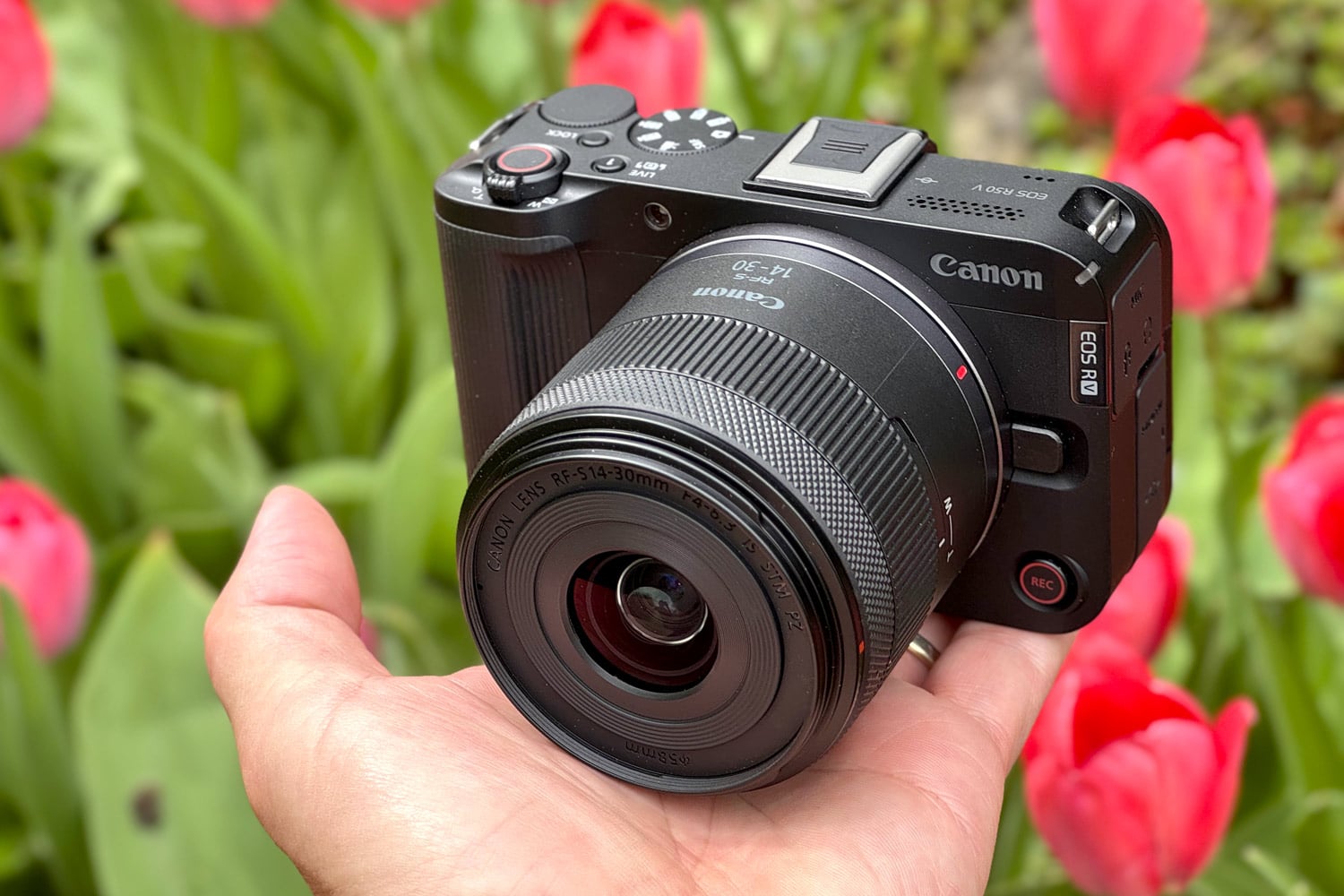
The Canon R50 V is primarily aimed at content creators who want something small and compact with a quality sensor and optics. But it’s definitely not just for shooting video – as we’ll show in this detailed review, even casual photographers will be satisfied with this new model.
Who is the Canon EOS R50 V for
The Canon R50 V, by its name, refers to its older sibling Canon R50 (review here), which has been among the really successful models for beginners, as well as fairly ambitious photographers, for several years: it offers solid performance at a “beginner-friendly” price.
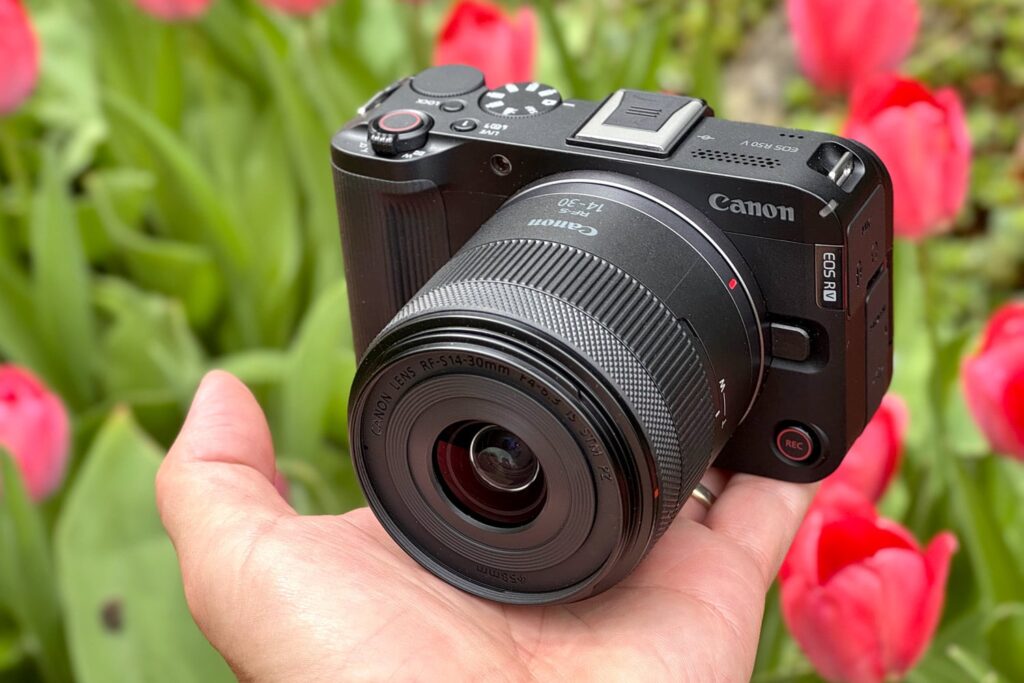
However, the Canon R50 V differs quite significantly from it: it has no viewfinder and at first glance makes it clear that it is mainly designed for video shooting – for example, it lacks the traditional “mode dial” with settings like P, Av, M, and so on. On this dial, you can mainly switch between different video modes.

Canon makes it clear in its materials that this model is mainly aimed at those who need to quickly create videos for social media. That’s why the button logic and controls include easy mobile connection. You can also connect it to the new Canon Live Switcher app, which allows live streaming from multiple cameras or real-time editing from different angles.
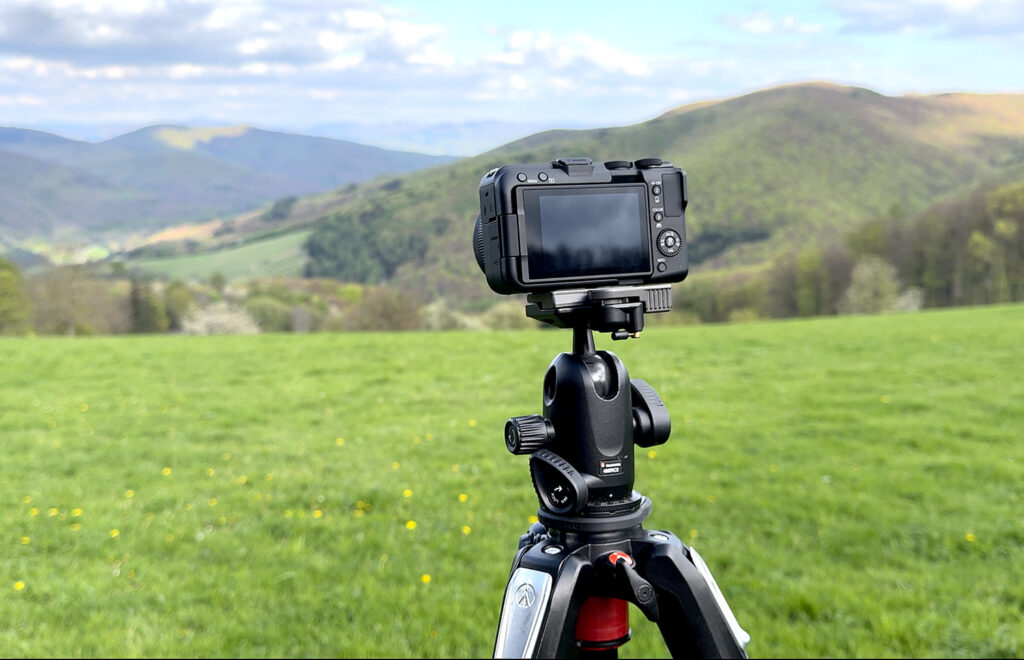
I admit, this isn’t exactly my area – I edit videos old-school on a desktop in landscape format, shooting with an iPhone or camera. But I tested this new model with pleasure. It also offers the ability to work with all the “traditional” photography modes. As evident from the test photos, it makes perfect sense as a quick camera for travel or family photography.
Video: Canon R50 V and photography – 11 min in 4K
Canon EOS R50 V – Key Technical Specifications
So, what’s important to know about the technical specifications? The main element, of course, is the APS-C sized sensor – smaller than full-frame, but significantly larger than compacts, not to mention smartphones. This has a crucial impact on image quality – larger sensors generally produce better photos and videos. You can see this clearly in the video on this page, which is, of course, full of sample clips and photos.
This model can shoot video in 4K up to 30 frames per second (strictly 29.97 fps). If you accept some cropping, it’s possible to reach 60 fps, which, let’s be honest, isn’t crucial for regular shooting.
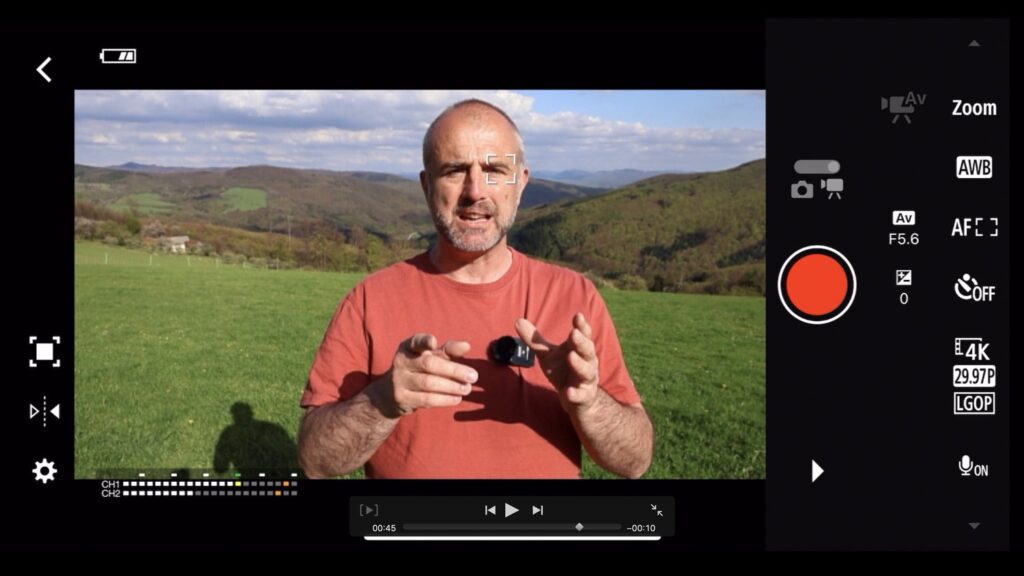
Another useful feature for everyday shooting is Log recording (Canon Log 3), suitable for further creative editing. I admit, I was never much tempted by it, because, like with photos, I always felt that a good camera should provide mostly ready-to-use images and videos. (Nothing against RAW, of course!) But I have to admit, I really enjoyed the editing here – playing with Log is quite addictive.
As mentioned earlier, everything – including the controls – is adapted for quick sharing and streaming. Content creators can very quickly select from main modes, including presets for fast and slow motion.

It’s also important to mention the lens introduced with the body, which will undoubtedly be the logical choice for most users (although I also carried a traditional “prime 50mm” for tests, see photos and salamander shots). The new kit lens is the Canon RF-S 14-30mm F4-6.3 IS STM PZ (equivalent to 22-48mm in full-frame terms).
Besides this, there are countless other settings, some of which we’ll cover in the video and following sections. The essential question remains: what to expect from this new model and how will it meet the expectations of different types of users?
Canon EOS R50 V – What I Liked
It’s truly a compact and pleasant camera – not exactly a scientific statement, but important for the overall conclusion: working with the Canon R50 V felt very good and it quickly “fit” my hands. That’s in terms of ease and efficiency, as well as how naturally it sits in your hand. Yes, the viewfinder was sorely missed in some situations, but its absence is a “defining feature,” leaving a very friendly and functional camera.
Image quality is very good – the main reason to buy the Canon R50 V is obviously the recording quality, because the APS-C sensor and solid lens easily outperform the “simpler” recording options in smartphones or compacts. As you can see in the accompanying video, the quality is impressive. I openly admit I’m not a video expert, but the difference versus smartphone recordings is truly significant.

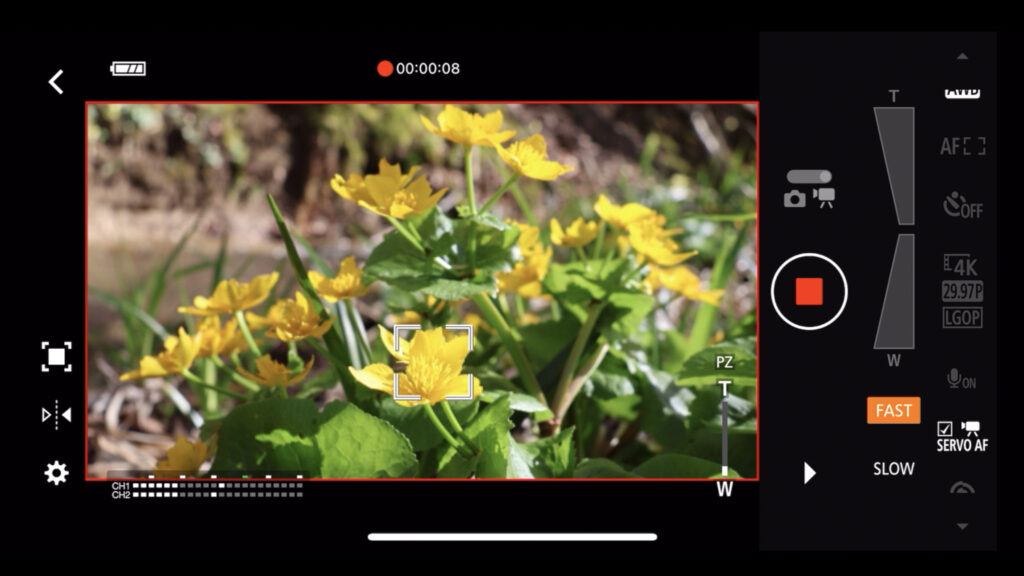
Mobile app control is addictive – I personally really appreciated the ability to control the Canon R50 V via the Canon Camera Connect mobile app. It’s not just basic connection; it offers quite extensive adjustment options. For my videos, it was essential to position myself perfectly from a distance of several meters. This is much easier via mobile than through the flip screen. The app reliably connected on the first try, even outside home Wi-Fi in the hills of Valašsko. Using the mobile display is also helpful for shots near the ground, like flowers by a stream, which would be difficult to frame from the camera screen alone.
The kit lens does a solid job. The Canon RF-S 14-30mm F4-6.3 IS STM PZ deserves praise. Of course, it’s a “plastic” lens with its limits, but overall it does not embarrass the camera body. Personally, I would rank it among the better lenses in this category: sharpness is decent, aperture isn’t spectacular, but the optics excellently support the essential feature that separates a “proper” camera from a smartphone – depth-of-field control is very noticeable. Plus, yes, the effective focal length is 22-48mm, and I admit a longer end would be useful since zooming is somewhat limited.

Digital stabilization handles a lot – among many settings and technical parameters, it’s worth highlighting digital stabilization – a system that stabilizes shake during shooting. This is clearly visible in the video, for example, in shots of a running dog and in handheld walking shots. For everyday use, this is a very valuable feature.

Playing with Log is worth it – as mentioned, the Canon R50 V can shoot in Log, which allows easy creative adjustments in post. There are, of course, other ways to influence the final look while shooting, but this option will appeal to creators who like to “color grade” their footage. These features also extend the camera’s use to more ambitious users who can use this Canon as a supplementary source for complex productions.

The Canon R50 V also works great in photo mode – as mentioned, the first glance may surprise photographers because the controls are clearly optimized for video and some key buttons and dials are missing. On closer inspection, everything can be set quickly via the menu. So this Canon can easily serve as a compact travel or family camera. The sample photos on this page prove that the results are really very good. It is certainly not a secondary accessory: photography is a valid “parallel” function of the Canon R50 V.

Canon EOS R50 V – Things to Watch Out For
Missing viewfinder – I’ve mentioned this before, so no need to go into detail. Yes, I sometimes really missed the viewfinder because the display was hard to see in bright sunlight. But in the era of smartphones, where everything happens via the display, this may be negligible for most users. A reliable app and mobile control help in many situations.
A built-in windscreen for the microphone would be useful – a few weeks ago, I tested another new model, Canon PowerShot V1 (review here), where I really liked the “dead cat,” the furry microphone cover included with that camera (though removable). It allowed shooting outdoors without problems, which is difficult here – even a small gust of wind can ruin the shot. On the other hand, most owners would probably use an external microphone anyway. But still, having the ability to shoot outdoors more easily would be nice.

Competition from cameras and smartphones will be strong – it will be interesting to see in whose hands we’ll see the Canon R50 V in the coming months and years. It is undoubtedly a very pleasant machine, but it targets beginner content creators, attracted mainly by its superior recording quality. More ambitious users will likely choose higher-end solutions, and in cheaper segments, smartphones will remain strong competitors. Personally, I really like the ability to shoot opening sections of my videos with excellent quality and responsive controls (though I still need to solve the audio).
Canon EOS R50 V – Summary in Two Sentences
The Canon EOS R50 V offers content creators excellent video recording quality, easily outperforming even top smartphones, thanks to its large APS-C sensor and solid kit lens. It can be a sensible choice for those seeking a relatively affordable solution for video shooting, as well as traditional photography on trips or family events, although smartphone competition will remain significant for less ambitious users.
Canon EOS R50 V – More Sample Photos


Canon EOS R50 V – Review Summary
Canon EOS R50 V
The Canon EOS R50 V offers content creators very good video recording quality, easily surpassing even top smartphones, thanks to its large APS-C sensor and solid kit lens. It can therefore be a sensible choice for those looking for a relatively affordable solution for shooting videos, as well as for traditional photography while traveling or at family events, although smartphone competition will still be fairly strong for less ambitious users.
7.8
Pros
- Compact and affordable camera
- Very good image quality
- Well-developed mobile control
Cons
- No viewfinder
- No built-in microphone protection
- Competition from smartphones and more expensive cameras is still significant





















Leave a Reply