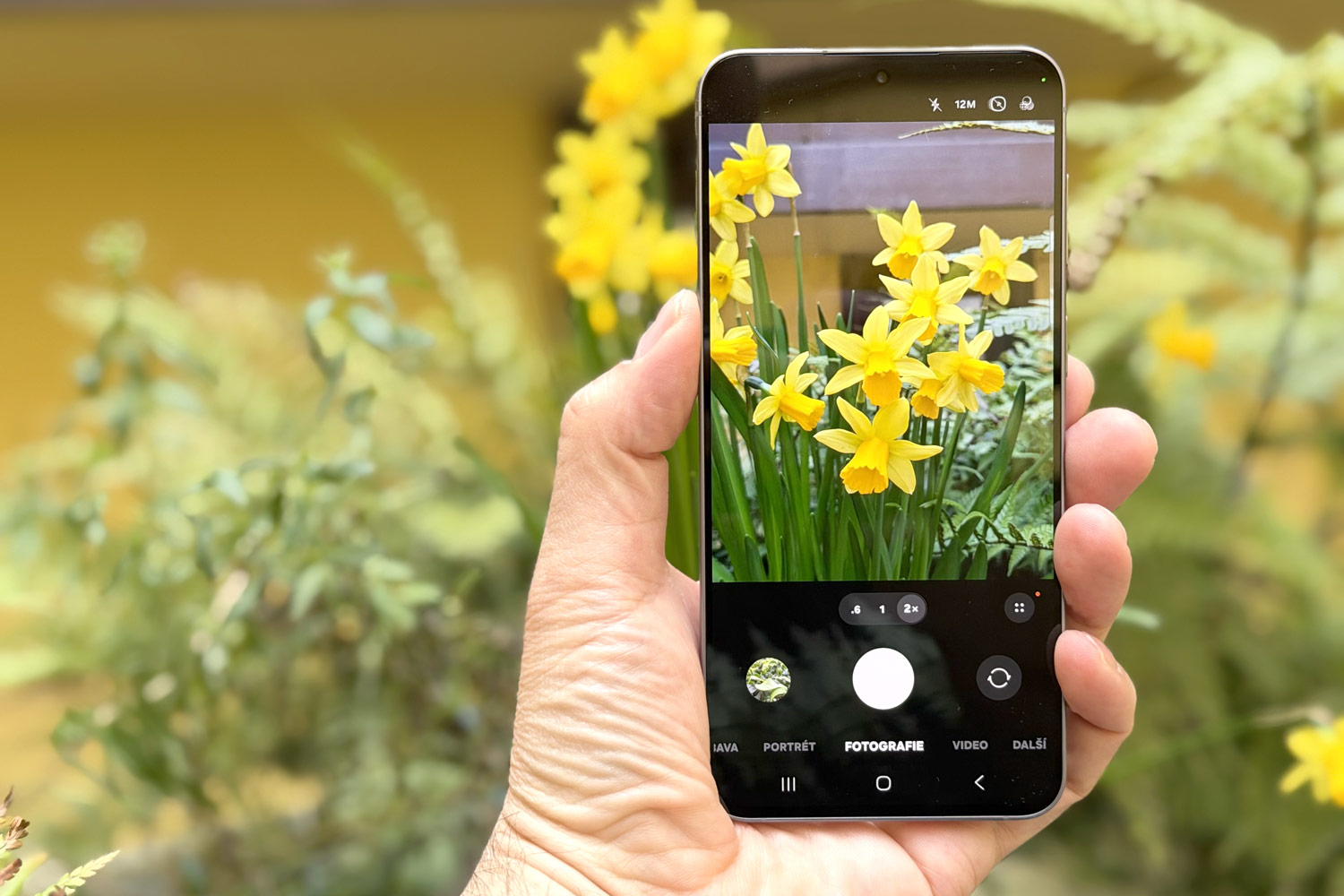
The Samsung Galaxy A57 is here, the next in a line of immensely popular mid-range smartphones offering very good performance for a (more or less) reasonable price. I took it for a quick spin—and here are my first impressions.
Samsung Galaxy A57 – A Mid-Range Favorite
Few people hold the exact statistics, but there is no doubt that this smartphone series ranks among the most popular mid-range models. It is also a top seller on a global scale.
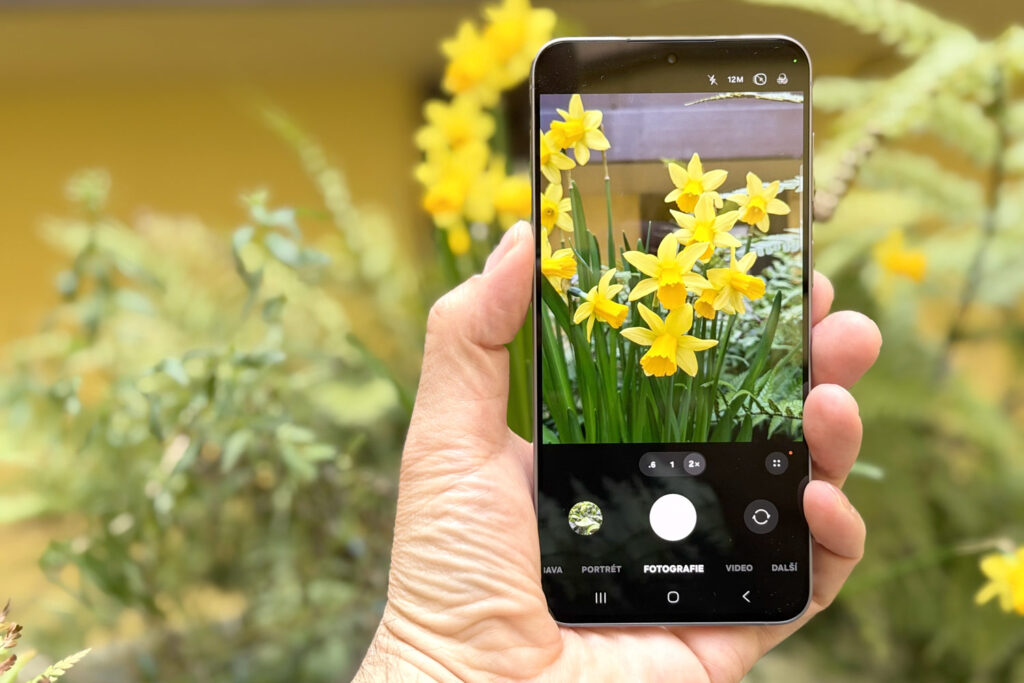
What makes this series so appealing? Traditionally, it offers solid performance that is sufficient for most casual users, while still being competent enough for more demanding ones. The price is usually very reasonable—though, admittedly, it’s not as straightforward this year, and the price will be higher than last year. The cheapest variant will start selling for 12,999 CZK, which is a thousand crowns more than a year ago. As Samsung and other manufacturers admit, components are getting more expensive, mainly due to the massive demand for memory “swallowed” by artificial intelligence.
I have been faithfully reviewing this series on these pages for many years, starting from the A53 model—for the record.
I had the opportunity to briefly try out the Samsung Galaxy A57 at a press event even before the official market launch. Here are a few of my first impressions.
What the Samsung A57 Offers in Photography
So, what is good and important to know about this year’s model? Let’s first look at the main parameters.
| Samsung Galaxy A57 – Camera: Lenses and Sensors | |
|---|---|
| Main Camera | 50 MP, size 1/1.56″, f/1.8, 1.0 µm, OIS |
| Ultra-wide Camera | 12 MP, f/2.2 |
| Macro Camera | 5 MP, f/2.4 |
| Front Camera | 12 MP, f/2.2 Video HDR, LN |
Hardware changes compared to the previous generation are minor. If you examine the smartphone specs, the main camera parameters are the same as last year. And since even that wasn’t a dramatic shift, the rule remains: Samsung is playing it safe with past successes, and the evolution is minimal.
The camera is basic but works very well. The camera’s characteristics remain the same: the 50 Mpx main camera handles everything essential, complemented by an ultra-wide lens, with a macro lens acting as a nearly symbolic addition.
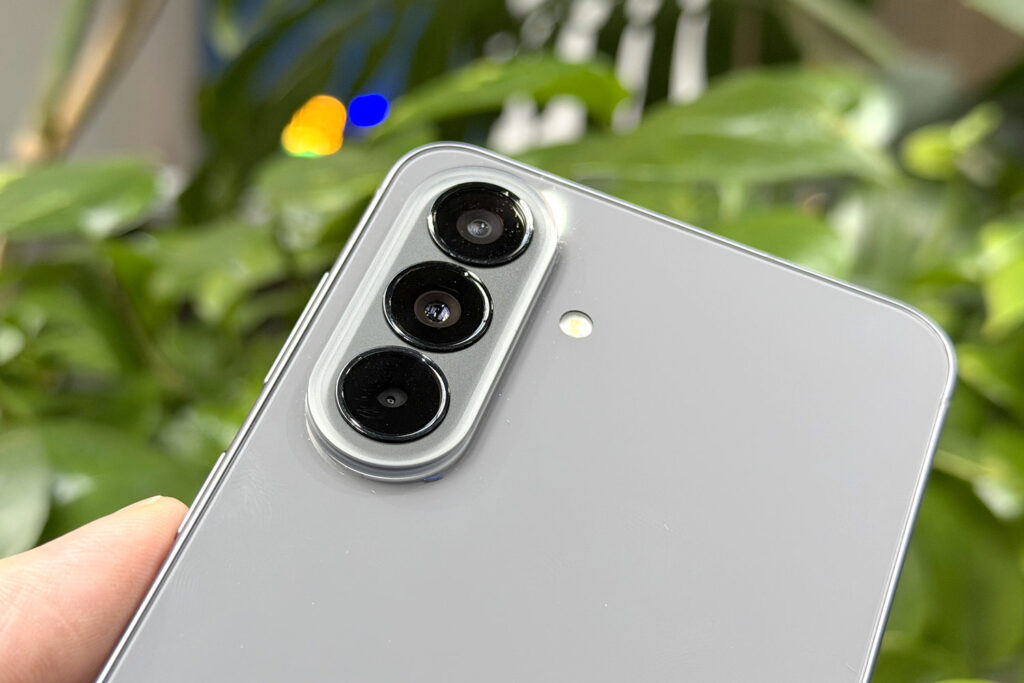
The changes lie in image processing—Samsung is taking some heat this year because the flagship Samsung Galaxy S26 Ultra also doesn’t bring dramatic hardware upgrades. Formally, that’s true, but quite honestly: regardless of hardware, the real change happens at the image processing level. I am currently testing the Samsung S26 Ultra, and it remains one of the best smartphones for demanding photographers in the global market. The same applies to the “cheaper relative,” the Samsung A57, regarding better software tuning. Is it a dramatic shift? Not as far as I can tell from quick testing. Does it still make sense to buy last year’s generation? Yes, undoubtedly. That said, there is definitely a certain progression visible.
Improved HDR performance—according to Samsung, one of the shifts is a better HDR processing method called AEB HDR. In practice, this clearly means better and faster HDR data reading, whereas in the past, phones relied more on stacking multiple frame variants (Multi Frame). It sounds like a detail, but changes in HDR processing are a major topic for iPhones and even Xiaomi. Will it have an impact that can be noticed? Only detailed testing will tell.
Important detail: zooming in portrait mode. This seemingly minor detail is easy to overlook, but it’s truly important: since last year’s model, Samsung added the option for digital zoom in portrait mode. This is crucial because it finally makes it possible to take portraits in a photographic sense.

The build doesn’t feel cheap—the phone has a metal frame, feels good in the hand, and simply meets what we expect from a mid-range device: it will make sense for everyday use and regular users, but won’t offend the more demanding ones either.
Editing suggestions can really help—as is common with smartphones now, Samsung emphasizes a large number of AI functions here as well. Personally, I don’t care for them much, and I have a private feeling they are used far less than manufacturers admit. However, I was very intrigued by the Edit Suggestion feature, appearing in this series for the first time. It can, for example, work with background blur, which is something where Android phones generally lag behind iPhones.
Samsung Galaxy A57 – Summary in Two Sentences
The Samsung Galaxy A57 is the successor to an extremely popular line of smartphones combining solid performance and a reasonable price. In terms of photography, it offers basic but solid tools—there is no telephoto lens, so the main lens “handles” everything, and traditionally does a decent job.
Samsung Galaxy A57 – Specifications
| Model | Samsung Galaxy A57 |
| Display | 6.7” FHD+, Super AMOLED+, Infinity-O display, 120 Hz, 1200 nits (HBM), 1900 nits (Peak bright) |
| Processor | Exynos 1680 (4 nm Octa-core) |
| Memory | 8 GB RAM + 128 GB 8 GB RAM + 256 GB 12 GB RAM + 512 GB microSD: not supported |
| Cameras | Main: 50 MP OIS HDR Video Ultra-wide: 12 MP Macro: 5 MP Front: 12 MP HDR Video |
| Battery | 5,000 mAh 45 W Fast Charging |
| Dimensions | 161.5 x 76.8 x 6.9 mm Weight 179 g |
| Durability | IP68 |
| Connectivity | Wi-Fi 6E, BT 6.0 |
| Materials | Display + Back: Gorilla Glass Victus+ Frame: Metal |























Leave a Reply