
The Canon RF 100-400mm f/5.6-8 IS USM offers an interesting mix of a long zoom range, compact dimensions and a reasonable price. In short: it is a popular choice for photographers who need strong telephoto performance, but do not want to invest in Canon’s more expensive lenses. But how serious are the compromises – especially the rather modest maximum aperture? And what can you actually expect from this lens? Let’s take a closer look in this detailed review.
Who is the Canon RF 100-400mm f/5.6-8 IS USM for?
Why did I decide to test the Canon RF 100-400mm f/5.6-8? Over the past few years, I have tested many telephoto lenses in different price categories, but the more affordable ones have always interested me the most. With lenses costing several times more, I simply expect the results to be very good.
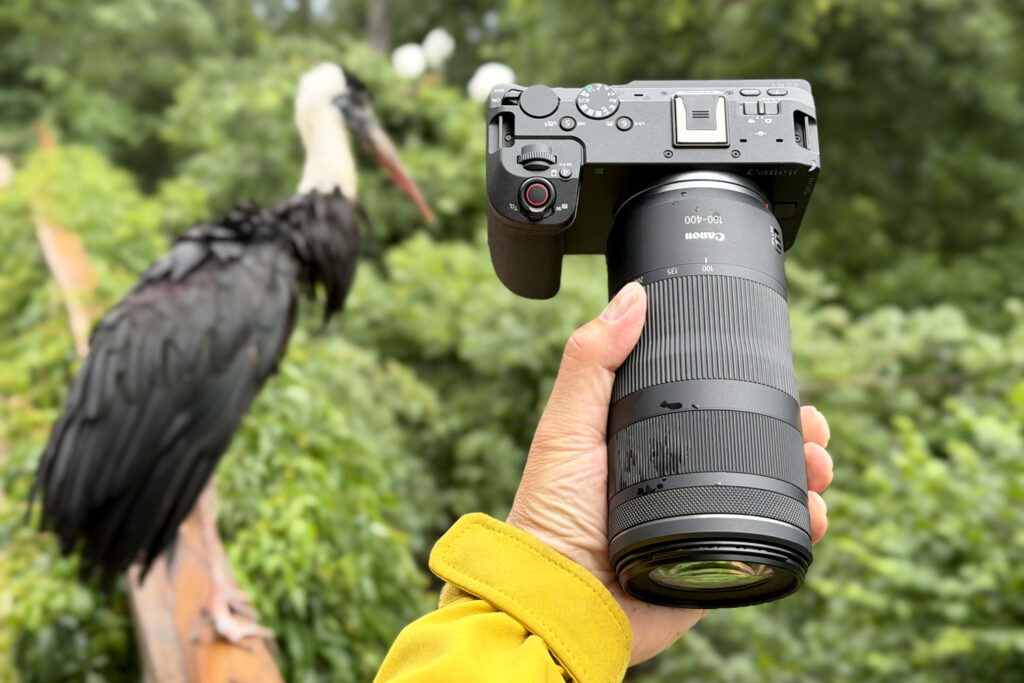
But what exactly can you expect from a lens that offers only f/8 at the long end and costs around CZK 18,000? That is precisely where a detailed test makes sense – because it is obvious that a relatively affordable price has to bring a number of compromises, from the maximum aperture to the build. But are those compromises already too limiting? And do they show in the image quality?
These are all logical questions, and they were simply interesting to explore, even though this is not a new lens – it was introduced in autumn 2021. Many photographers are trying to find a sensible balance between price and performance. In other words: to keep the budget under control, while still getting the best possible photos.
So I borrowed the lens and headed to a place where many owners may well take it: Prague Zoo. I tested it on Canon’s new full-frame body from this spring, the Canon R6 V (more detailed article here). I was simply tempted to try not only the lens, but also the new camera body.
It is also worth adding right away that many photographers will probably buy this lens for cameras with APS-C sensors, meaning smaller sensors, such as the Canon R7. In that case, the field of view corresponds to about 640mm, which is already a very solid reach for photographing animals or sports.

In short: this really is an interesting and versatile lens. So let’s break it all down in detail.
Video: Canon RF 100-400mm f/5.6-8 – Review – 13 min in 4K
How limiting is the f/5.6-8 maximum aperture? Quite a lot, but…
When testing lenses in this category, there are really only two essential questions. First: how much does the key characteristic show in real-life shooting – the fact that at the long end, the maximum aperture is a rather unimpressive f/8? Second: what is the image quality like overall, and especially how good is it when shooting wide open, which is where cheaper lenses often struggle a bit.
The answers are relatively simple: 1. Yes, the modest maximum aperture is definitely noticeable, especially in weaker light, when you constantly need to find the right balance between a shutter speed that is not too slow and an ISO value that is not pushed too high.
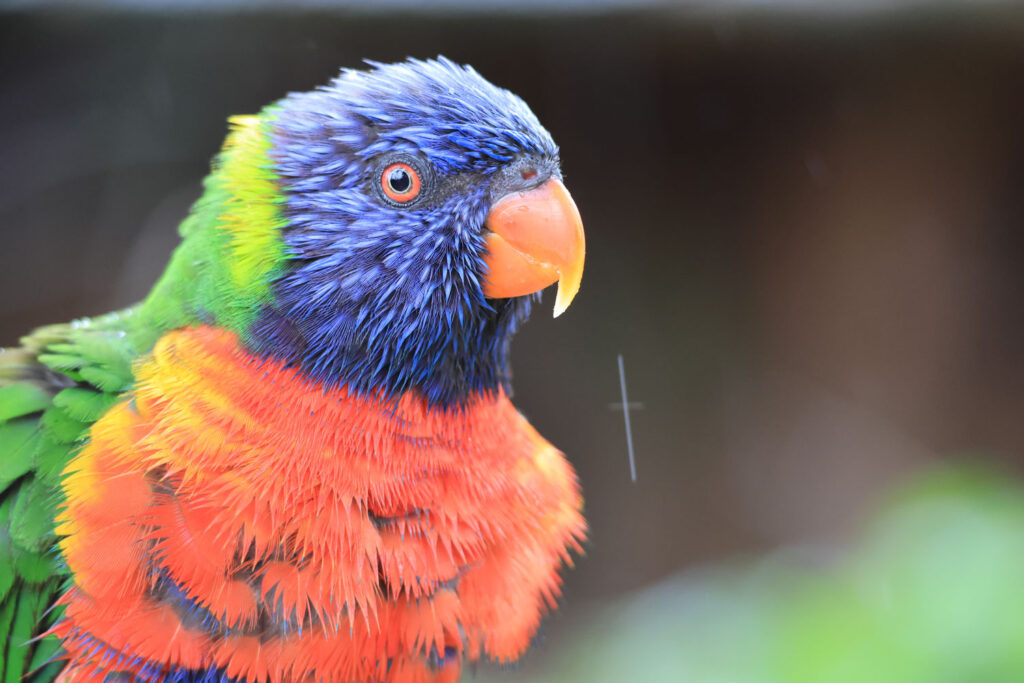
2. I was pleasantly surprised by the image quality – of course, it is still important to remember that this is a relatively inexpensive lens. But if you look through the photos on this page, and especially in the video, you will see that for normal use, the results are very good. And that is probably the key conclusion of the entire review: for the money, this lens can simply deliver a lot.

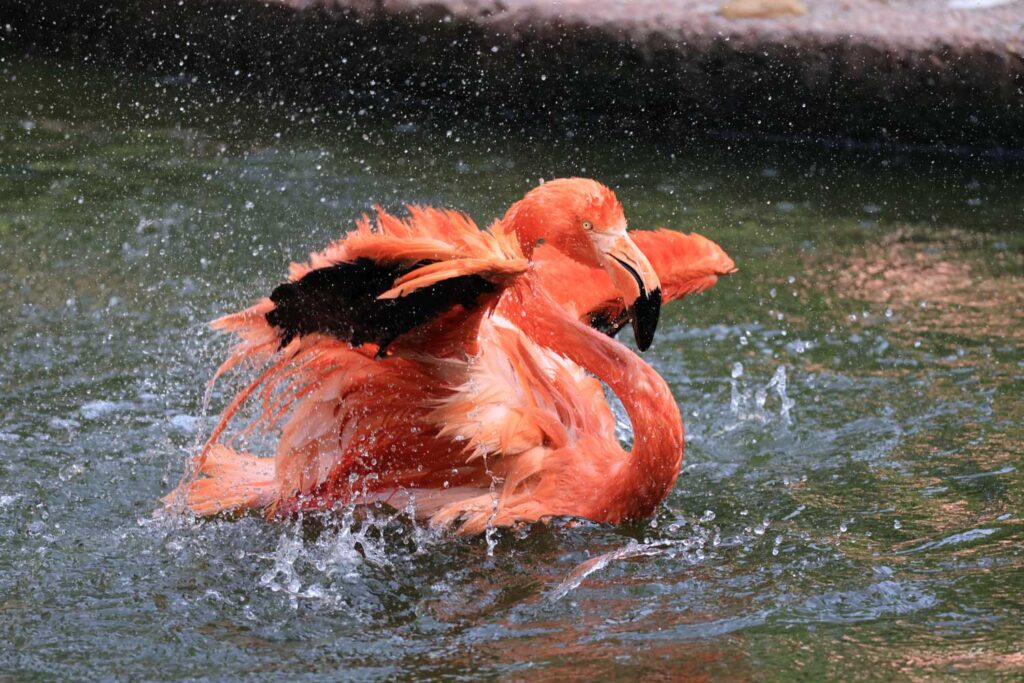
The first set of compromises is, of course, something even a less experienced photographer can spot directly from the lens name: Canon RF 100-400mm f/5.6-8, meaning f/8 at the long end. That maximum aperture is simply tricky by definition – and during my test, I felt it quite strongly. At the zoo, the weather was truly awful. It rained almost continuously for several hours. In some ways, that was actually useful for certain types of shots – in full sun, some very contrasty scenes would have been difficult to photograph well. But for camera settings, it sometimes made things quite complicated.

In most cases, I was shooting at ISO 1600 and 3200 and trying to keep the shutter speed at least around 1/200 sec, which is not ideal – it is already quite a slow shutter speed. And from time to time, I had to push the ISO even higher. Of course, the new full-frame Canon R6 V body helped a lot, but it does not change the fact that it was a fight. In other words: in weaker light, the modest maximum aperture will force you to keep adjusting the settings carefully.
At the same time, this is not a flaw – it is simply a defining feature of this more or less affordable lens. A lower price means a worse maximum aperture and more work with the settings. If there had been more light, the problems would naturally have been far less significant.
And what about image quality? Very solid
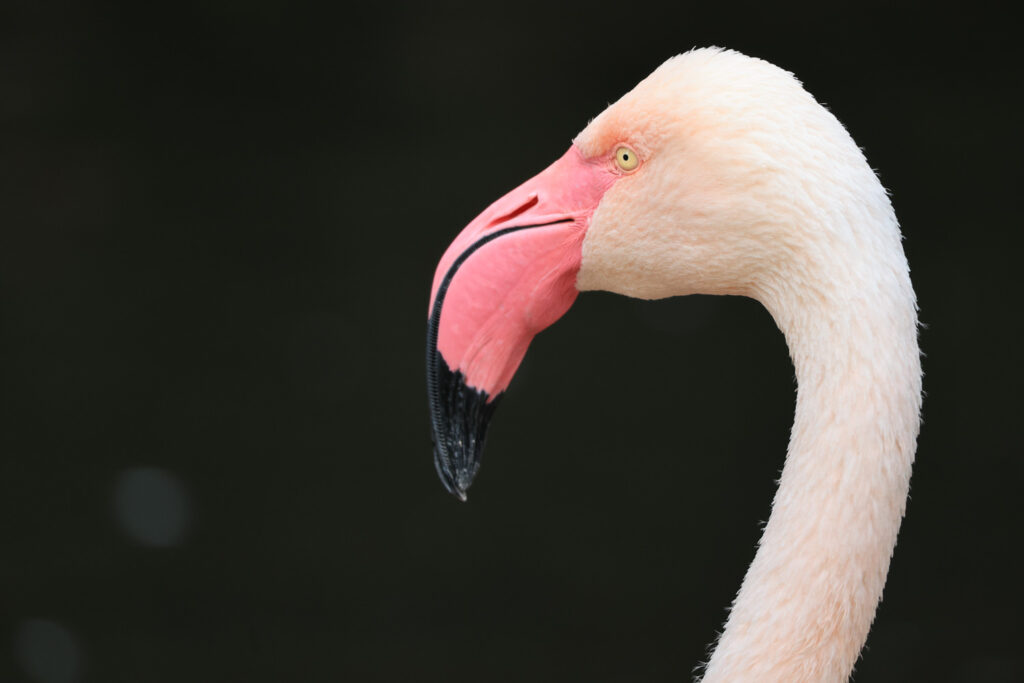
Besides the constant fight with settings, the rainy weather brought one more simple fact: I was shooting at the widest available aperture of f/8 almost all the time. As every photographer knows, that is not ideal with any lens in the world. And the cheaper the lens, the more visible this can be, because lenses usually perform a little worse wide open.
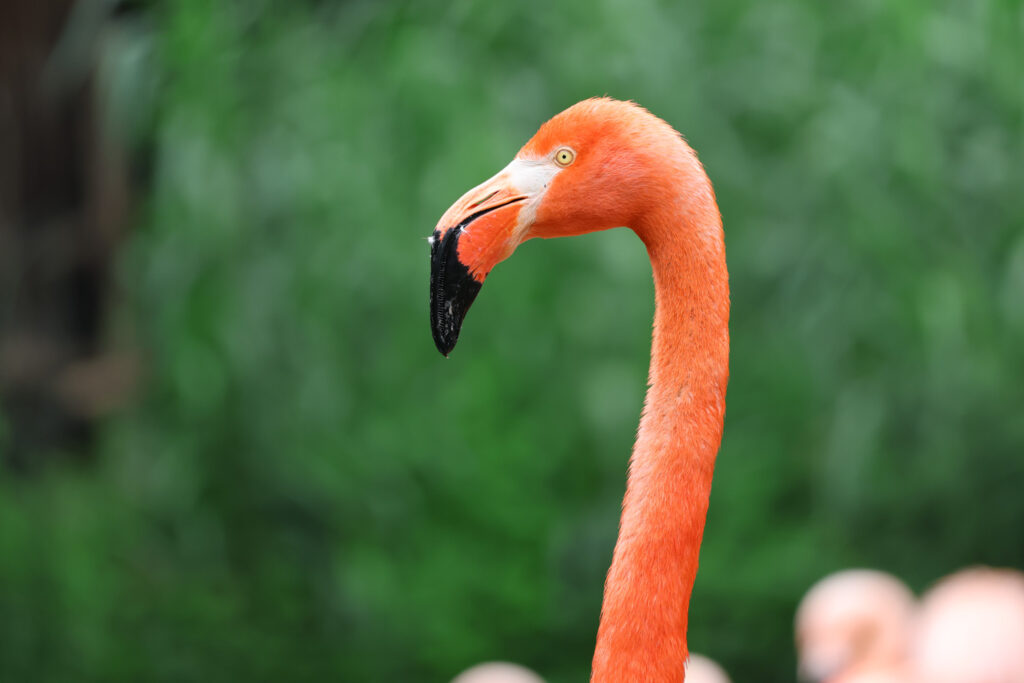
These photos also naturally have the shallowest depth of field. On the one hand, that helps the images. On the other hand, it places huge demands on autofocus accuracy: our brain wants to see sharp eyes, and a shallow depth of field requires the focus points to hit them very precisely. At smaller apertures, we have a better chance that the overall sharpness will turn out well.
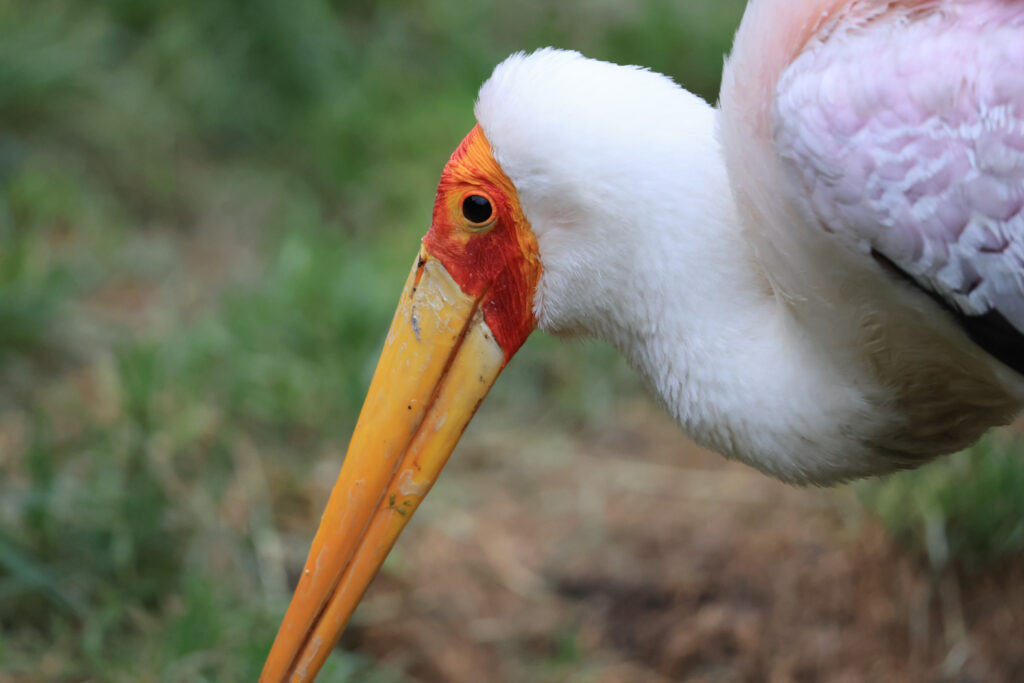
And I have already mentioned the essential conclusion about aperture: the results are very good. You can see this best in the accompanying video, where I systematically show photos taken at different apertures, but for practical reasons I pay the most attention to shooting wide open, meaning f/8. In short, anyone looking for a sensible lens at a price that will not break the bank cannot really complain about sharpness and image quality here.
Canon RF 100-400mm f/5.6-8 – what I liked
So let’s sum it all up once again:
– overall, this is a very interesting lens for those looking for very good performance at a good price. As you can see on this page and in the accompanying video, the lens delivers good photo quality in many situations.
– the range is decent on the full-frame body I used for testing, but the biggest “magic” in terms of reach will, of course, come when using it on a camera with a smaller sensor, where the field of view corresponds to up to 640mm – and that is already very impressive.
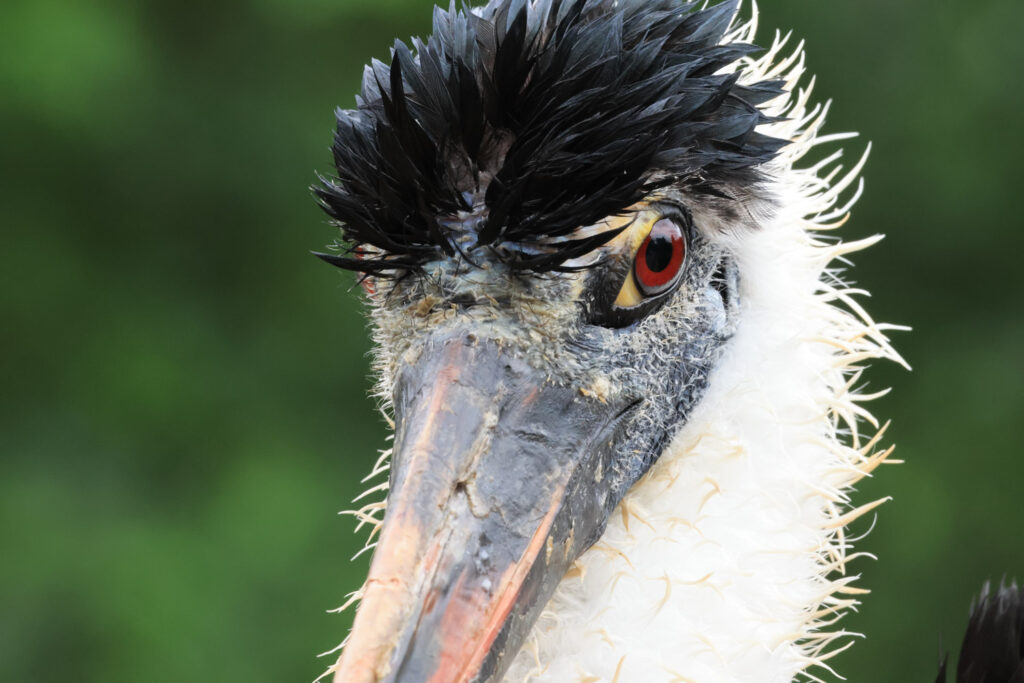
– although the modest maximum aperture naturally makes shooting more complicated, it is not an insurmountable problem – it simply requires the user, especially in weaker light, to set everything carefully and to know what the camera can handle when working with ISO and slower shutter speeds.
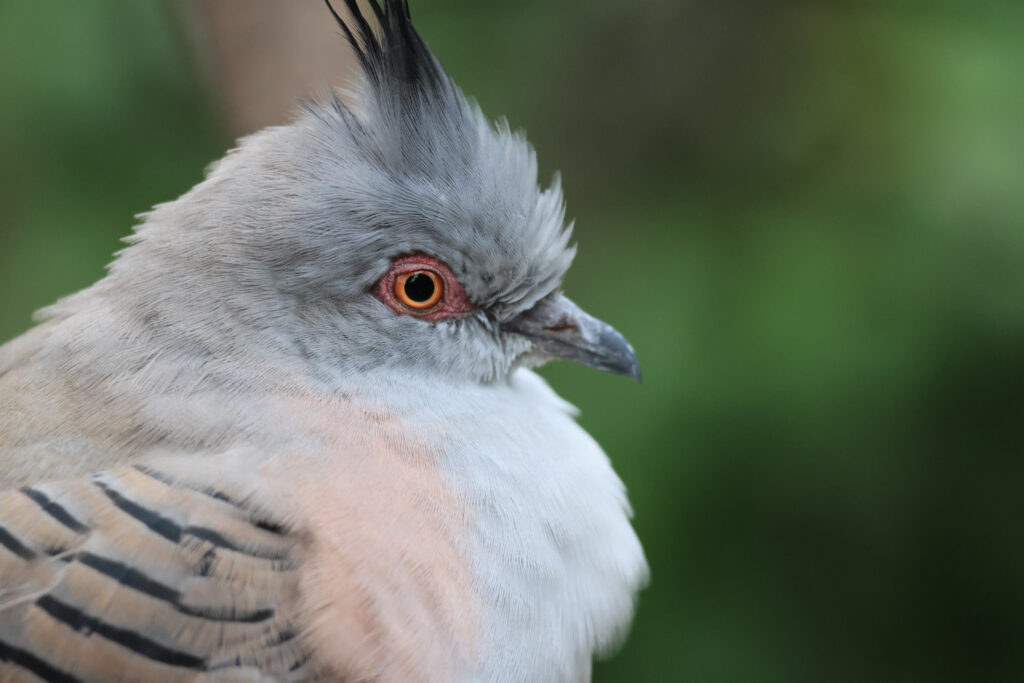
– image quality is good even when shooting wide open – which, as I have already mentioned, is probably the most important finding of the whole review. Everything else can more or less be guessed from the technical specifications, but this cannot. In short, there is no need to worry.
– despite the “high widest” aperture of f/8, the lens can still create a nicely blurred background – so if a beginner photographer fears that everything will look flat and the background will not blur enough, the sample photos should prove that there is no need to worry about poor results here either. With this type of photography, the background can still blur quite significantly.
– it is a light and relatively compact lens: it weighs 635g and is 164.7mm long, which can really be useful when walking around. The minimum focusing distance is also worth mentioning – in other words, how close the subject can be. At 200mm, it is just 88cm. For completeness, here are the other values from Canon’s website: 1.2m at 100mm / 0.88m at 200mm / 0.95m at 300mm / 1.05m at 400mm.
– the image stabilization can be relied on even in difficult scenes. Canon states up to 5.5 stops of stabilization, and it is true that I was sometimes surprised by how long a shutter speed I could still use. So that counts as well.
Canon RF 100-400mm f/5.6-8 – what to watch out for
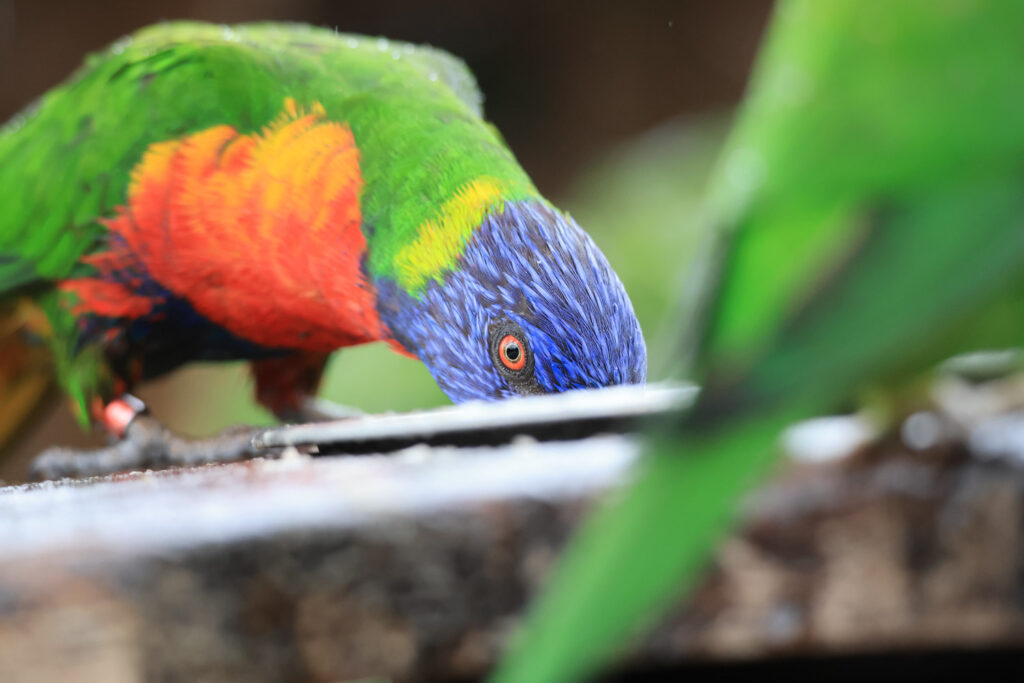
– we have already mentioned the most important point, but let’s repeat it once more just to be safe: yes, the maximum aperture of f/8 at the long end means that in some situations you will simply have to fight quite hard for the right settings, balancing a reasonably fast shutter speed against an acceptably high ISO. For more experienced photographers, this will not be a problem. For beginners, it is worth accepting that without careful settings, the modest maximum aperture will make life more difficult in weaker light.
– yes, this is simply a more or less affordable lens, not a piece of uncompromising professional gear. That shows in the build, the general specifications and the performance. It is good to keep this in mind and to expect that cheaper equipment will always have some limitations. But these limitations are manageable and do not dramatically affect the most important thing: image quality.
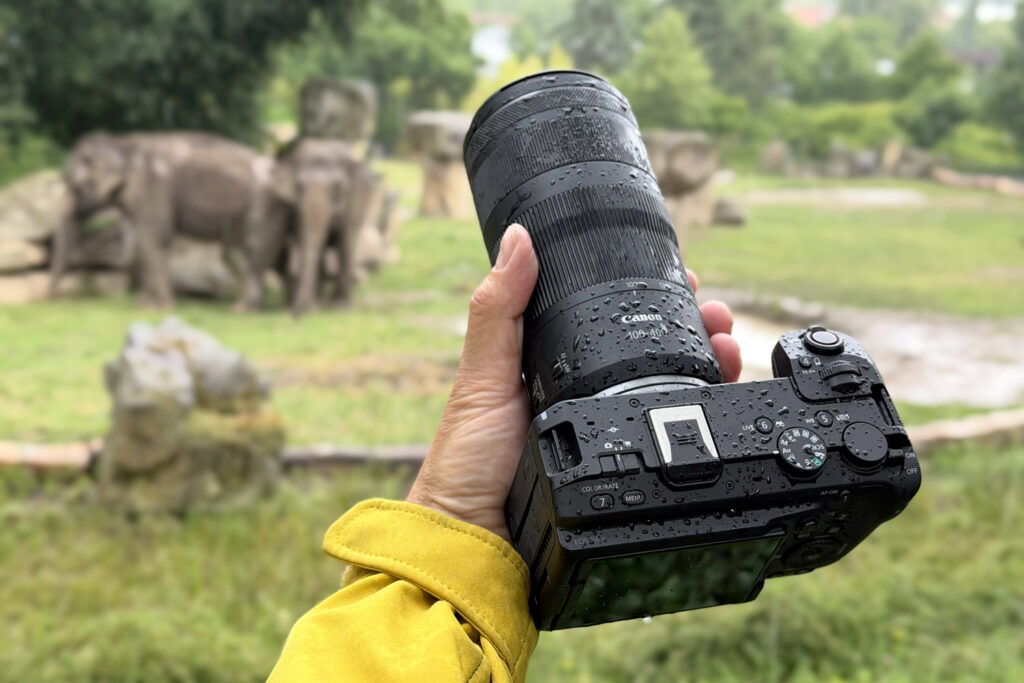
– there is no protection against water and dust. I admit that I have never spent much time worrying about how weather-resistant my many lenses and cameras really are. I have always assumed that a few drops, or even a heavier shower, are not a problem, but that a longer stay in wet and humid conditions can put any camera or lens out of action. To be more precise: this lens is not part of Canon’s top L series, so it does not offer the highest level of protection. But as I tested in the rainy zoo, the lens survived quite a lot. It is true that after a combination of a humid greenhouse and heavy rain outside, one of the lens elements fogged up from the inside. But as often happens with unsealed lenses, everything disappeared after about 30 minutes in a warm and dry place. So: there is no reason to be afraid, but a little caution is useful.
Canon RF 100-400mm f/5.6-8 – summary in two sentences
The Canon RF 100-400mm f/5.6-8 is an interesting option for those looking for a more or less affordable lens that offers very solid performance when photographing animals or sports, especially when used on cameras with APS-C sensors. Owners have to accept a number of compromises, including the modest maximum aperture of f/8 at 400mm, but the image quality is very solid and the photos will not disappoint even more demanding users.
Canon RF 100-400mm f/5.6-8 – more photos from the test


Review Summary
Canon RF 100-400mm f/5.6-8 IS USM
The Canon RF 100-400mm f/5.6-8 is an interesting option for those looking for a more or less affordable lens that offers very solid performance when photographing animals or sports, especially when used on cameras with APS-C sensors. Owners have to accept a number of compromises, including the modest maximum aperture of f/8 at 400mm, but the image quality is very solid and the photos will not disappoint even more demanding users.
7.9
Pros
- good price-to-performance ratio
- solid image quality even when shooting wide open
- light and compact build
Cons
- the f/5.6-8 maximum aperture is not exactly stellar
- f/8 at 400mm requires careful settings
- no weather sealing against water and dust
Related posts
-

Canon EOS R8 Mark II Review – Sample Photos & Video
-
Is This Photo Manipulated? Canon Can Now Verify Its Origin
-
Canon R6 V: Open Gate Video Test – Why Full-Sensor Recording Matters
-
Best Cameras – Summer 2026: My 40 Reviews, 4 Tables, 10 Years of Testing
-
Testing a 30-Year-Old Canon PowerShot A5: Retro Review from Prague + video
-
Canon G7 X Mark III: Why This “Old” Camera Beats Your Phone – 2026 Review + video







Leave a Reply