With the Xiaomi 18 Pro Max, a new series of smartphones is hitting the global market—at first glance, it stands out with its back display and a host of other features. So let’s take a detailed look in this review at what it can do and what to expect from its camera and photos.
Xiaomi 18 Pro Max—Where It Fits and Who It’s For
As always, let’s first address the important question of where the Xiaomi 18 Pro Max actually fits on the smartphone landscape. It’s trickier than it might seem, because this is a series that has so far been available only in China and has always been one step below the top-tier flagships like the Xiaomi 17 Ultra (review here).
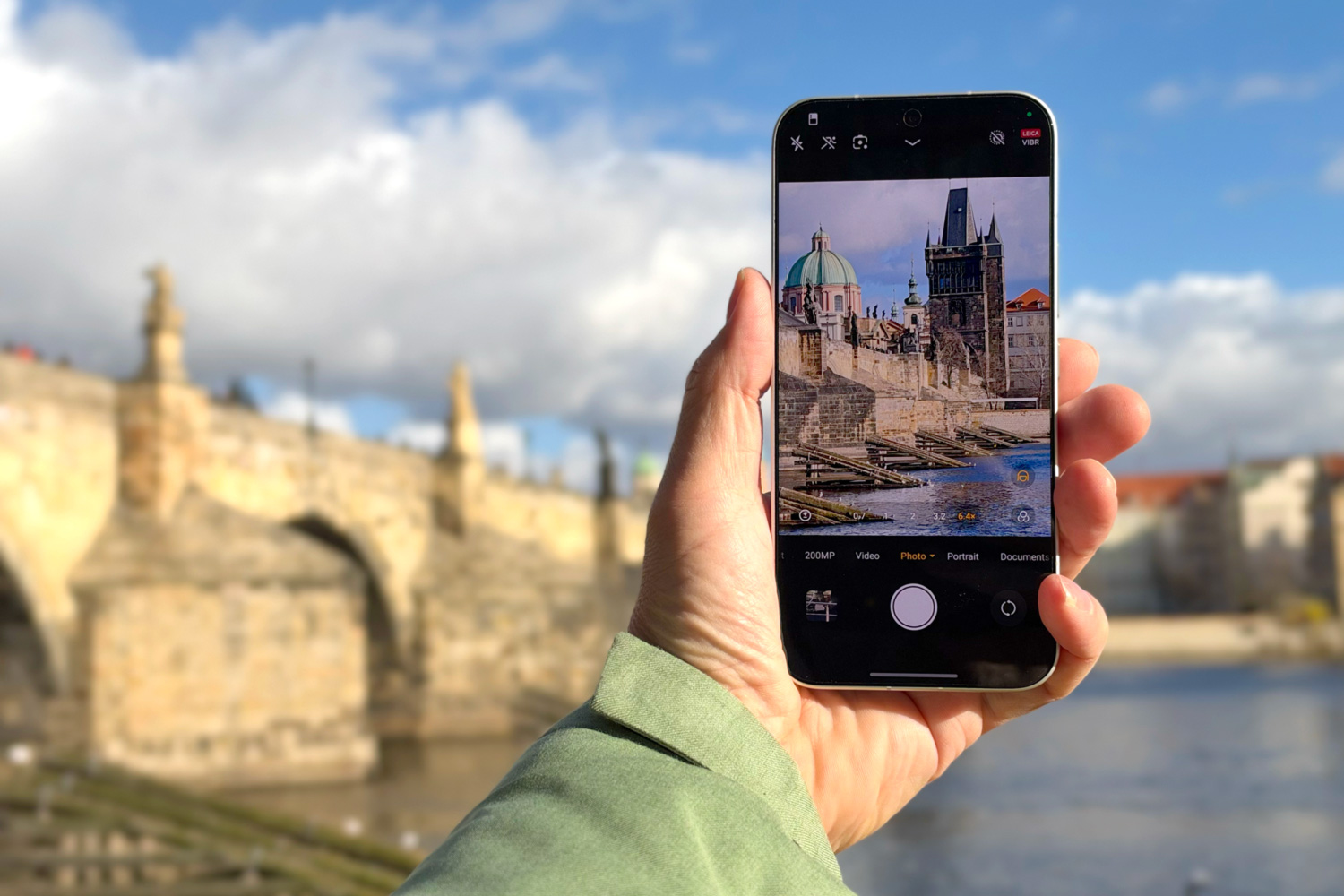
However, in recent months, there has been a lot of speculation that another Ultra model won’t be released in the near future. This hasn’t been officially confirmed, so it should be taken with a grain of salt. On the other hand, the global launch of this model suggests that there might be some truth to the speculation. The reasons are obvious: component prices, especially for memory, are rising dramatically, and the resulting price could simply be very high.

This would mean that the Xiaomi 18 Pro Max could become Xiaomi’s top flagship—at least for a while. That’s another reason why it deserves a truly in-depth look—I had the opportunity to test the Xiaomi 18 Pro Max for several days before its official unveiling in Paris, where I also traveled to attend the event.

So, how would I sum it all up right at the start? I’ll admit, I was a little worried, because the previous models in the Ultra series were among the very best you can get in the world of mobile photography—thanks in part to the relatively large “one-inch” sensor—which is missing here. But in the end, I was pleasantly surprised—the photos are simply good, and I was also delighted by a crucial little detail: the return of the ability to capture close-up details (which I missed in the previous Ultra), as well as the arrival of the new default “Original” style, which photographers have spent many years asking for (I’ll explain both below). Partly because of this, all things considered, it’s an interesting model.
Xiaomi 18 Pro Max and the Camera
First, as usual, let’s summarize what sensor and lens system we have at our disposal.
| Xiaomi 18 Pro Max – Camera: Lenses and Sensors | |
|---|---|
| Main Camera | 23mm, 200 MP f/1.67, OIS, QPD focusing Light Fusion 960L sensor, 1/1.28″ LOFIC HDR technology |
| Periscope Telephoto Lens | 75mm, 200 MP f/2.4, OIS 1/1.56″ sensor 3.2× optical zoom 12cm macro photography |
| Ultra-wide Lens | 17mm, 50 MP f/2.4, 102° FOV, AF 1/2.88″ sensor 5cm macro photography |
| Front Camera | 21mm, 50 MP f/2.2 1/2.88″ sensor |
At first glance, it’s clear that this is a remarkable combination: there are three sensors and lenses here—the main (wide-angle), ultra-wide-angle, and telephoto lenses. There’s nothing particularly special about that, but: the resolution is 200 MP on both the main sensor and the telephoto lens, which is unprecedented.

What’s missing here: there’s no second telephoto lens, as was the case, for example, with the Xiaomi 15 Ultra or the Samsung S26 Ultra (review here). The main sensor isn’t a so-called “one-inch” sensor, which generally signifies the highest photo quality. And this year’s Xiaomi 17 Ultra (review here) features a truly unique optical zoom—both technologically and photographically—that allows for a smooth focal length adjustment between 75 and 100 mm.
As mentioned, the main lens has 200 MP, an unprecedented resolution that sets the bar for what to expect from this phone. Photographers are generally a bit skeptical about a high pixel count on the main sensor (due to the risk of noise in low light), but as we’ll discuss below, the overall results are very good.

The telephoto lens offers 3.2× optical zoom, or 75 mm, which is a reasonable value (the last two generations of iPhones have settled on 4× zoom), especially when combined with the 200 MP sensor—the data simply comes in handy during digital zooming. And most importantly, as we’ll see below, this sensor allows you to take photos from as close as 12 cm, which is a crucial feature that opens the door to a significant category of close-up photography—including product shots.

The ultra-wide-angle lens is a valuable addition—as is often the case, ultra-wide-angle lenses tend to be somewhat overlooked, but that’s not the case here: although it’s the “third in line,” it really counts and comes in handy in many situations. And it’s important to note that this is a full-fledged lens.

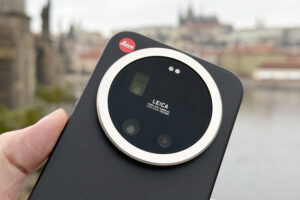
The back display is probably the most visually striking feature of this phone, and if you take a lot of selfies, you’ll likely love it—because the preview on the back lets you use the main camera, not just the secondary one on the front, which is undeniably a big plus. And yes, if you enjoy experimenting, the back display offers a wide range of additional options for what to do with it, what to view, and how to use it.
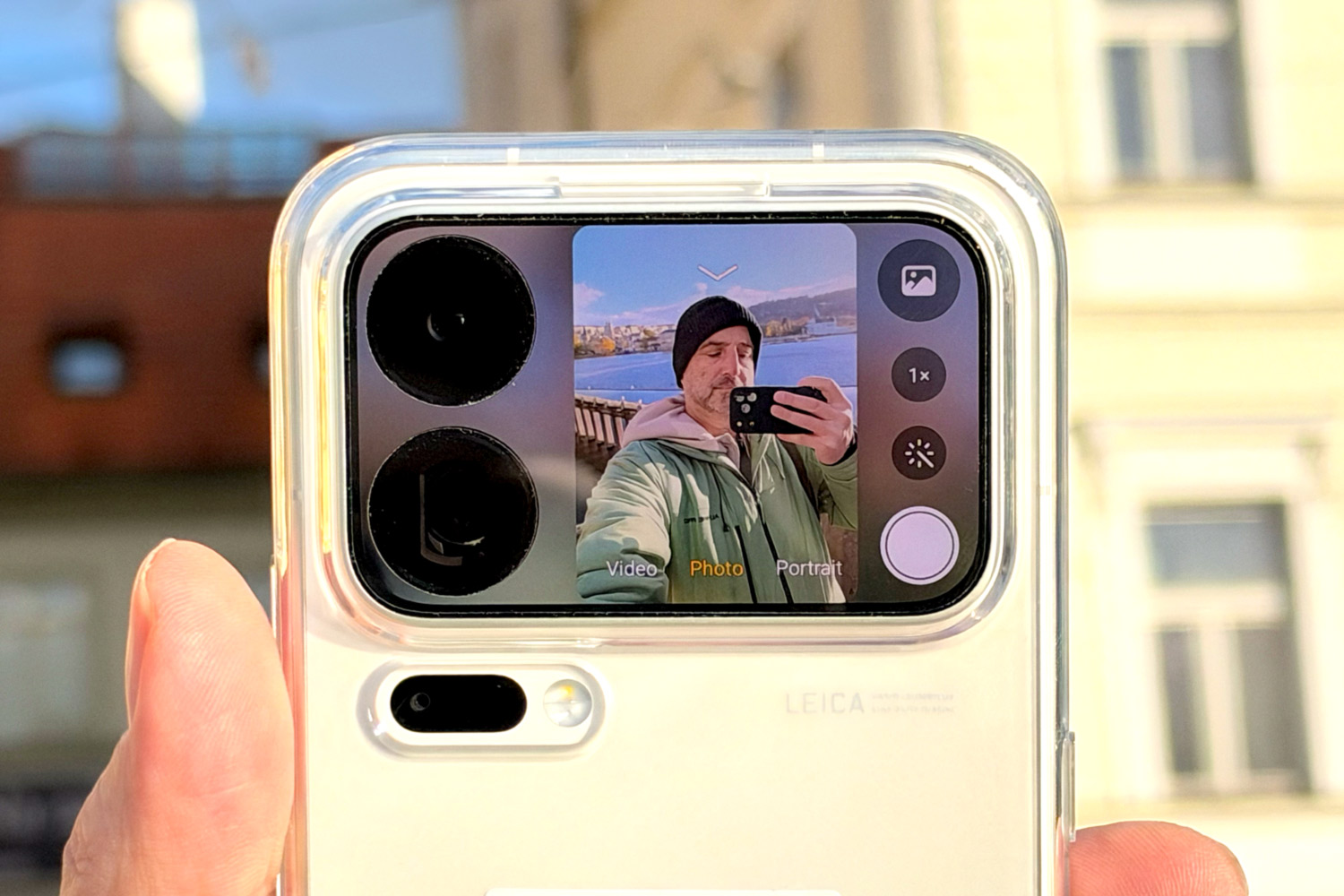
As always—the famous Leica brand is impossible to overlook. Just as in previous years, its developers are involved in the design of both the optical systems and the software. For a long time, I thought this was a more or less formal collaboration, but from the presentations by company representatives at various events I’ve attended in person, it’s clear that Leica is playing a fundamental role.
A third default style has been added: in addition to the popular default options (Leica Vibrant, Leica Authentic), there’s now a third one, Original. This is actually a crucial detail, because it’s closest to what photographers often want—“real photos” without embellishments or filters (see below).
As always: there are a number of valuable additional features. Naturally, this time around there are also many different features available that can be useful to users when shooting in various situations; they can be configured in Pro mode or directly in the camera app (such as shooting at the full 200 MP resolution).

Xiaomi 18 Pro Max—What I Liked
The photos are very good—yes, saying that this model takes really good photos sounds a bit boring. But that’s actually the most essential takeaway from the entire review—I tested the phone extensively for several days, from the streets and parks of Prague to Paris, in various conditions and situations. Yes, we mostly had perfect fall light, which certainly showed in the results, but that doesn’t change the verdict: the results are simply good. Although this model is technically below the Ultra series, overall it’s a solid choice even for relatively ambitious photography—and it won’t disappoint even the most demanding users.
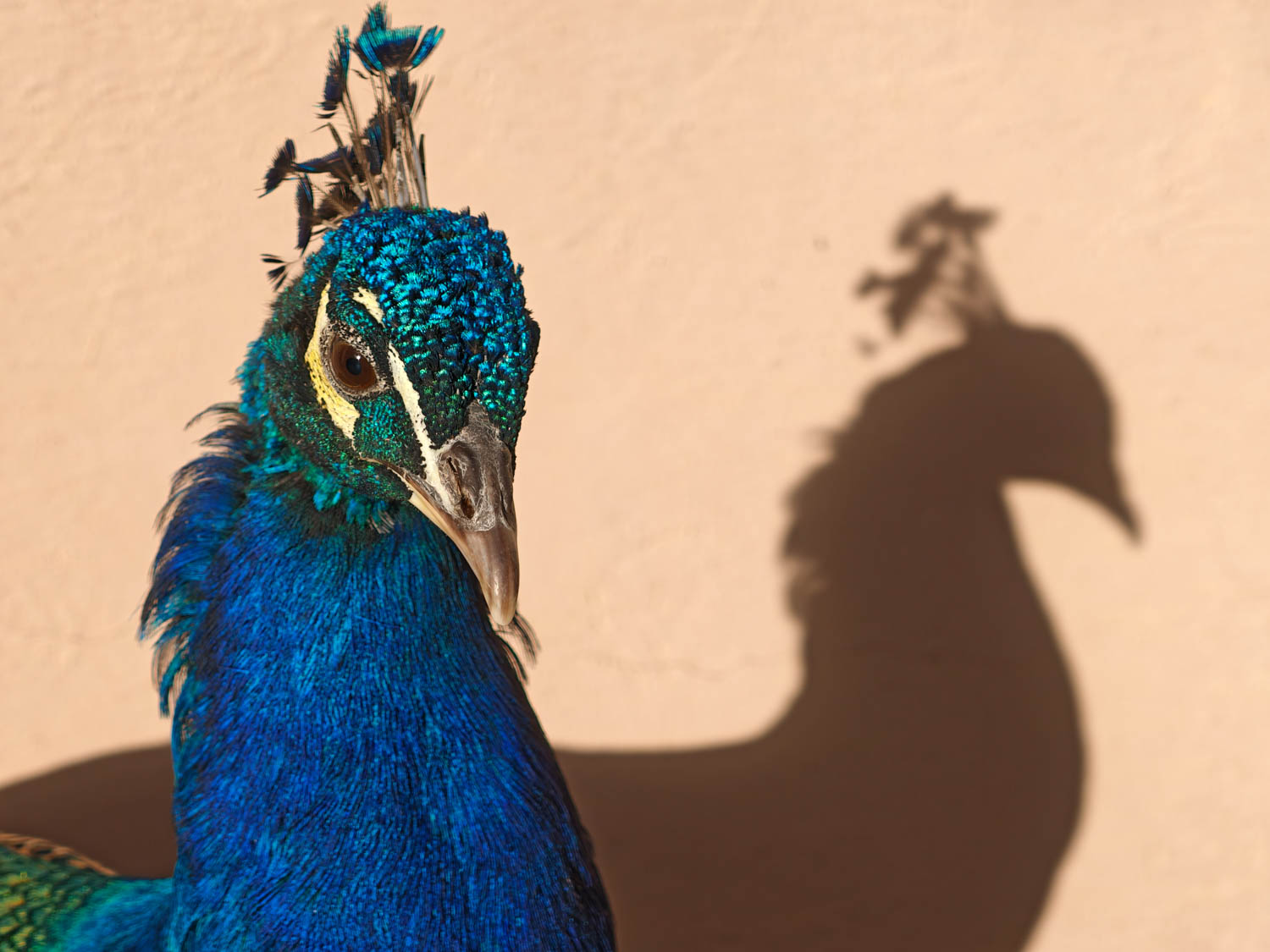
Key detail #1: The phone can capture details from as close as 12 cm. This may sound like a minor detail, but it isn’t, as I’ve already hinted at above. To be honest, this pleased me. Let me explain why: from a photography standpoint, I consider the Xiaomi 15 Ultra to be Xiaomi’s absolute pinnacle, because in addition to its one-inch sensor, it offered two telephoto lenses. Of those, the “shorter” one was truly addictive—it could capture fine details, which any experienced photographer had to appreciate—not least because it allowed you to work with natural depth of field without having to use portrait mode. Its successor, the Xiaomi 17 Ultra (the 16th generation was skipped), does have a unique mechanical zoom, but it lost that second telephoto lens—and the minimum focusing distance for detailed shots increased to 30 cm. That’s a pretty significant change, and I was a bit disappointed by it. But now it’s back. I’ll say it again: it may sound like a minor detail, but it dramatically helps expand the range of interesting photos you can take.


Key detail #2: The “Original” style has been added, complementing the classic “Leica Vibrant” and “Leica Authentic” styles. In each of my previous reviews of Xiaomi phones, I’ve written something along the lines of: those two default styles are good, but another one would be nice—just a more ordinary one, without any significant enhancements. After all, Leica Vibrant did sometimes produce colors that were too vivid. Now, Xiaomi and Leica have listened to me and other photographers: the new “Original” style does exactly that—it aims to capture a “natural look,” which is great. That said, it’s worth noting that “Vibrant” remains the default mode, and this review was shot using it—vibrant colors aren’t a problem in the fall, and I also wanted to maintain consistency with my other reviews so that comparisons would be possible.
A very good combination of sensors and lenses—I’ve already mentioned this, but it’s worth repeating here. The lenses are well-matched, and their specs are solid, which is evident in the results. This phone is simply a versatile device that can be used in a wide range of situations—something that’s by no means a given, even among top-tier phone models.

The zoom can capture details even at great distances—120× digital zoom isn’t exactly groundbreaking; many other high-end phones can see at similar distances. Plus, such extreme digital zoom is really more of a novelty. The real difference lies elsewhere—at lower digital zoom levels, where performance improves slightly with each new generation of phones. In other words: if you stick to reasonable digital zoom ranges—say, up to 20–30× magnification—the results won’t be bad (though what’s acceptable to you is partly a matter of personal taste).

A 200 MP resolution comes in handy—it used to be more of a technological curiosity, but now it’s a tool that’s useful in certain situations. Yes, it’s very easy to enable full-resolution shooting—that is, 200 MP on both the main lens and the telephoto lens. Why do this? For example, when you need to capture as much detail as possible in a scene—such as when photographing landscapes or cityscapes. It comes in handy once in a while, but it’s definitely a valuable feature.

Xiaomi 18 Pro Max—What to Watch Out For
There’s no so-called “one-inch sensor” here—a huge selling point of the Ultra series has been and remains the so-called “one-inch sensor,” which offers a significantly larger physical size than is typical for smartphones. This generally translates to better photos. If you ask me whether you can really tell the difference, the answer is yes, you can. Photos from larger sensors simply have “that extra something.” And that’s another reason why I’m still very drawn to the Ultra series—it’s just a slightly different world. But does that change my overall impression of this “smaller” sensor’s performance? No, it doesn’t; it’s still very good. But if someone says it doesn’t matter, well, it does.

The phone is sometimes a bit sluggish when processing photos—a few times, after taking a series of photos, there was a brief processing delay. Yes, this is fairly common with iPhones, for example, when the portrait effect is being calculated, but with the Xiaomi, it was occasionally noticeable when “processing” photos taken with high digital zoom. Here, it happened more often—the processing of, say, portrait mode wasn’t instant either. In practice, it doesn’t matter, but it’s worth mentioning. That said, minor issues like this are almost always fixed by software updates within a few weeks.
The battery drains relatively quickly—if you take a lot of photos, use the secondary display often, and then browse through the photos, the battery will drain surprisingly fast. For example, an intensive photo walk in Divoká Šárka (a nature reserve in Prague) drained more than a third of the battery after about an hour and a half. Yes, we iPhone owners are used to this, but with high-end Android phones, it’s a bit unexpected. It’s definitely worth thinking about the back display mode and making sure to turn it off, otherwise it can increase battery consumption.
Xiaomi 18 Pro Max—A Two-Sentence Summary
Thanks to its hardware and software, the Xiaomi 18 Pro Max delivers very good performance that won’t disappoint even very demanding photographers seeking high-quality image output and a wide range of shooting possibilities. Unlike the Ultra series, it doesn’t feature a one-inch sensor, though this isn’t critical for everyday use.
Xiaomi 18 Pro Max—More Photos from the Test


Review Summary
Xiaomi 18 Pro Max
Thanks to its hardware and software, the Xiaomi 18 Pro Max delivers very good performance that won’t disappoint even very demanding photographers seeking high-quality image output and a wide range of shooting possibilities. Unlike the Ultra series, it doesn’t feature a one-inch sensor, though this isn’t critical for everyday use.
8
Pros
- Image quality
- Great specs for capturing details
- Well-tuned lens combination
Cons
- No 1-inch sensor
- You need to keep an eye on battery consumption
- The phone occasionally hesitates during processing
Related posts
-

Xiaomi Redmi Note 17 Pro Max 5G Camera Review + Sample Photos
-
Xiaomi 17T Camera Review: 200 Sample Photos & HDR Video
-
Xiaomi 17T Pro Camera Review: 200 Sample Photos & HDR Video
-
Xiaomi 17 camera review: 200 test photos + video
-
Leica Leitzphone: Hands-On Review, Unboxing & Camera Test
-
Xiaomi 17 Ultra camera review: 200 test photos + video






Leave a Reply