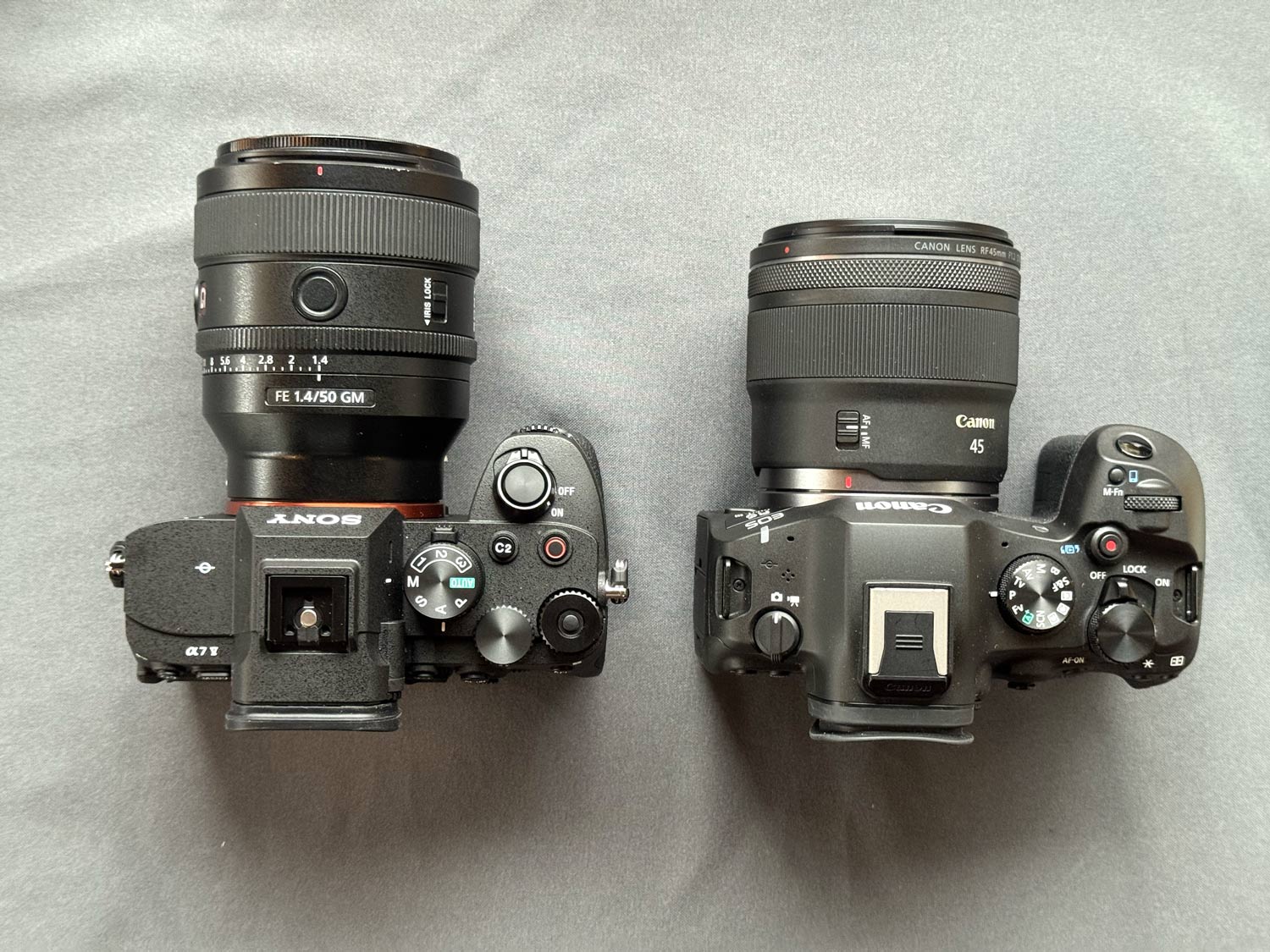
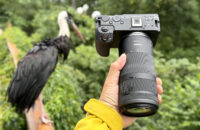
2025 is shaping up to be an exciting year for photographers, with two of the most anticipated cameras hitting the market: the Canon EOS R6 Mark III and the Sony Alpha 7 V. I had the chance to attend the Sony A7 V launch event in Prague, and coincidentally, I was testing a new lens on the Canon R6 Mark III at the same time. Naturally, this begged for a comparison.
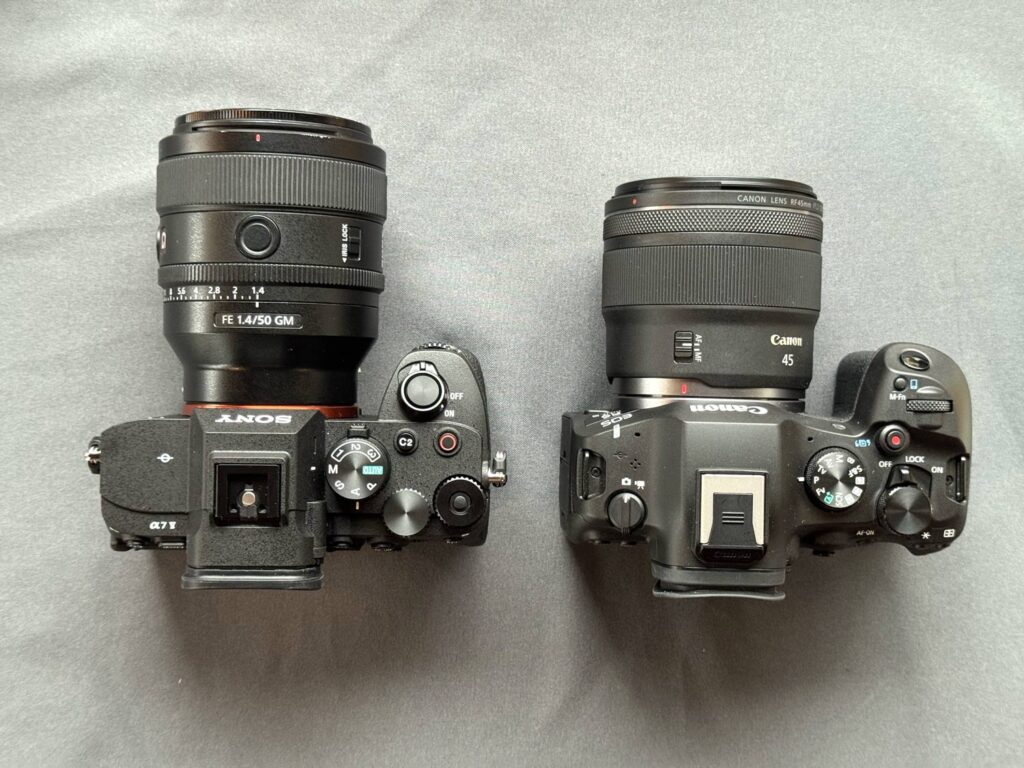
Why This Comparison Matters
Both cameras occupy a key place in today’s photography landscape. They are aimed at serious enthusiasts as well as professionals who don’t necessarily need the absolute maximum performance of the flagship models. One of the biggest advantages? The price. Both the Canon and Sony offer top-tier technology at very accessible price points, delivering exceptional value for money.

The Sony A7 V continues the legacy of one of the most legendary full-frame lines of the past decade, making advanced Sony technology accessible to a wide audience of photographers. Meanwhile, the Canon R6 Mark III follows in the footsteps of its best-selling predecessors, consistently ranking among the most popular cameras in its class.
At this stage, I won’t claim to make a full verdict between the two cameras, since I haven’t tested the Sony Alpha 7 V in depth yet. However, I did capture a few shots during its Prague unveiling, which give a sense of its capabilities – see the article Sony Alpha 7 V – Sample Photos from a Quick Hands-On Test. For those interested, a full review of the Canon R6 Mark III, including dozens of photos and video reviews, is available here.
Key Highlights of the Comparison
Outstanding Image Quality
Ultimately, image quality is what matters most – and it’s often hard to put into words. Photographers primarily want to know: how will my images look? The Canon R6 Mark III delivers truly exceptional quality. From my brief hands-on with the Sony A7 V, it’s clear that it aims for the same level of excellence. A detailed, side-by-side test will tell the full story.
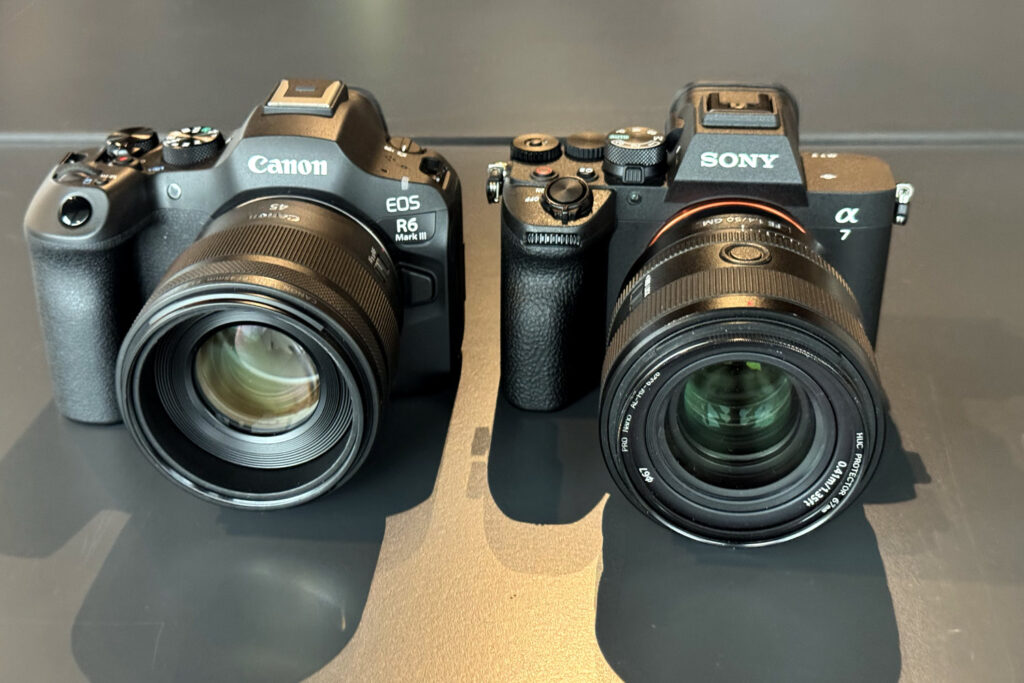
Frame Rate: Canon 40 fps vs Sony 30 fps
One of the most noticeable differences is the continuous shooting speed. The Canon can reach up to 40 frames per second, while the Sony tops out at 30 fps. For most users, this won’t be a game-changer, but for action or sports photography, those extra frames can make a real difference.
Pre-Continuous Shooting / Pre-Capture
Both cameras feature this incredibly useful functionality. On the Canon, it’s called Pre-Continuous Shooting; on the Sony, Pre-Capture. The concept is simple: the camera starts capturing images the moment you half-press the shutter button. This is perfect for moments when timing is everything – like catching a bird in mid-flight. I tested it on the Canon and was impressed, and there’s no reason to doubt the Sony performs just as well.
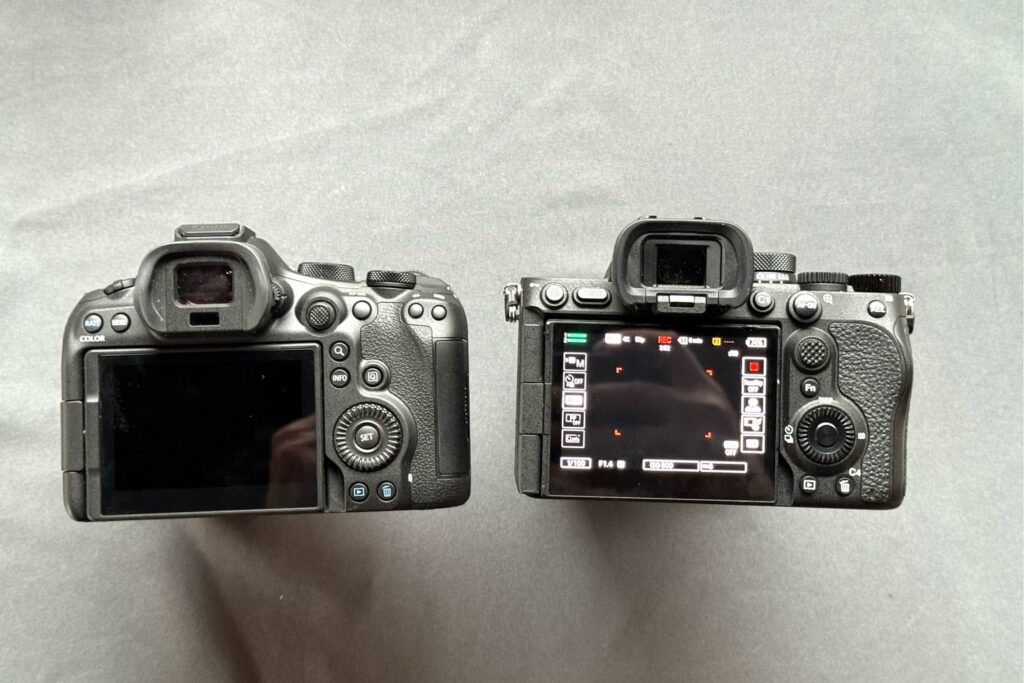
Video: Sony Lacks Open Gate
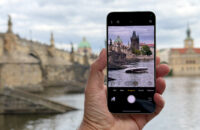
Video capabilities are strong on both models, but one difference stands out. Unlike the Canon, the Sony A7 V does not support Open Gate, which allows the camera to record video using the full sensor area. This means the final 16:9 crop must be applied in post-production. While this isn’t critical for most users, it can be a useful option for creative workflows. (I wrote about the same feature earlier this year when it debuted on the iPhone 17 Pro.)
The Bottom Line
Both cameras are top-tier, offering impressive technology and excellent value for money. I won’t make a final judgment about which is better for undecided photographers until I’ve had the chance to test the Sony more thoroughly. My guess, however, is that there won’t be a definitive winner: both cameras are exceptional, and the choice will likely come down to personal preference and subjective liking.
| Canon EOS R6 Mark III vs Sony Alpha 7 V – Specs Comparison | ||
|---|---|---|
| Feature | Canon EOS R6 Mark III | Sony Alpha 7 V |
| Sensor | 32.5 MP Full-Frame CMOS (BSI) | 33.0 MP Full-Frame “Partially Stacked” Exmor RS |
| Processor | DIGIC X | BIONZ XR2 + Dedicated AI Unit |
| IBIS (Stabilization) | Up to 8.5 stops (Center) | Up to 7.5 stops (Center) |
| Continuous Shooting | 40 fps (Electronic) 12 fps (Mechanical) |
30 fps (Electronic) Blackout-free with AF/AE |
| Autofocus | Dual Pixel CMOS AF II People, Animals, Vehicles |
AI Real-time Recognition (759 pts) Humans, Animals, Birds, Insects, Cars, Trains, Airplanes |
| Video Specs | 7K RAW (Open Gate) 4K 120p (Uncropped) |
4K 60p (Oversampled) 4K 120p (Super 35 Crop) Multiple bitrates: 4:2:0/10bit up to 200 Mbps, 4:2:2/10bit up to 280 Mbps |
| Video Features | Canon Log 2/3, Internal RAW | S-Log3, AI Auto Framing |
| LCD Monitor | 3.0″ Vari-angle Touch | 3.2″ 4-Axis Multi-angle Touch |
| Storage | 1× CFexpress Type B 1× SD UHS-II |
1× CFexpress Type A / 1× SD UHS-II |
| Weight | ~699 g | ~695 g |
| Approx. Price | $2,799 / €2,799 | $2,799 / €2,999 |


















Leave a Reply