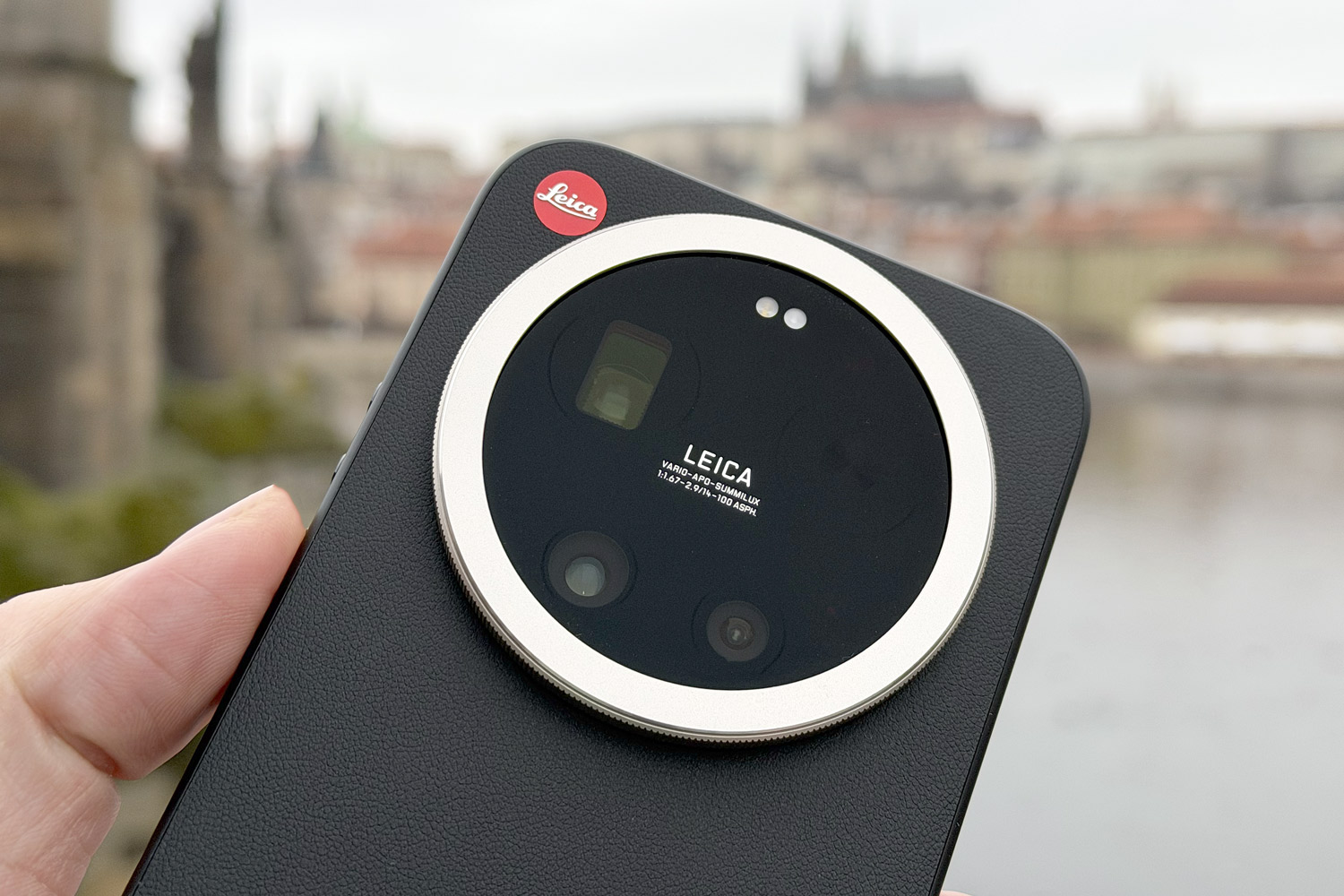
Leica and Xiaomi have introduced a new product called the Leica Leitzphone, a special enhanced version of the Xiaomi 17 Ultra. I quickly tested this remarkable newcomer, and here are my first impressions. It is, of course, a top-tier camera phone, but the crucial signal is that Leica is taking its mobile phone division very seriously.
Leica Leitzphone powered by Xiaomi – the start of a new chapter?
I usually start reviews with a summary of where a specific mobile belongs and who it is actually for. In this case, it’s not hard to summarize quite precisely. That is, the Leica Leitzphone was introduced in Barcelona together with the Xiaomi 17 Ultra, on which it is based. (You can find my detailed review of the Xiaomi 17 Ultra here).
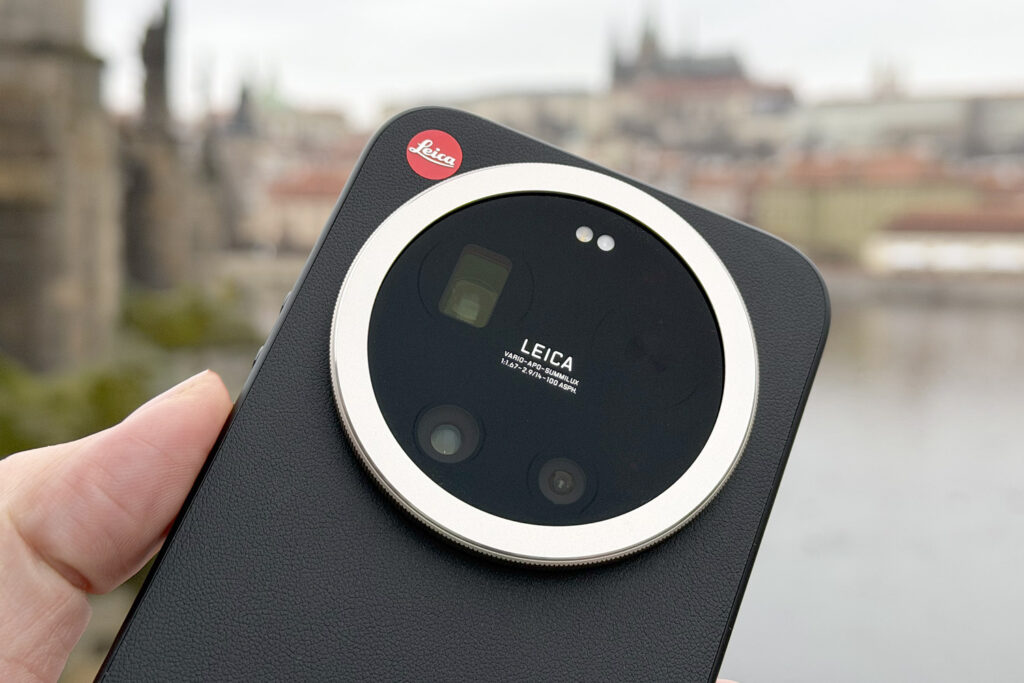
Yes, it’s possible to wave a hand at everything – from the point of view of photography, the differences compared to the basic version are rather cosmetic (see below), in Asia this model was launched under the duller name “Xiaomi 17 Ultra by Leica” and in professional circles, this mobile was also talked about as the “Leica edition” of the Xiaomi 17 Ultra. But still, I think it is a relatively significant milestone.
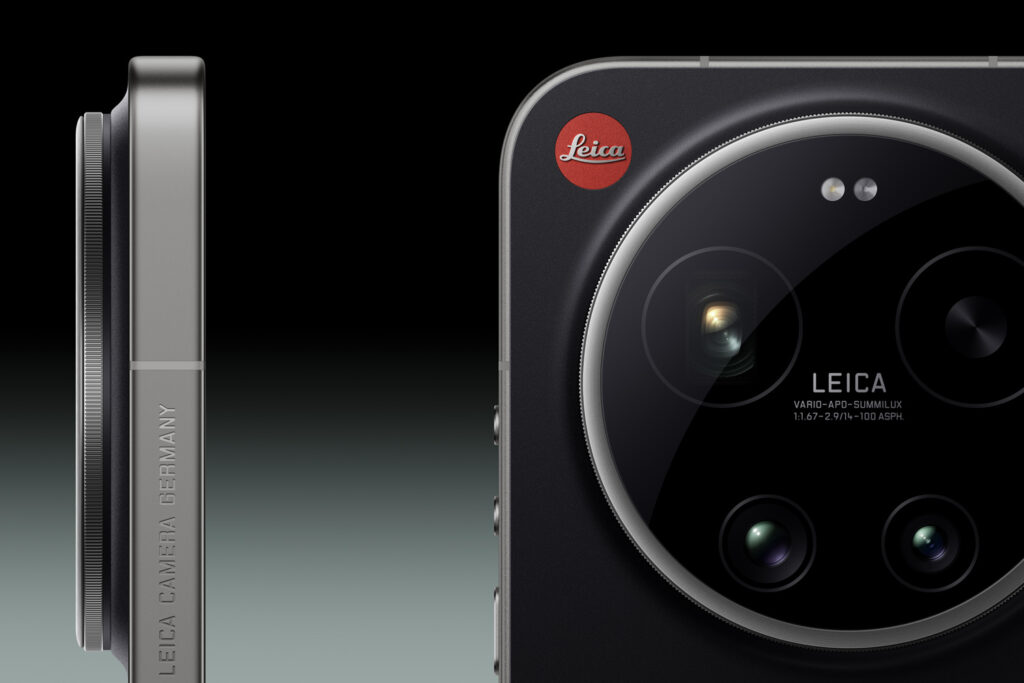
The version for the European market, which I had the opportunity to try before the official presentation, strictly uses the name Leitzphone. Both on the box and inside the mobile.
It could, of course, be because the strength of the Leica brand is a bit greater in Europe – but my personal tip is that this really is supposed to be the beginning of something new.
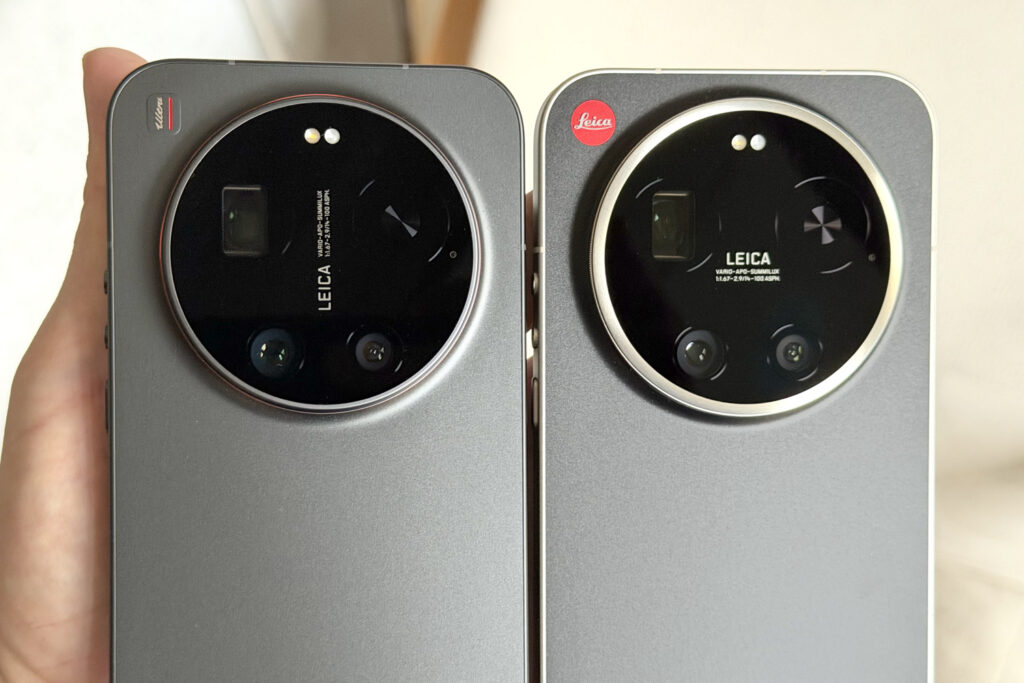
And for good measure, an important note: a mobile bearing the Leica name is not new. Even the term Leitz phone (with a space between the words) is not new. Leica last launched the Leitz Phone 3 on the market two years ago, built on high-quality but niche Sharp mobiles (also with a one-inch sensor). So it was truly a connoisseur’s item, but without much significance or impact.
That is now set to change – the Leitzphone will also be more exclusive (and naturally more expensive), but it undoubtedly targets a wider audience.
Video: Leica Leitzphone – a quick test
Leica Leitzphone – camera specifications
I deal with photographic performance in great detail in the review of the Xiaomi 17 Ultra (link here), but even here it’s not bad to repeat the key parameters.
| Leica Leitz Phone – Camera: Lenses and Sensors | |
|---|---|
| Main Camera | 23mm, 50 Mpx f/1.67, OIS one-inch sensor Light Fusion 1050L LOFIC HDR technology |
| Telephoto Lens | 75-100mm, 200 Mpx f/2.39-2.96, OIS Samsung HPE sensor 30cm macro photography support |
| Ultra-wide Lens | 14mm, 50 Mpx f/2.2, 115° FOV JN5 sensor |
| Front Camera | 21mm, 50 Mpx f/2.2, 90° FOV |
The most visible difference? The Camera ring
For the sake of certainty, let’s repeat: yes, the basis is the Xiaomi 17 Ultra, therefore undoubtedly one of the best camera phones on the current market: it traditionally offers a one-inch sensor, but also a total rarity: a zoom with variable focal length, i.e., an optical zoom in the range of 75-100mm (see below for more detail).
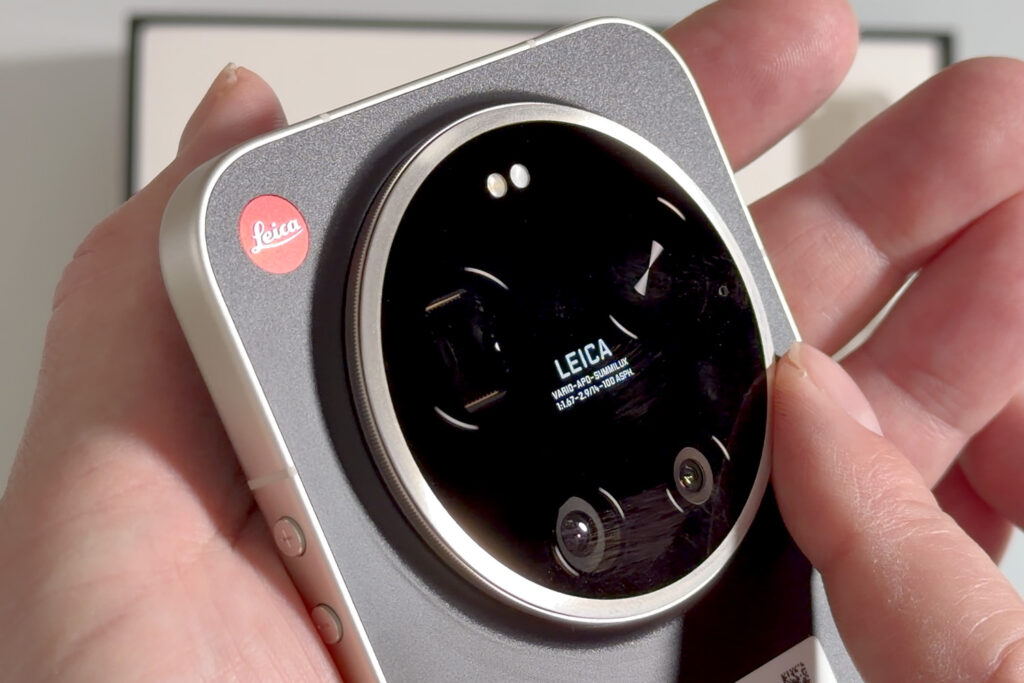
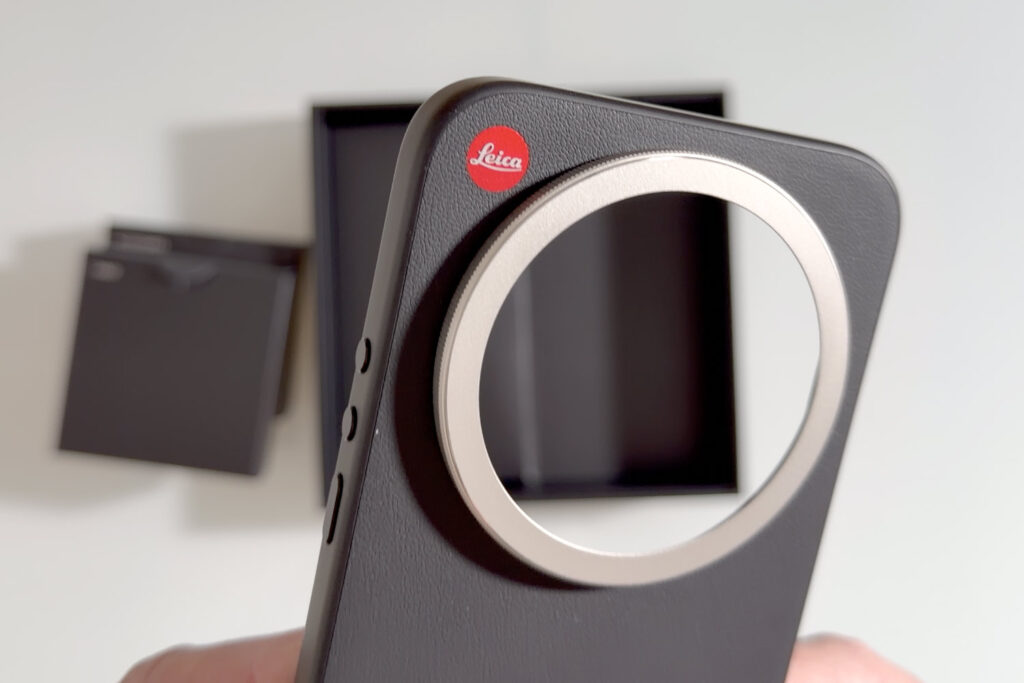
But anyone who wants a quick summary of the main difference will see it at first glance. It is the control ring around the cameras, in other words, a control wheel with the official name Camera Ring.
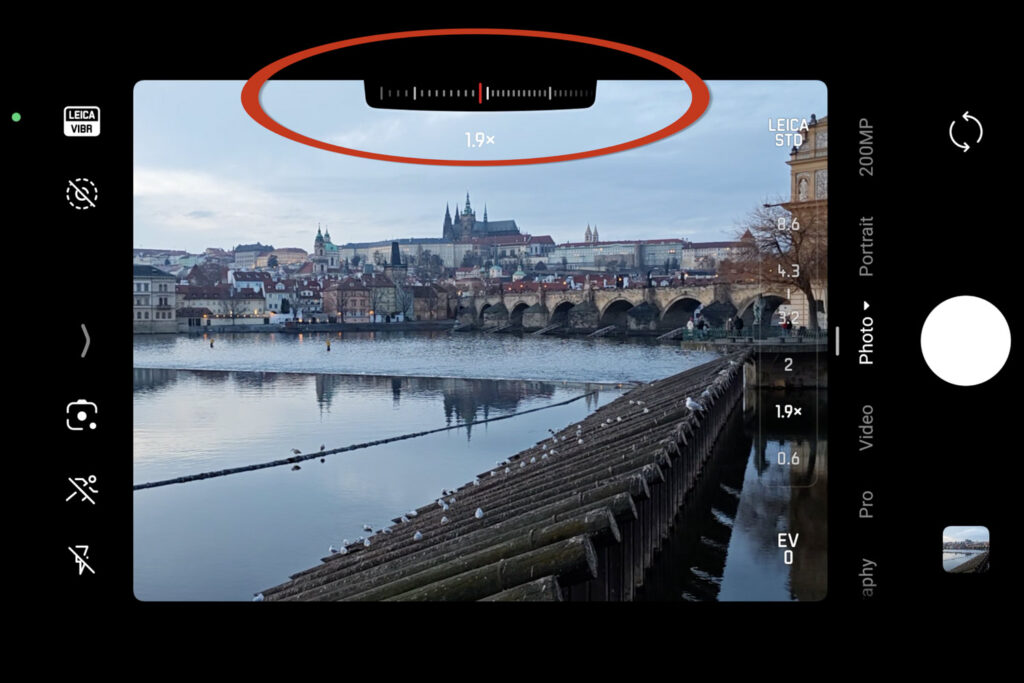
Its key role is to facilitate the control of a number of elements and give owners the feeling that they have “something more” in their hands than just a mobile, which is symbolism that plays a relatively fundamental role in this case. The ring is meant to evoke the magic of manual control of a classic Leica.
In normal operation, the most significant function of the ring is the ability to zoom smoothly – and I must say that this really is a very addictive function – you get used to the fact that control can be truly comfortable very quickly. But of course, other elements can also be controlled – in the case of video, exposure correction is set by default, and in the menu, see the illustration, truly many functions and their combinations can be set to this ring.
So yes: on one hand, it’s easy to live without the ring, but it is clever, there is no doubt about that.
Other key elements: elegant design and special Leica functions
The ring is obviously not the only difference, in a way a more visible element is the overall impression of this mobile: it is simply a successful “design piece” that is tuned to the world of proper Leica cameras. And it just really looks good.
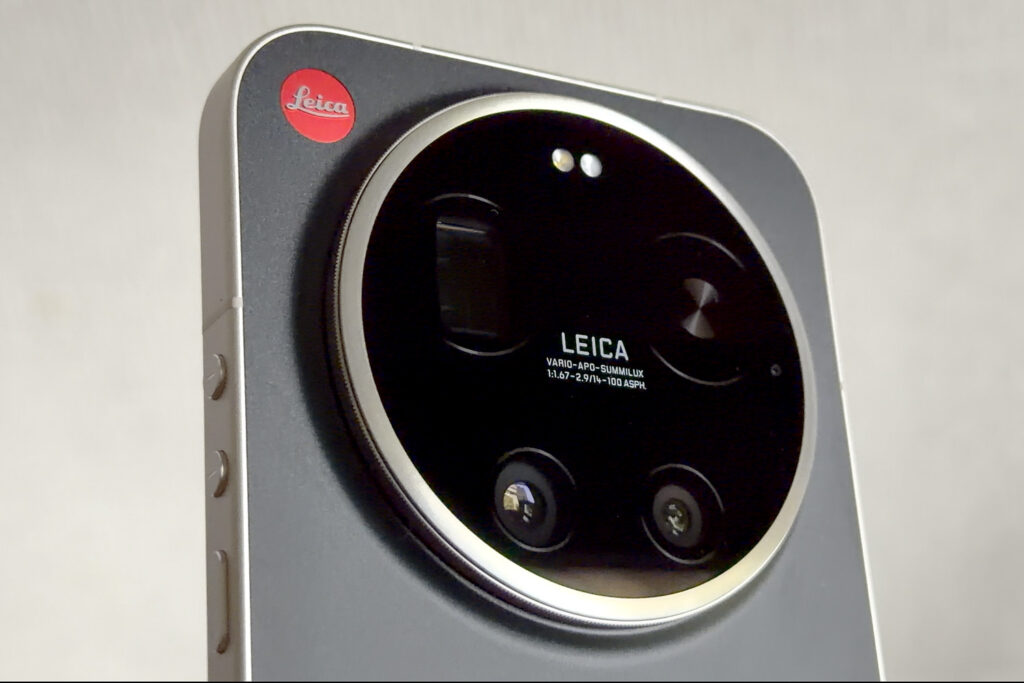
This is helped by the overall design with a metal frame, color toning, and of course the famous red logo. In short, anyone who wants to have something exceptional in their hands, this mobile will fulfill that.
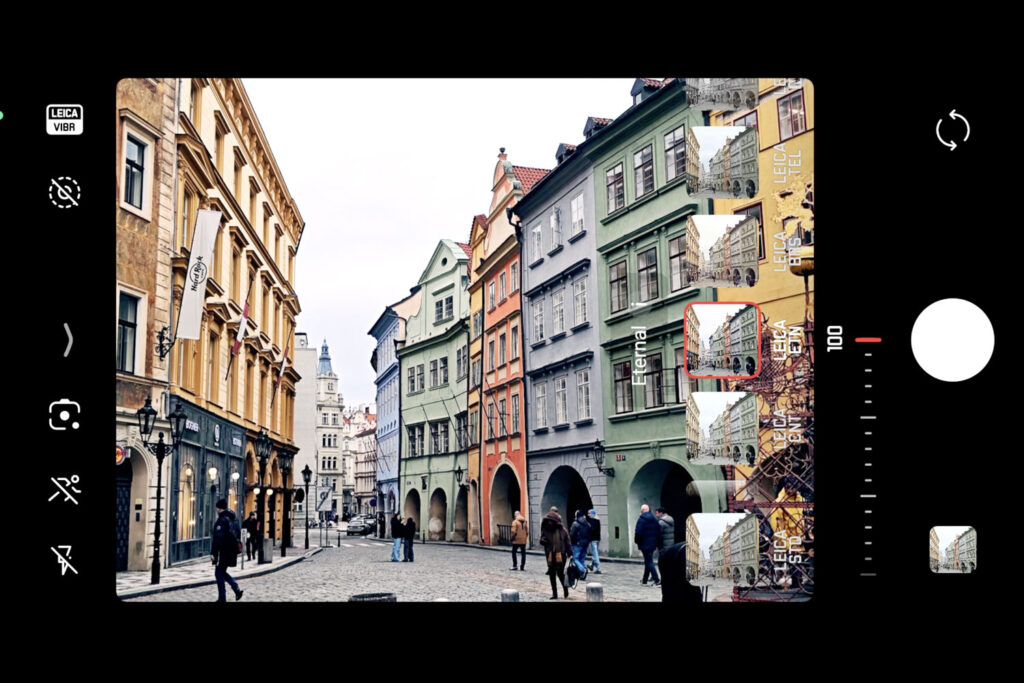
The design of the “interior” is also slightly different, that is, the graphic processing of the digital space in which we move, and again everything looks very pleasant and user-friendly. Plus, Leica fans will find a number of things here that they are used to from their cameras. From all possible filters faithfully copying their originals, to a function that is not in the Xiaomi 17 Ultra. There is something here they call Leica Essential mode, which according to official specifications attempts to create the style of famous cameras thanks to Leica M9 and Leica M3 styles.
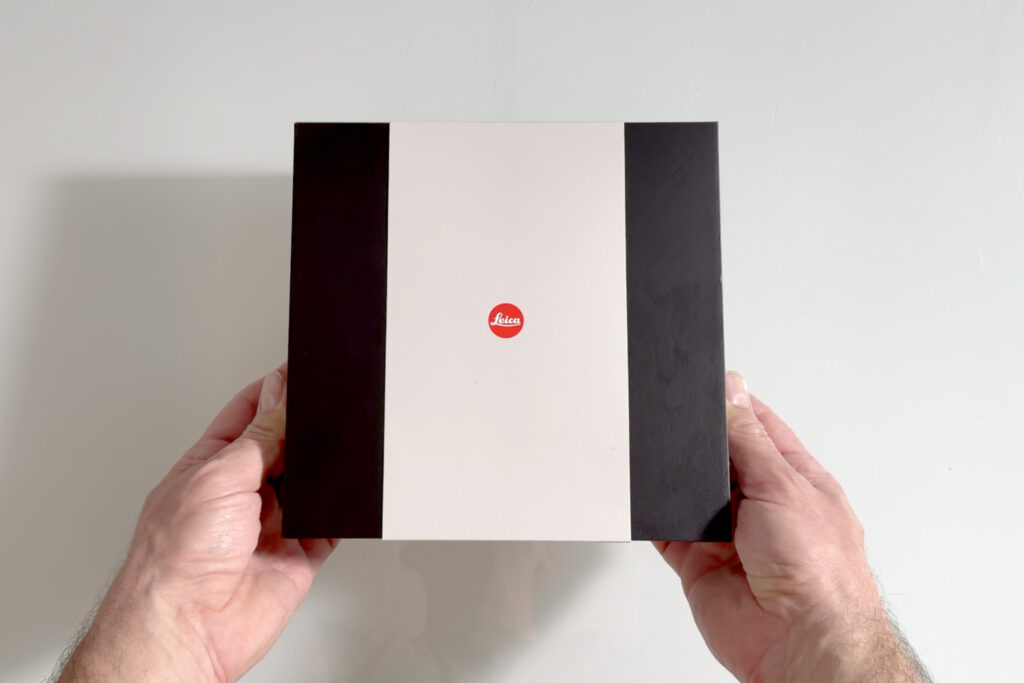
In short: besides the effect of exclusivity, references to classic Leica cameras work here as well, and marketing experts will target their campaigns this way: on one hand to those who will be happy to have something with a large Leica logo. On the other hand to those who already belong to the camp of Leica lovers and want to have something at least partially connected.
Leica Leitzphone and photography – main points
If we don’t count the control ring and other elements mentioned above, I recommend exploring my detailed review of the Xiaomi 17 Ultra to investigate photographic performance, where you will find about 200 test photos and a detailed evaluation of all essential functions. However, it’s useful to summarize the essentials here too.
The one-inch main sensor offers exceptional performance – although a lot of attention will (justifiably, see below) be focused on the optical zoom, the truly fundamental building block remains the main sensor – just as with previous generations. And let’s repeat that it has an exceptional physical size, which is always a key prerequisite for photos simply being better than from more ordinary sensors. And yes, it is also a new sensor, a new generation, which according to official specifications offers better HDR work, i.e., higher quality processing of complex scenes full of lights and shadows. And yes, it really is a key sensor and lens.
The 75-100mm optical zoom is truly remarkable – we’ve seen the one-inch sensor in previous generations, but this is a total novelty and rarity. And not only within the mobiles of this brand. The Leitzphone, like the Xiaomi 17 Ultra, offers a telephoto lens with variable focal length, i.e., an optical zoom in the range of 75-100mm. Which, let’s admit, is not a large range, but it is undoubtedly interesting. And it opens up space for creativity for photographers when taking various photos of products, details, and of course portraits. In short, it is very fun to play with it all.
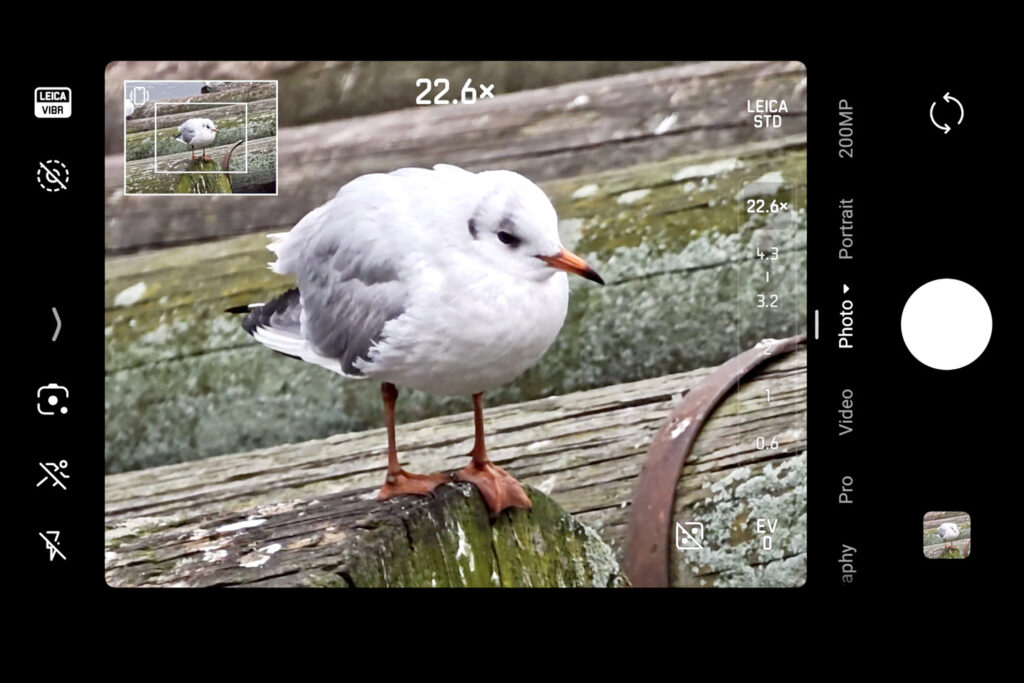

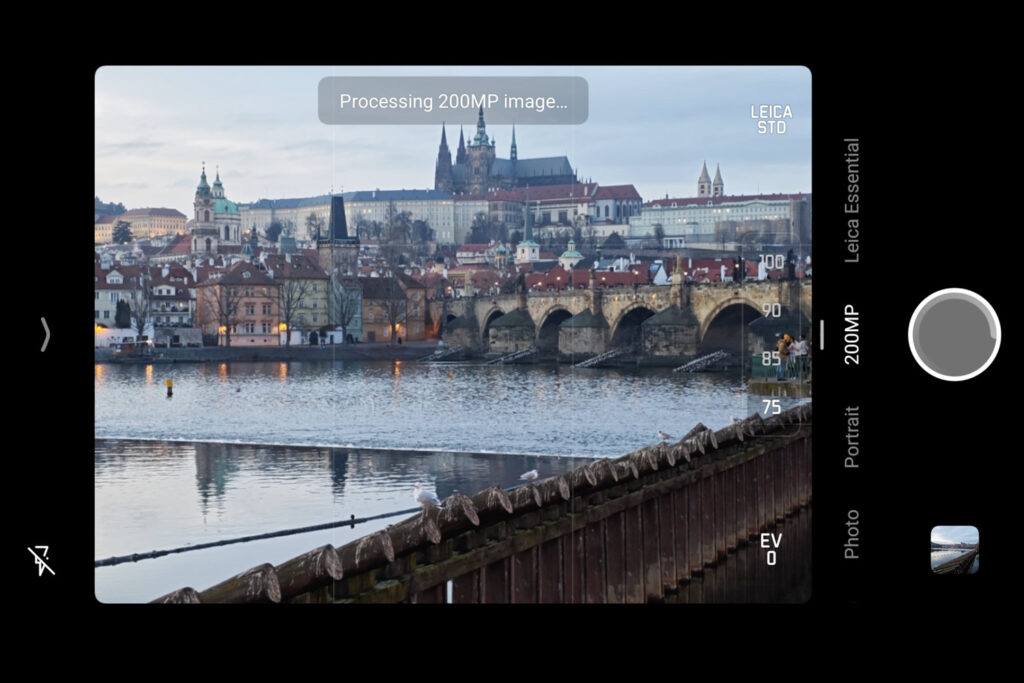
The 200 Mpx in the telephoto lens really counts. The second essential feature of the telephoto lens is the simple fact that it has a huge number of pixels. Although 200 Mpx in some other mobiles is not necessarily a recipe for better photos, it is so here – that large resolution truly comes in handy and helps. By the way, I experimented with shooting in full resolution with gusto, which is one of the very clever features of this camera phone. Here too, it applies that it makes sense with few models because the photos tend to be lackluster, but here you get, for example, a truly uniquely detailed photo of a city or some product (see samples in the video).


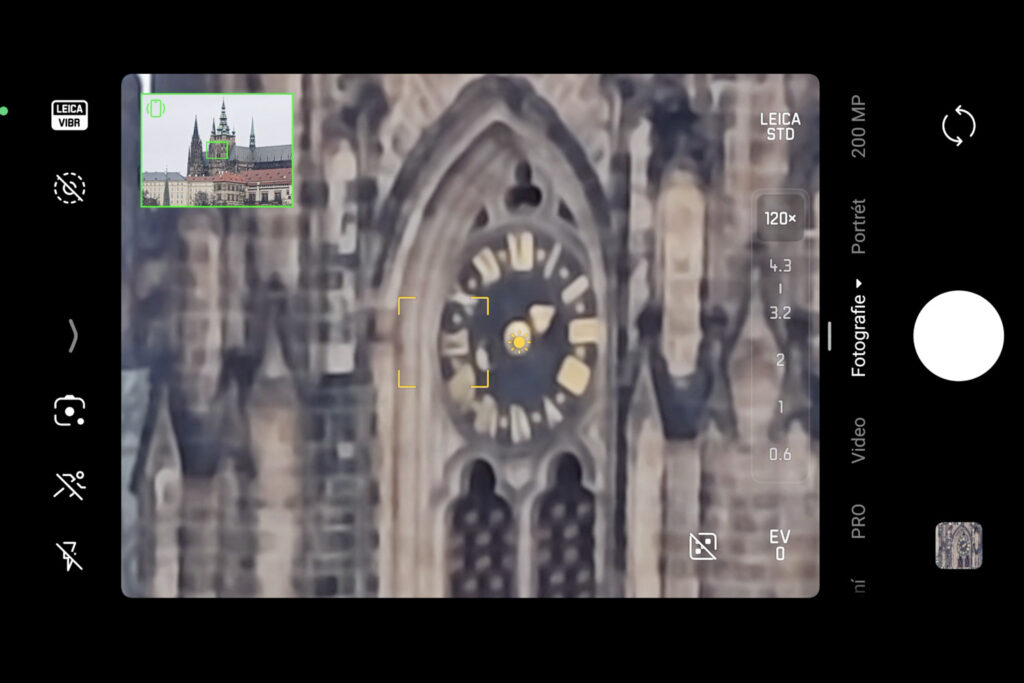
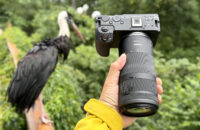
Zooming works great in the digital part as well. The optical zoom, see above, is seamlessly followed by digital zoom, where we “crop” the photo digitally and the quality generally drops quickly. This of course applies here too, but at the same time it is indisputable that thanks to the large resolution of the sensor, we can still obtain very high-quality output in reasonable values of digital zoom (up to, let’s say, 20x zoom). Plus yes, similarly to the iPhone 17 Pro, it’s possible to debate what digital zoom actually is with pixel-large sensors: in one view it starts beyond the 100mm limit, but at the same time it applies that when we use a crop from a 200 Mpx sensor, we maintain quality even beyond this limit. Either way, a look at the bird photography in this article is enough, and it is clear that it applies here too: it is an exceptionally high-quality mobile.
Very good work of the portrait mode – the quality of the portrait mode is something that really counts and is easily overlooked. And for a mobile like the Leitzphone, it is completely fundamental. And here too, it applies that portraits really belong among the strengths of this mobile. Although it is obviously a “fake” software blur, everything turns out very well even in very complex situations. And whoever wants to experiment has simulations of famous Leica lenses available.
The overall tuning and quality of Leica also counts – the concept of “tuning” can be a bit hard to grasp, but here it is really essential. That is: everything really fits together, the mobile has no significantly weak points and when used it simply works as we would expect from a mobile of this performance and price class. Or put from the other side: it is simply felt here that Leica left nothing to chance and really holds very high standards.

The only complaint, the only sigh: the great “second telephoto lens” is missing here. So far I’m praising, but still, something has really made me sad about the Leitzphone and Xiaomi 17 Ultra from the first minute. A lens that I literally fell in love with in previous generations of this top camera phone is missing here. In the previous generation it had 70mm, speed 1.8, but mainly: it was possible to shoot with it from a distance of about 10 cm. Which opened the door to an exceptionally fundamental category of nice details with a naturally, not digitally, blurred background. Yes, its role has been largely taken over by the new telephoto lens, but that can only do details from 30 cm. Yes, only connoisseurs will truly appreciate this, but I’ll be honest: it makes me a little sad.
And one statement: this is not a camera phone for everyone. There is no doubt, the Leitzphone is designed as an exclusive mobile for an exceptional clientele. Those who will appreciate the great design, the famous brand, and a number of top functions. But similarly to the Xiaomi 17 Ultra and indeed all previous generations of this mobile, it applies here that only more experienced photographers will fully appreciate these flagships. Those who can maximally utilize the power of the large main sensor, the magic of optical zooming, and other functions. Which of course is nothing bad – but it simply applies: it is an exceptional mobile for exceptional use.
Leica Leitzphone – summary in two sentences
The Leica Leitzphone is a remarkable smartphone that, like the Xiaomi 17 Ultra, undoubtedly belongs to the absolute top of the world’s camera phones – it offers exceptional performance, but also overall processing. It makes sense primarily for those who want top photographic performance “wrapped” in an attractive and design-wise excellently executed device with the logo of one of the most famous camera brands in the world.

Related posts
-

Xiaomi Redmi Note 17 Pro Max 5G Camera Review + Sample Photos
-
Xiaomi 17T Camera Review: 200 Sample Photos & HDR Video
-
Xiaomi 17T Pro Camera Review: 200 Sample Photos & HDR Video
-
Xiaomi 17 camera review: 200 test photos + video
-
Xiaomi 17 Ultra camera review: 200 test photos + video
-

Xiaomi Redmi Note 15 Pro+ 5G Camera Review: 50 Sample Photos + Video




Leave a Reply