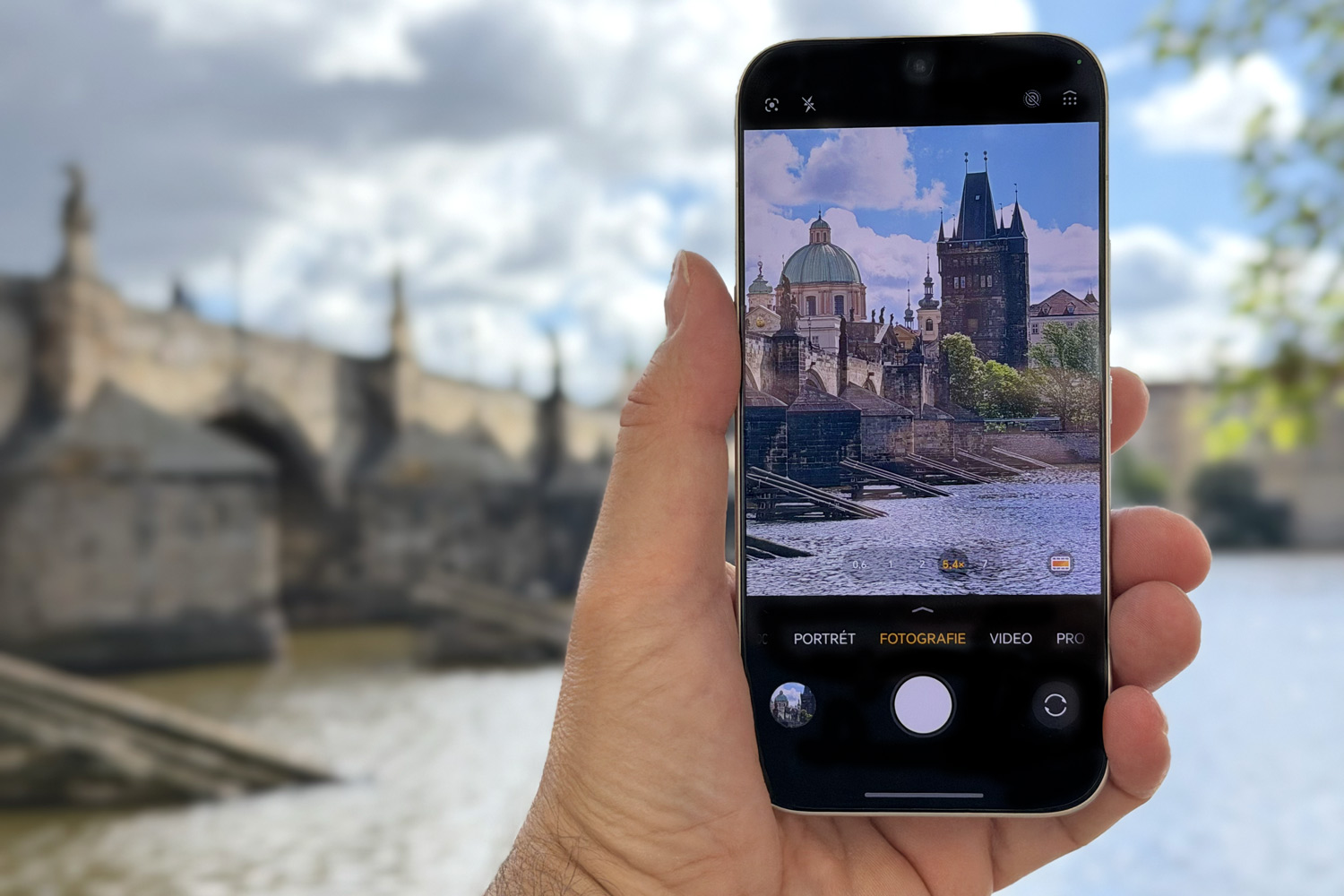
What can you expect from the Honor 600 Pro camera? How do its two main selling points – the massive 200 MP main sensor and the 3.5× optical zoom telephoto lens – affect overall image quality? And who is this upper mid-range phone actually for? In this detailed review and video, we’ll break it all down.
Where It Fits and Who the Honor 600 Pro Is For
Let’s first pin this model on the smartphone roadmap. Definitions might vary, but the safest bracket is definitely the upper mid-range. It packs serious hardware power alongside a versatile lens-and-sensor combo, spanning from a 200 MP main shooter to a dedicated 3.5x optical zoom. However, the flagship crown remains with the Honor Magic8 Pro (review here), which reaches into the premium tier in terms of specs, performance (and price).
I’ve long had a soft spot for Honor’s top-tier devices. In my personal ranking of the most underrated smartphones of recent years, last year’s Honor Magic7 Pro takes the top spot. Even now (spring 2026), it can be picked up for a very good price. Performance-wise, it completely holds its own against legendary lineups currently spearheaded by the likes of the Samsung S26 Pro (review).
A few months ago, I tested the Honor 400 (review), the budget-friendlier option from previous generations. Naturally, I was curious to see how Honor handled this “Pro” middle ground—meaning a model from the upper mid-range where every device fights a war on two fronts: squeezed by pricier flagships from above and high-performing budget models from below.

The Honor 600 Pro turns heads, partly because its design unapologetically takes cues from the iPhone 17 Pro. But market tactics aside, my focus—as always—was what to expect from this model behind the lens. So, I grabbed one and put it through its paces over roughly 10 days across a wide variety of scenarios and locations. As always, the quickest way to get the full picture is the video, where you can check out the photos in maximum quality.
Video: Honor 600 Pro Photography – 14 min in 4K HDR
Honor 600 Pro Camera – Specs
As usual, let’s dive into the core specs of the camera ecosystem first—taking a look at the lenses and sensors we have at our disposal.
| Honor 600 Pro – Camera: Lenses and Sensors | |
|---|---|
| Main Camera | 24mm, 200 MP, f/1.9, OIS, sensor size: 1/1.4″ |
| Telephoto Lens | 80mm, 50 MP, f/2.9, 3.5x optical zoom |
| Ultra-Wide Camera | 16mm, 12 MP, f/2.2 |
| Front Camera | 21mm, 50 MP, f/2.0 |
| Processor | Snapdragon 8 Elite |
Unlike the base models in this lineup (Honor 600 and Honor 600 Lite), you get a fully-fledged triple-lens and sensor array: featuring the 200 MP main sensor and the 3.5x telephoto lens. The standard Honor 600 lacks a telephoto lens, while the entry-level Honor 600 Lite swaps in a different 108 MP main sensor.
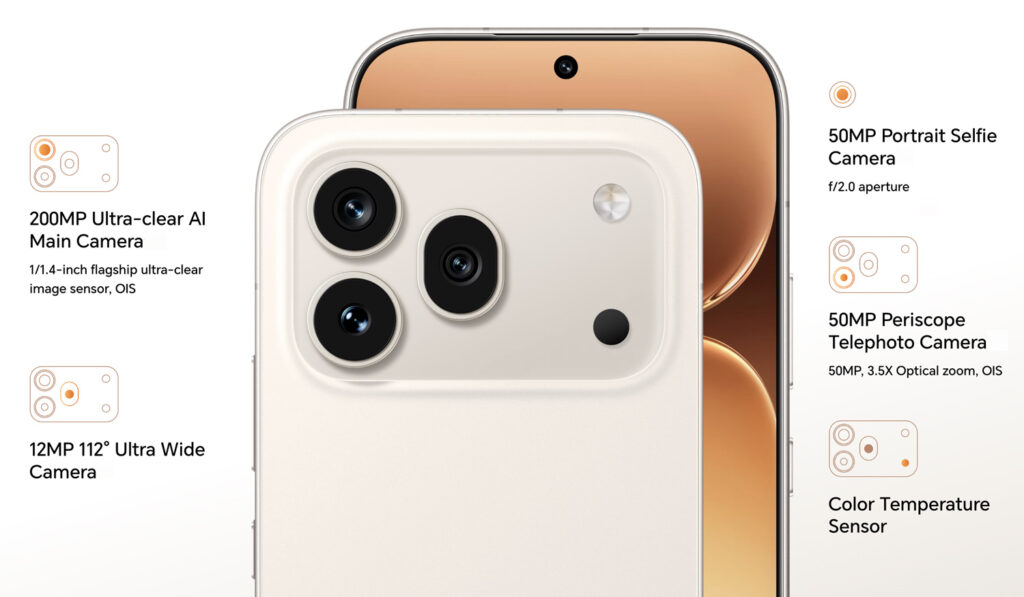
The 200 MP main sensor plays a crucial role here. It boasts a relatively large physical footprint (1/1.4″), making full-resolution shooting genuinely practical. Granted, 200 MP photos only make sense in specific scenarios, but sometimes you just need that extra resolving power for fine details.

Another heavy hitter in the camera setup is, of course, the aforementioned 3.5x telephoto lens. As you will notice from the sample shots in the video, it handles everything from portrait work to close-ups seamlessly. Packing 50 MP, it gives you plenty of data to work with, and that high resolution keeps things crisp even when you push the zoom further.

Digital zoom stretches up to 120x, which is an extreme figure on paper, but the processing algorithms handle upscaling remarkably well—similar to top-tier flagships. It operates more as a tech showcase, but dialing it back to more conservative zoom ranges delivers highly impressive results.
The third piece of the puzzle is the ultra-wide lens. At 12 MP, it trails significantly behind the other two sensors in pure resolution, but as a secondary lens, it isn’t a dealbreaker. In practice, it performs reliably and serves as a valuable asset to the overall system.

And yes, there is a selfie camera on board. While I didn’t put it through any specialized testing, it’s definitely worth a mention. It also hits the 50 MP mark, which will be a major selling point for heavy selfie creators.
Keep in mind that for standard day-to-day shooting, the phone outputs downsampled 12 MP images. High-resolution modes need to be toggled manually (and generally, it’s best to deploy maximum resolution selectively).

Naturally, you get a wide spectrum of styles and filters designed for instant creative experimentation. Personally, I’m not a huge fan; I always lean toward capturing the most authentic version of a scene. On this Honor, that means sticking to the default “Vibrant” profile. That said, don’t hesitate to play around with other profiles and filters if that’s your style; it’s just a matter of preference.
You also get a host of valuable secondary features. I personally tested Super Macro and High Resolution (check out the video for direct side-by-side examples). I always recommend diving into Pro Mode to take manual control over shutter speeds and ISO values.
Honor 600 Pro Camera – What I Liked
A rock-solid sensor and lens combo – The core takeaway is that the Honor 600 Pro delivers a balanced, well-tuned array of optics. It confidently handles a massive range of shooting scenarios under harsh conditions: from sweeping landscapes and portraits to macro work. This hardware package firmly positions it in the upper mid-range, satisfying even advanced users.

Great overall imaging performance – Behind the somewhat dry phrase “great imaging performance” lies a simple fact: this camera setup just works. It’s the easiest way to summarize this review alongside praising the hardware. Yes, this phone takes great photos, which you can easily see for yourself in the main text and video review—I used about 200 sample shots from various spots, so there is plenty to judge.

Excellent main sensor capabilities – I’ll admit I’m usually skeptical of massive resolution sensors. In photography, more pixels often correlate with smaller pixel sizes and increased noise. However, there are no nasty surprises here—sensor technology has simply come a long way. Sure, these extreme resolutions still serve partly as marketing bait since many buyers still believe “more megapixels = better photos.” But as noted, this sensor is a true pillar of the camera system, delivering consistently clean images.

Impressive 3.5x zoom – As the sample photos show, I found myself leaning on the telephoto lens quite often. It’s highly versatile, whether you’re pulling in distant subjects, shooting portraits, or framing up close. If you’re wondering if a dedicated telephoto lens is a gamechanger, the answer is yes. Sure, seasoned shooters can work around its absence, but it adds immense value to the overall package here.

Digital zoom holds up well – If you want to see the digital zoom in action, I highly recommend checking out the video review where I included several test clips. Obviously, pushing it to its 120x limit is strictly for emergencies—the resulting images are heavily processed and serve more as a record than a final photo. However, keeping it within a reasonable 20-30x range yields surprisingly usable results. The drop in fidelity isn’t jarring in most lighting conditions, which goes down as a major win.


Surprisingly capable macro mode – I generally avoid smartphone macro modes. For a variety of technical reasons, they tend to underperform across the board (even on flagships like iPhones). Don’t expect absolute technical perfection here either. However, as seen in the sample shots of the oil beetle, it handles close-ups better than average. If you enjoy shooting bugs, petals, or tiny details, it’s absolutely worth experimenting with.

A highly capable ultra-wide lens – If you’ve read my previous reviews, you know I have a soft spot for ultra-wide perspectives. Sure, they are situational tools, but they earn their keep in any camera bag. Even though this sensor is capped at 12 MP, the resolution deficit isn’t overly apparent. It performs reliably across a range of settings: from tight interiors and cramped city streets to dynamic tracking shots of dogs in the woods.

A strong suite of secondary features – Those looking for extra utility won’t be disappointed. Between shooting at maximum resolution, Super Macro, and full Pro Mode, there’s plenty to play with. Honor packages a wide array of AI tools as well, though I bypassed them for this review to focus purely on core photographic capabilities. Even without AI, the manual tools offer plenty of creative leverage.
Honor 600 Pro Camera – What to Watch Out For
Heavy competition from both sides – The primary critique of the Honor 600 Pro is exactly what I noted at the start: it faces an uphill battle for market share. Right now (May 2026), it costs around USD 1,000 or more, depending on the market. That’s a significant investment—especially when you can pick up last year’s excellent Honor Magic7 Pro for similar money. It gets squeezed from above by premium flagships (the go-to choice for power users) and from below by high-value budget alternatives. This doesn’t take away from how well the phone shoots, but it complicates its market position.

HDR video isn’t enabled by default – This is a minor detail, but it’s a pet peeve of mine across multiple brands. I firmly believe the future belongs to HDR imaging and video, with its brilliant highlights and expanded color gamuts. While the phone handles HDR automatically for stills, you have to manually toggle it on for video capture. In a few years, users might regret that their older videos have blown-out skies. It’s a small detail, but worth noting.

Minor image processing refinements needed – As is typical when testing fresh hardware, the processing algorithms don’t always hit the bullseye. At times, landscape and urban shots turned out slightly over-sharp with aggressive contrast. However, this is standard fare for early firmware—99% of these minor quirks are ironed out via over-the-air software updates within a few weeks.
Honor 600 Pro – Summary in Two Sentences
The Honor 600 Pro offers a very good combination of lenses and sensors, ensuring it won’t disappoint beginners or more demanding users. A potentially significant issue is the heavy competition in this segment of the mobile phone spectrum, where standing out is no easy task—even when competing against other models from the Honor brand itself.
Honor 600 Pro – Additional Test Gallery Photos


Review Summary
Honor 600 Pro

The Honor 600 Pro offers a very good combination of lenses and sensors, making it a strong choice not only for beginners but also for more demanding users. One potentially significant challenge is the intense competition in this segment of the smartphone market, where it is not easy to stand out — especially against other Honor models.
7.8
Pros
- Very good image quality
- A strong combination of lenses and sensors
- A valuable set of additional features
Cons
- Strong competition from other models with similar performance
- A few details still need fine-tuning
- HDR video is not enabled by default
Related posts
-

Honor Robot Phone: Camera, Gimbal and… Robot — First Look in Barcelona
-
Honor Magic8 Pro Camera Review: 50 Sample Photos + Video
-
Best Smartphones for Photographers (2026) – My Top Picks Based on 10 Years of Reviews
-
Honor 400 Camera Review: 50 Sample Photos + Video
-
Honor Magic V5 Review: 200 Sample Photos & Video

























Leave a Reply