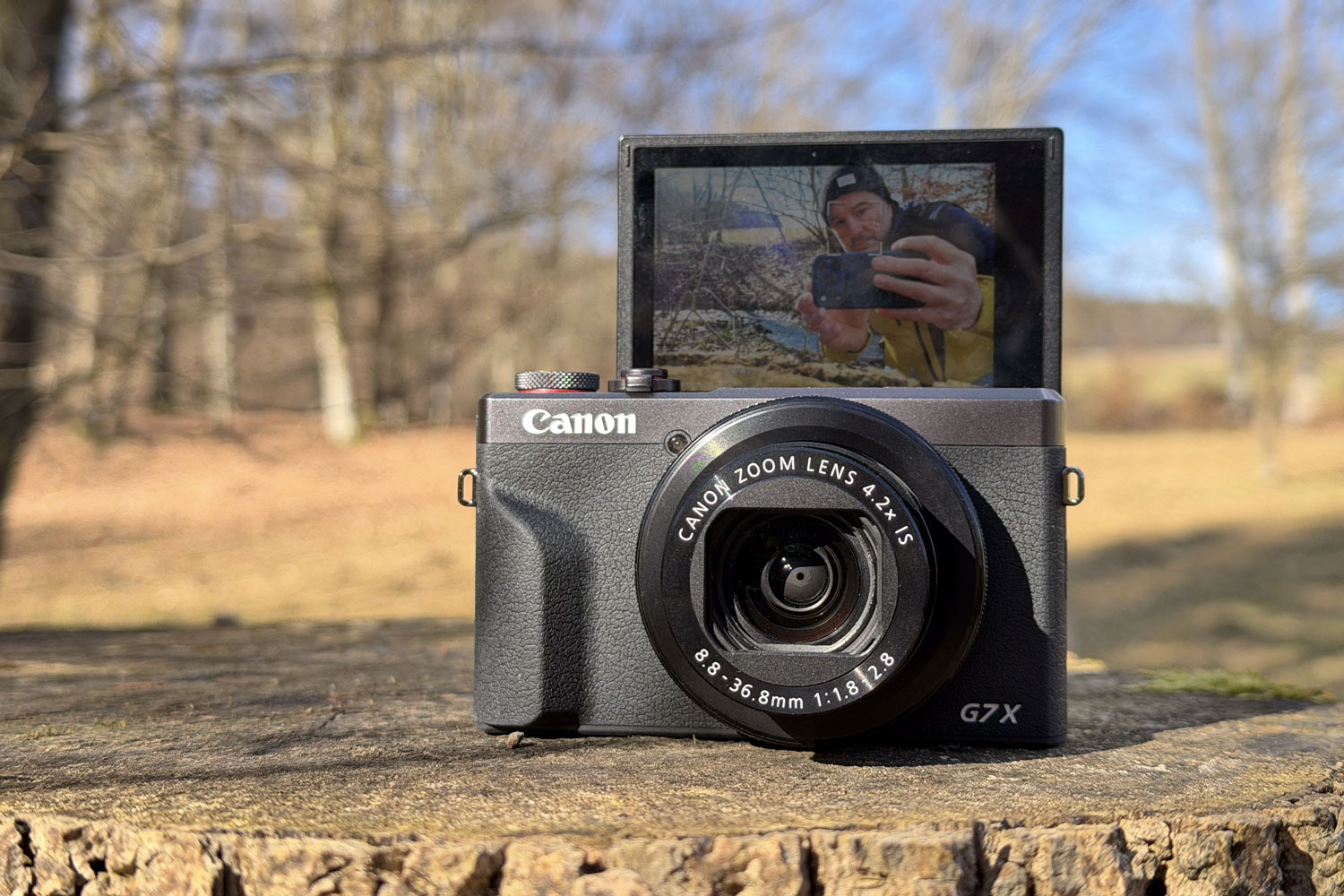
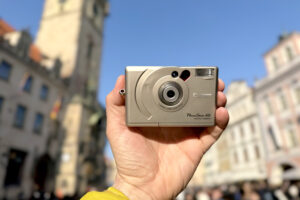
The Canon PowerShot G7 X Mark III is hitting the shelves in Spring 2026 in a special Anniversary Edition. This provides the perfect excuse to pick up this legendary compact again after seven years. Somewhat surprisingly, it has become a massive hit among YouTubers and a favorite for those who are simply bored with smartphone photography. And yes, it makes sense: authenticity is what will count more and more. Here is my review.
Canon PowerShot G7 X Mark III has an Anniversary Edition – and a Compelling Story
This is a very special article – and yes, you guessed right, I’ve spent two weeks testing a camera that is nearly seven years old: the Canon G7 X Mark III first appeared in August 2019. If we count the Mark II from 2016 and the original model from 2014, we are looking at a 12-year legacy. Either way, that’s a long time.
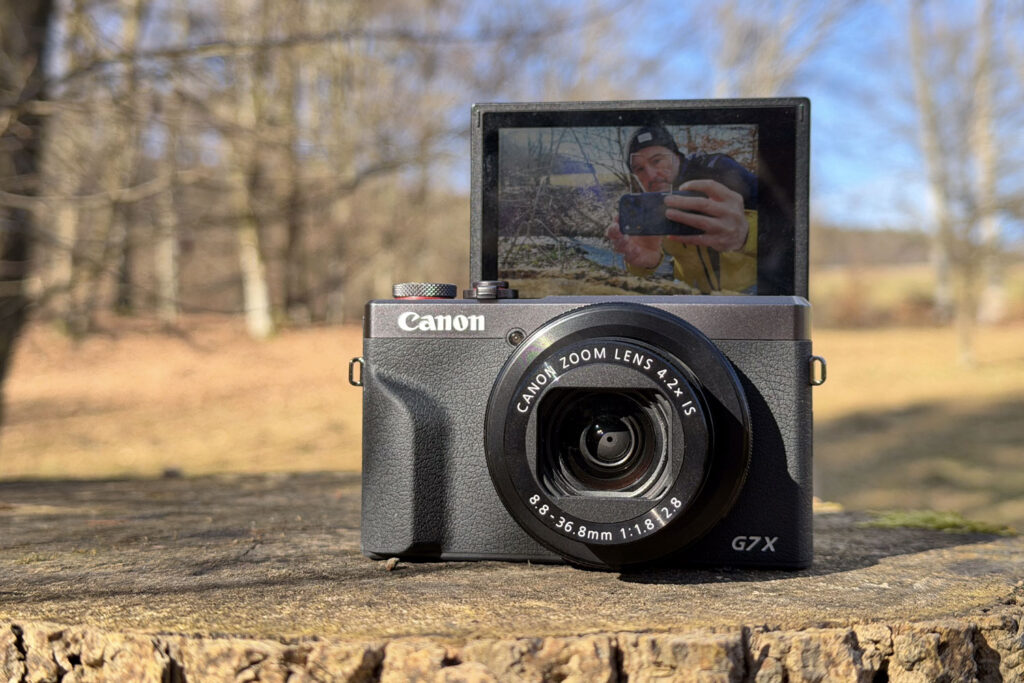
Why do this? Why return to this “old-timer”? Because it’s simply an interesting story that transcends the world of cameras. In an era of “computational” mobile photos and “artificial” AI-generated imagery, this camera and its peers offer an absolute treasure: authenticity. Simply put, something different, more substantial, and more real. And that counts.

I first noticed this phenomenon in late 2024, when a remarkable article appeared in the New York Times about how social media users were going crazy for the Canon G7 Mark II and Mark III. How they love its portrait rendering, enjoy experimenting with “real” photos, and are simply riding a new wave—willing to pay absurd prices to resellers for this camera.
I didn’t quite believe it until my then sixteen-year-old daughter returned from a party, absolutely thrilled that someone there had a “fantastic camera that takes much better pictures of people than an iPhone.” After a detailed interrogation, we discovered she was indeed excited about one of these compacts.
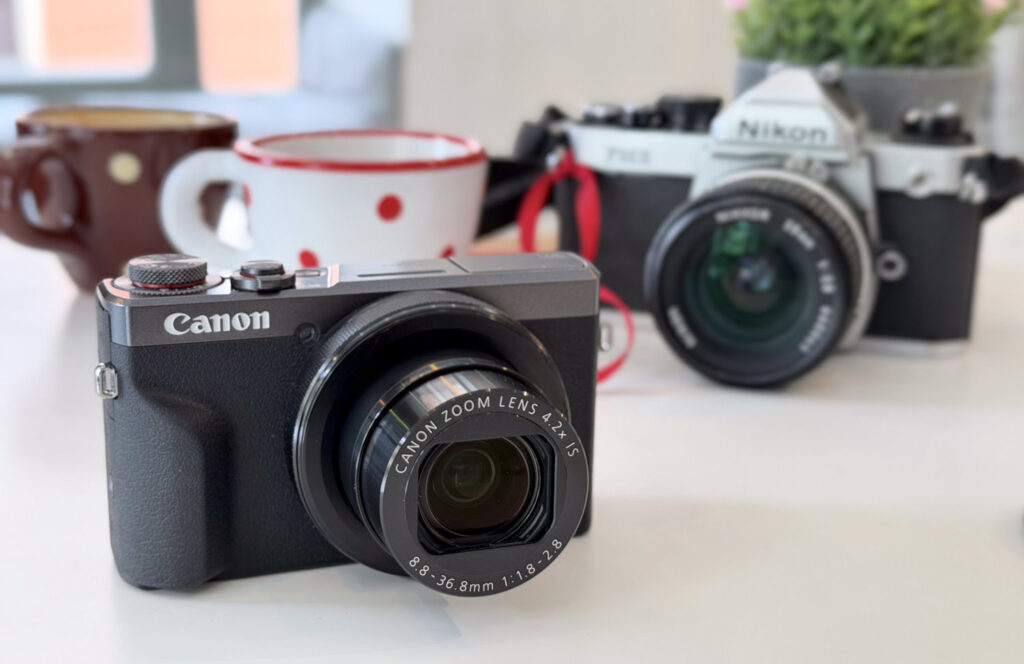
Add to that the simple fact that the Canon G7 X Mark III is a true global hit; whenever I check e-shops, it’s frequently out of stock.
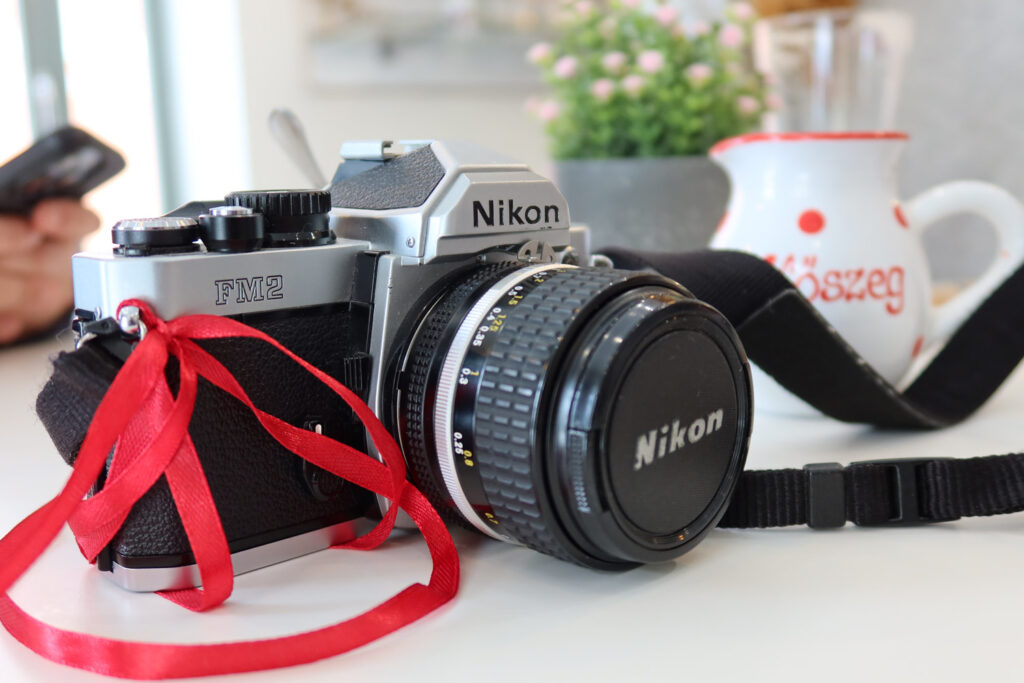
So, I was actually glad when Canon released the special edition—it was a great excuse to borrow it. Thus, this review was born: over about two weeks, I took the camera on various trips through Austria, Hungary, Slovakia, and Spain, not to mention Moravia and Prague. I tested it alongside smartphones in scenarios where the most vital thing matters: the authenticity of photos from “proper cameras.”
Video: Shooting with the Canon PowerShot G7 X Mark III – 18 min in 4K
Canon PowerShot G7 X Mark III – Specs in a Nutshell
The Canon G7 X went down in history as a so-called professional compact. To recap: about 12 years ago, when the first generation appeared, DSLRs ruled the world, and the word “compact” generally meant a small pocket thing of truly mediocre quality. This was dramatically changed by the arrival of the professional compact category with significantly higher quality—including the legendary Sony RX100 series, which appeared in 2012 and remains at the top today.

The Core Pillar: The 1-inch Sensor. The crucial element was, and still is, the sensor size—the “one-inch” sensor was always dramatically larger than those in standard compacts. This meant these once-dispised compacts suddenly offered unprecedented photo quality. This still holds true today—though 1-inch sensors are now found in some high-end smartphones, including the Xiaomi 17 Ultra.

The Second Pillar: Optical Zoom and Aperture. Another major charm is, of course, the zoom—the Canon G7 Mark III can zoom between 24-100mm with an aperture of f/1.8-2.8. This really counts and is one of the fundamental reasons it appeals so much to the “mobile generation.” Moreover, the excellent aperture means you can truly work with depth of field and achieve that nicely “blurred background.”

For experienced photographers, everything they need is here. De facto, everything key for advanced control similar to DSLRs or mirrorless cameras is present: from modes and focusing to RAW shooting, 4K video, and various special modes. In short: if you want it, it’s here. True, there is no viewfinder, but one can live without it.

Plus, yes: it’s pretty and small. It’s essential to mention that a significant part of the charm is the size—this camera simply fits in a pocket, which for me personally is a massive plus. I don’t enjoy lugging around large bags.

How does the Anniversary Edition differ? The Anniversary Edition is released to commemorate thirty years of the famous PowerShot line. However, it was likely a good opportunity for Canon to “modernize” a popular camera—though we should quickly add that the modernization is purely cosmetic. The special edition has a slightly different color, a special strap, box, and several other items (including, ahem, a higher price). But the internals are, according to available info, exactly the same. There is a change to a slightly more modern battery type, though basic models should eventually receive this too.

It’s currently unclear how long it will be on sale—whether it will be a true limited edition or if it might replace the “standard” version for part of the year. But it doesn’t really matter—as I admitted, the anniversary edition is just an excuse for me to try this camera again. To find out why it’s so popular. And to see if I feel the magic too.
Does this compact shoot better than smartphones? “Of course yes! Of course no!”
So, does the Canon G7 X Mark III shoot better than smartphones? It’s a logical and important question, but the answer is surprisingly complex. Depending on the context, it can be both “of course yes” and “of course no.”
Let’s explain, because this issue is the subject of many arguments and misunderstandings. And quite frankly: it can lead to a lot of disappointment.

1. A camera generally always shoots better than a phone – generally (and that “generally” is very important), a camera always “shoots better.” An experienced user can simply get higher quality output from a camera than from a phone.
2. However, phones are perfect at instant image processing – much more than cameras, phones can finalize a photo on the spot in real-time: ensuring the sky isn’t blown out but full of clouds, lifting shadows, vivid colors, and fine-tuning everything.

3. This leads to a very important paradox: especially with landscape or city photos, smartphones can offer a “better result” for many users – that hill in the spring sun will simply look better instantly than from a $5,000 camera. Because with the camera, we still need to invest time in editing. Only then will it be perfect and better than the phone.
What shoots “better” thus depends on the specific user, their settings, experience, and expectations. The massive charm of cameras simply lies in that perfect authenticity, where algorithms interfere minimally. But that might not suit everyone.
Canon PowerShot G7 X Mark III – Why People Like It
The photos are “real.” And authenticity counts. Why are these compacts experiencing such a famous comeback? There could be many answers, but in my opinion, the main reason is that they produce “different photos.” For experienced photographers, this won’t be anything new, but for those who have only ever shot on a phone, the feeling of “real” photography and “authentic” photos can be truly enchanting. Even I enjoyed it – for a certain type of shot, mainly cafe-travel vibes, these photos have great charm. They are different, and if they are sometimes less perfect than those from a phone, it’s more of a plus.

Portraits have “different dimensions.” When I looked into what attracts younger users most, I often heard the same thing as from my daughter: “the portraits are just great, real, different.” Again, an experienced photographer might cynically say: well, they are just camera portraits where the blurred background is created by optics, what’s so amazing about that? But let’s not ruin it for them – it’s true that even I occasionally find artificial/software background blurring on phones annoying, even if it gets more accurate every year. And those “authentic portraits” simply have something to them.

“It’s small and it zooms” – another reason users are clearly attracted is the zoom. Years ago, it was a hit because Canon squeezed very decent optics with a good aperture into a small body. Today, I’d guess the charm is again more in the fact that zooming non-digitally is a great experience. Again, I admit, it makes sense.

Photos have “nobler” data – experienced photographers will likely be interested in something average users won’t care about much: if you play with photos in Photoshop, for example, the data is simply “better.” In short, these are not over-sharpened and over-processed photos from mobile phones. Not that it’s crucial, and not that I have anything against mobile outputs in general. But again, we come back to that word “authentic,” which counts.

And mainly: it’s just real photography. All of this could be summarized in a single sentence. The Canon G7 X Mark III is a camera – and shooting with a camera is always a slightly different experience. Many photographers would even say that only shooting with a camera counts and brings them joy. I don’t feel it that radically, but I have a certain understanding of it. It’s just different in many ways.

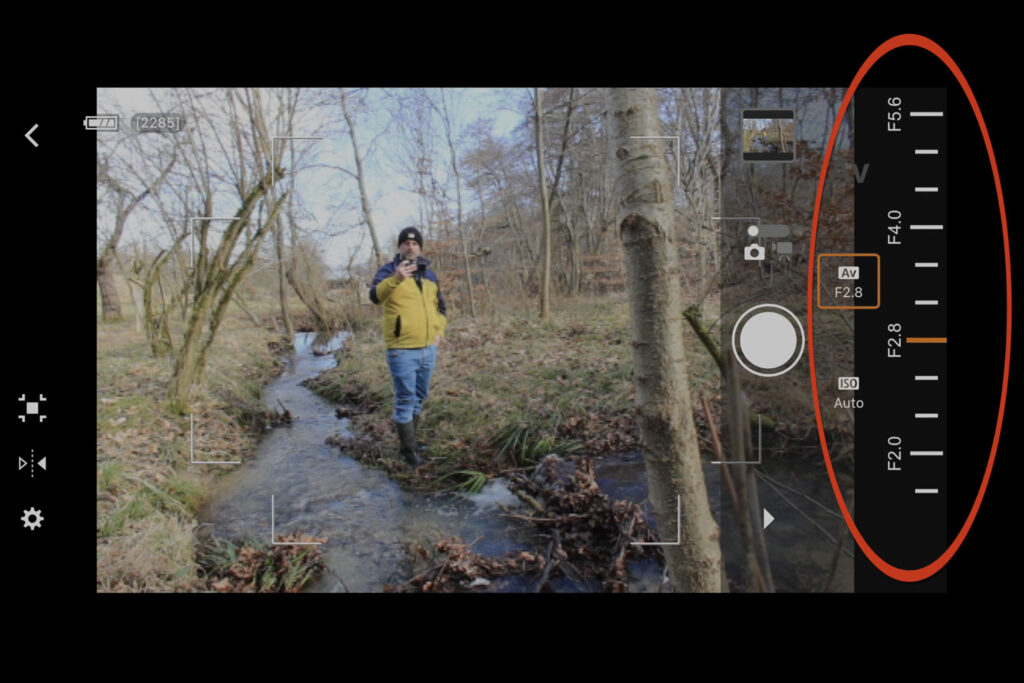
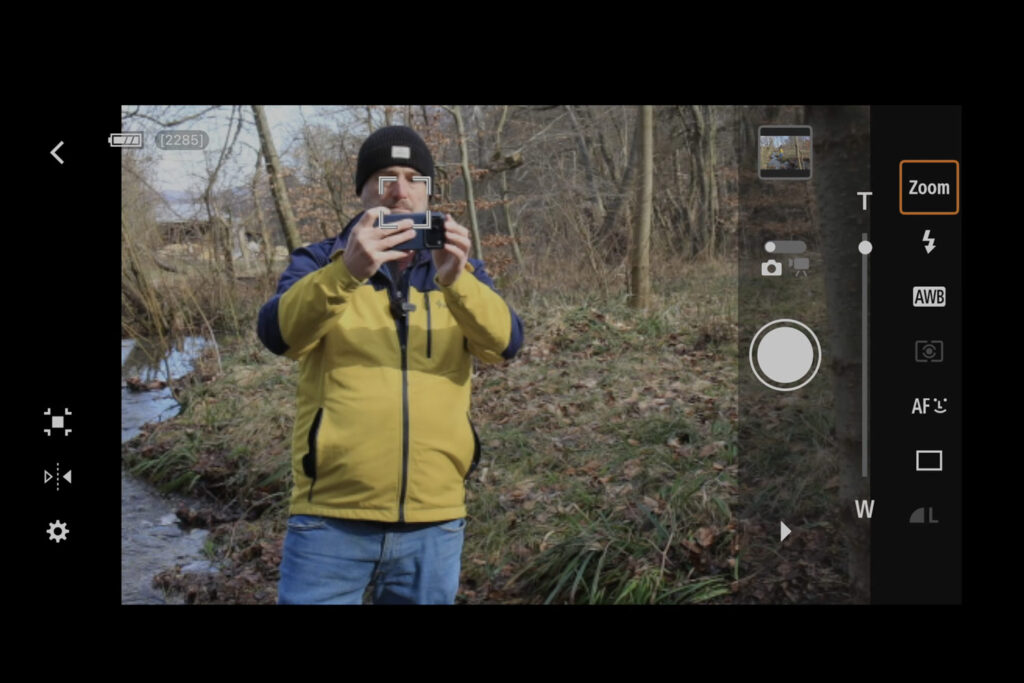
Very good mobile connectivity – it sounds trivial, but one of the biggest changes in the world of photography for me lately is that you can finally reliably connect a phone and a camera. Yes, it has more or less worked for a long time, but it used to be a nerve-wracking mess. In recent years, thank goodness, that has changed. And this camera is no exception – a few clicks and it connects effortlessly to a phone, from which you can then control vital shooting and video parameters: including zooming and other essential settings. That is truly useful. And the video is very decent too.
Canon PowerShot G7 X Mark III – What to Watch Out For
Don’t forget: this camera is 7 years old. We’ve summarized all the possible pros, but let’s not forget that this is a seven-year-old model (and in many ways older, as it inherited elements from previous generations). In the world of technology, that is a very long time. Does it matter? No. Should you keep it in mind? Yes.

It’s a camera – so phones will “beat” it in processing some photos. If you head out to shoot landscapes with this camera, just expect that you’ll have to edit them later. This sounds trivial to anyone who shoots with a camera; that’s just how it is. But if someone with only mobile experience starts shooting landscapes or cities, they might be disappointed. As described above, phones are exceptionally good at processing the photo on the spot for an instant “better” result. You need to account for that.

It’s a compact without a viewfinder. And yes, of course, those used to phones will quickly find that you can see more on the significantly larger screens of smartphones, for instance on a sunny day. Or that the speed of focusing and zooming isn’t exactly lightning-fast. Because, see above, it’s a seven-year-old compact. So it’s not a machine for complex shooting.
Canon PowerShot G7 X Mark III – Summary in Two Sentences
The Canon PowerShot G7 X Mark III primarily offers what is scarce in today’s mobile-centric world: authentic, old-school photography, different and “real” portraits, and the chance to stand out in a sea of boring, over-processed smartphone photos. It undoubtedly makes sense as an interesting gateway into the world of real photography, though one shouldn’t forget the simple fact that it has its limits – it simply belongs to a different era.
Canon PowerShot G7 X Mark III – More Photos from the Test


Review Summary
Canon PowerShot G7 X Mark III

The Canon PowerShot G7 X Mark III primarily offers what is scarce in today’s mobile-centric world: authentic, old-school photography, different and “real” portraits, and the chance to stand out in a sea of boring, over-processed smartphone photos. It undoubtedly makes sense as an interesting gateway into the world of real photography, though one shouldn’t forget the simple fact that it has its limits – it simply belongs to a different era.
7.9
Pros
- small compact camera that takes great photos
- an alternative to smartphone photos
- authentic, “real” photography
Cons
- it’s a model that’s many years old
- no viewfinder
- smartphones can process photos better
Related posts
-

Canon EOS R8 Mark II Review – Sample Photos & Video
-
Is This Photo Manipulated? Canon Can Now Verify Its Origin
-
Canon RF 100-400mm f/5.6-8 IS USM – Review, Sample Photos + Video
-
Canon R6 V: Open Gate Video Test – Why Full-Sensor Recording Matters
-
Best Cameras – Summer 2026: My 40 Reviews, 4 Tables, 10 Years of Testing
-
Testing a 30-Year-Old Canon PowerShot A5: Retro Review from Prague + video








Leave a Reply