
What can you expect from the Xiaomi 17T’s camera? How does it compare to its more advanced sibling, the Xiaomi 17T Pro? And who is this phone actually for? Let’s find out in this detailed review and video.
Where the Xiaomi 17T Fits and Who It’s For
Where to place the Xiaomi 17T? For many years, it was basically very simple: the popular T-series has always been a key intermediary between the world of top flagships (including the Xiaomi 17 Ultra – review here) and the more affordable Xiaomi Redmi series (including the Xiaomi Redmi Note 15 Pro+ 5G – review here).

And buyers still had to choose between the standard “T” and the Pro version. This was a bit different every year, because sometimes the Pro was de facto identical (and therefore didn’t make much sense), while other times the Pro offered significantly more. This was also true for last year’s generation – the Xiaomi 15T Pro model (review here) turned out exceptionally well in my opinion, and even now I consider it one of the most reasonable choices in the mid-range (see below).
To which one “chronological sidebar”. The 15T/15T Pro series looks a long way off, but at the time of writing this review (July 2026), it is only about 10 months old. Namely: Xiaomi decided to skip the 16th generation and released this year’s models in the spring, instead of the traditional autumn. Which, let’s admit, complicates the comparison a bit – in short, the Xiaomi 15T/15T Pro are still highly relevant options.

Returning to the Xiaomi 17T: compared to the Pro version, it offers a more compact body, a lower price, and otherwise very similar hardware. The biggest attraction is the 5× optical telephoto camera, which is identical to the one found in the Pro model. On the other hand, there is an older type of main sensor, which an experienced eye will spot in certain situations, though the difference is not dramatic.
In short: just like previous generations, the Xiaomi 17T offers a reasonable price/performance ratio, unusually good features (5× optical zoom), and more compact dimensions. However, competition from the Pro version, and especially the already mentioned Xiaomi 15T Pro model, which costs roughly the same, is noticeable.
Video: the Xiaomi 17T Photography – 12 min in 4K HDR
Xiaomi 17T and the Camera
First, as usual, let’s take a look at the system of sensors and lenses we have available.
| Xiaomi 17T – Camera: Lenses and Sensors | |
|---|---|
| Wide-angle (Main) |
23mm, 50 MP f/1.7, OIS Light Fusion 800 Sensor Sensor size: 1/1.55″ |
| Telephoto |
115mm, 50 MP f/3.0, OIS Samsung JN5 Sensor 5× optical zoom Sensor size: 1/2.75″ |
| Ultra-wide |
15mm, 12 MP f/2.2, FOV 120° OV13B Sensor Sensor size: 1/3.06″ |
| Front |
21mm, 32 MP f/2.2, FOV 90° Sensor size: 1/3.42″ |
As the table shows, the main strength is simple: the combination of sensors and lenses is exceptionally generous for a mid-range phone, especially thanks to the 50 MP main sensor and the 5× zoom (which also has 50 MP).
The main sensor is roughly 23mm and, as a key tool, delivers very respectable performance, making it the most important camera on the phone.

The telephoto lens is undoubtedly the phone’s biggest selling point—and it is undeniable that this is a feature missing from the vast majority of competitors in this price category. And as we will show, it really offers a lot.
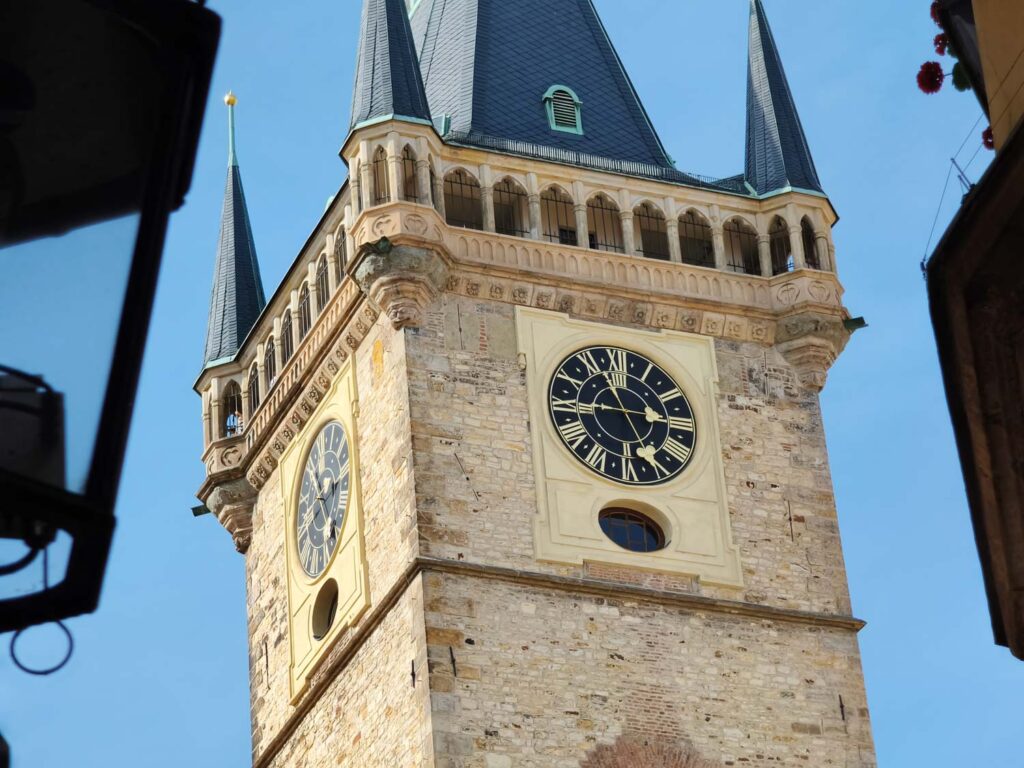
We also cannot forget the ultra-wide lens, which I personally like to use and consider (even on other phones) to be a component that is often unjustly neglected: without it, the results would be truly boring.
And of course, Leica’s influence is evident throughout; the legendary German company is involved in the development of optical systems as well as software. In practice, this means not only two styles (Vibrant and Authentic), but also many popular filters that can give photos an interesting look (although I don’t use them myself).

Those who want to shoot video will not be disappointed either – it is of course possible to shoot in 4K at 30 frames per second. And even in HDR (see my video), which in my opinion should be a matter of course, but many cheaper models still do not offer this option. That is why it is worth mentioning.
Xiaomi 17T – What I Liked
Exceptionally generous camera hardware – this is worth repeating because it defines the Xiaomi 17T. For a relatively modest price, you get a lot in return. A 50 MP main camera combined with a dedicated 5× optical telephoto lens is still uncommon in this price range, and it’s one of the phone’s biggest strengths.

Solid performance from the main sensor – as usual, it applies here too that regardless of the zoom, the overall performance of the phone is decided by the main sensor. And it delivers solid performance here. As I already mentioned, an experienced eye will notice that, after all, the Pro version offers slightly better results in certain specific situations. But for a mid-range phone, it is nothing dramatic.

An excellent 5× telephoto camera – as the sample photos and video show, this is one of the phone’s defining features. It shares exactly the same hardware as the Xiaomi 17T Pro. Although it supports up to 120× digital zoom, that’s largely a technical showcase, as image quality drops quickly. Stay within roughly 20× to 30×, however, and you’ll be pleasantly surprised by the results. A zoom lens of this quality is still unusual in this price category.


A handy ultra-wide lens – the ultra-wide lens / sensor has only 12 MP, which can be felt in places compared to the 50 MP sensors, but overall it is a reliable complementary element. Personally, I like to use it, although it naturally needs to be done with consideration and the knowledge that such angles are only suitable for a certain type of shots in interiors or, for example, in the city.

The option to shoot in 50 MP. Phones have offered the option to shoot at full sensor resolution for many years, but only relatively recently has this variant begun to make sense, because the quality of the result is really very good. Yes, it’s not for everyday shooting, but if, for example, we need to capture a city panorama, it’s not a bad idea to take a version of the photo in 50 MP as well, because we can then pull out a lot of detail from it if needed. As the specs show, we can play with this feature on both the main lens and the telephoto lens.
Successful night photos – I included a special section from night shooting in the video, which I generally like and consider to be a somewhat overlooked part of what can easily be photographed with phones. And here too, it delivers very solid results.
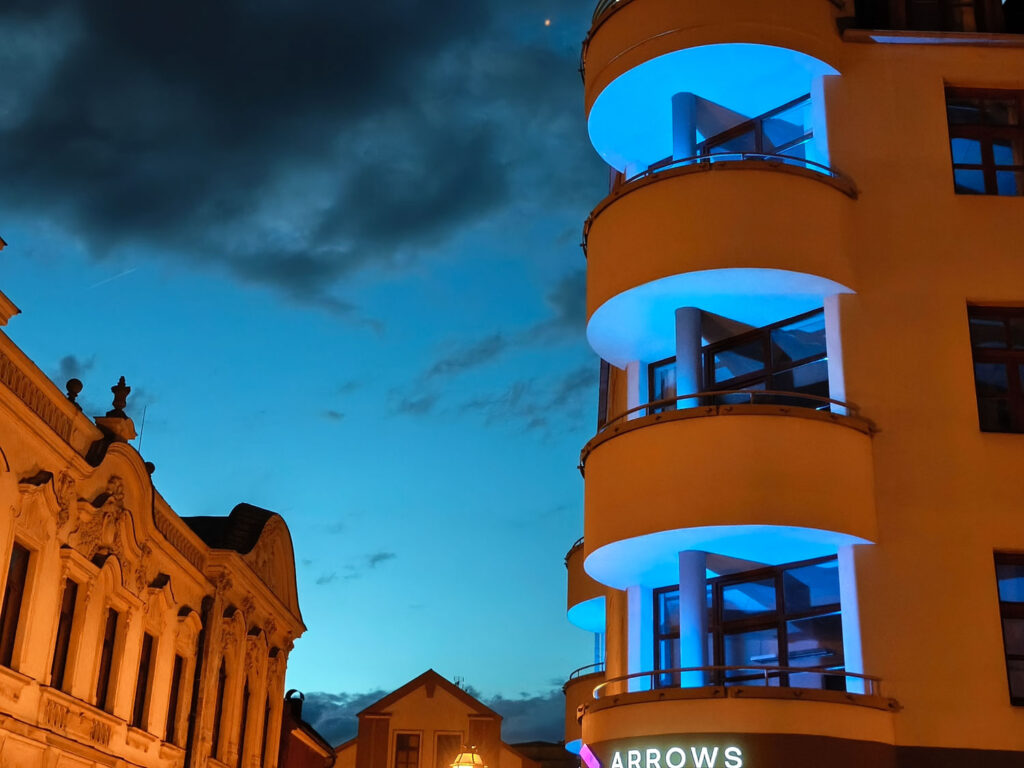
Leica everywhere – Xiaomi’s cooperation with Leica has been a key element of flagships, but also mid-range phones, for many years. For a long time, I thought it was rather a formal partnership, but when I saw the developers from Germany live at trade fairs, I realized it is actually a fairly deep collaboration: Leica participates in both the development of optical systems and software equipment and filters. Which simply counts.
Xiaomi 17T – What to Watch Out For
Competition from other Xiaomi models is significant – as I already mentioned at the beginning, the Xiaomi 17T will not have it easy competing against its close relatives. On one hand, it undeniably offers a great combination of parameters in its category. On the other hand, an experienced eye will catch a certain difference in the output from the main sensor of the 17T and 17T Pro. As the parameters show, the 17T features a sensor that is simply a bit older and, importantly, has smaller physical dimensions than the 17T Pro (and the 15T Pro). And the 15T Pro (which is a model only about 8 months older) is, in my opinion, strong competition. At the moment, the 15T Pro and 17T cost roughly the same. To be sure, let’s add that this is a difference that only an experienced photographer will notice.
| Xiaomi 17T vs Xiaomi 17T Pro – Comparison | ||
|---|---|---|
| Xiaomi 17T | Xiaomi 17T Pro | |
| Wide-angle (Main) |
23mm, 50 MP f/1.7, OIS Light Fusion 800 Sensor Sensor size: 1/1.55″ |
23mm, 50 MP f/1.67, OIS Light Fusion 950 Sensor (OV50Q) Sensor size: 1/1.31″ |
| Telephoto |
115mm, 50 MP f/3.0, OIS Samsung JN5 Sensor 5× optical zoom Sensor size: 1/2.75″ |
115mm, 50 MP f/3.0, OIS Samsung JN5 Sensor 5× optical zoom Sensor size: 1/2.75″ |
| Ultra-wide |
15mm, 12 MP f/2.2, FOV 120° Sensor size: 1/3.06″ |
15mm, 12 MP f/2.2, FOV 120° Sensor size: 1/3.06″ |
| Front |
21mm, 32 MP f/2.2, FOV 90° Sensor size: 1/3.42″ |
21mm, 32 MP f/2.2, FOV 90° Sensor size: 1/3.42″ |
Styles need slight fine-tuning – much like in previous years, Xiaomi offers two styles here, meaning two main versions of how the photos will look. The richer Leica Vibrant and the “faded” Leica Authentic. I always shoot in Vibrant because it feels more believable than the overly desaturated Authentic style. This time, however, it sometimes seemed to me that Vibrant was a bit too vivid and saturated. I assume an upcoming update will fix this. But even so, adding an even more varied palette of initial styles would definitely help.

Shooting video in HDR needs to be specially turned on. This is of course a complete detail: but I simply find it a pity that the phone (just like, it must be added, many others) does not have HDR video shooting enabled in its default settings. Yes, it can easily be activated in the settings, and yes, I understand that the world of HDR videos is still not fully compatible. But on the other hand, it remains true: in a few years, owners will regret not having higher quality videos, so I would definitely vote for automatic activation.

Xiaomi 17T – Summary in Two Sentences
The Xiaomi 17T continues the tradition of previous generations and again offers solid performance for a reasonable price, this time also thanks to an exceptionally strong configuration including a 5× optical zoom. However, it faces strong competition from, among others, last year’s Xiaomi 15T Pro model, which offers slightly better results from the main sensor for a similar price.
Xiaomi 17T – Additional Photos from the Test


Review Summary
Xiaomi 17T

The Xiaomi 17T continues the tradition of previous generations, once again delivering solid performance at a reasonable price. This time, it also stands out thanks to its exceptionally generous camera hardware, including a dedicated 5× optical telephoto lens. However, it faces strong competition from last year’s Xiaomi 15T Pro, which offers slightly better image quality from its main camera for roughly the same price.
7.6
Pros
- very good price/performance ratio
- unique combination of lenses in its class
- good image performance across all lenses
Cons
- competition from other Xiaomi models
- camera styles need improvement
- the need to manually turn on HDR for video
Related posts
-

Xiaomi Redmi Note 17 Pro Max 5G Camera Review + Sample Photos
-
Xiaomi 17T Pro Camera Review: 200 Sample Photos & HDR Video
-
Xiaomi 17 camera review: 200 test photos + video
-
Leica Leitzphone: Hands-On Review, Unboxing & Camera Test
-
Xiaomi 17 Ultra camera review: 200 test photos + video
-

Xiaomi Redmi Note 15 Pro+ 5G Camera Review: 50 Sample Photos + Video


























Leave a Reply