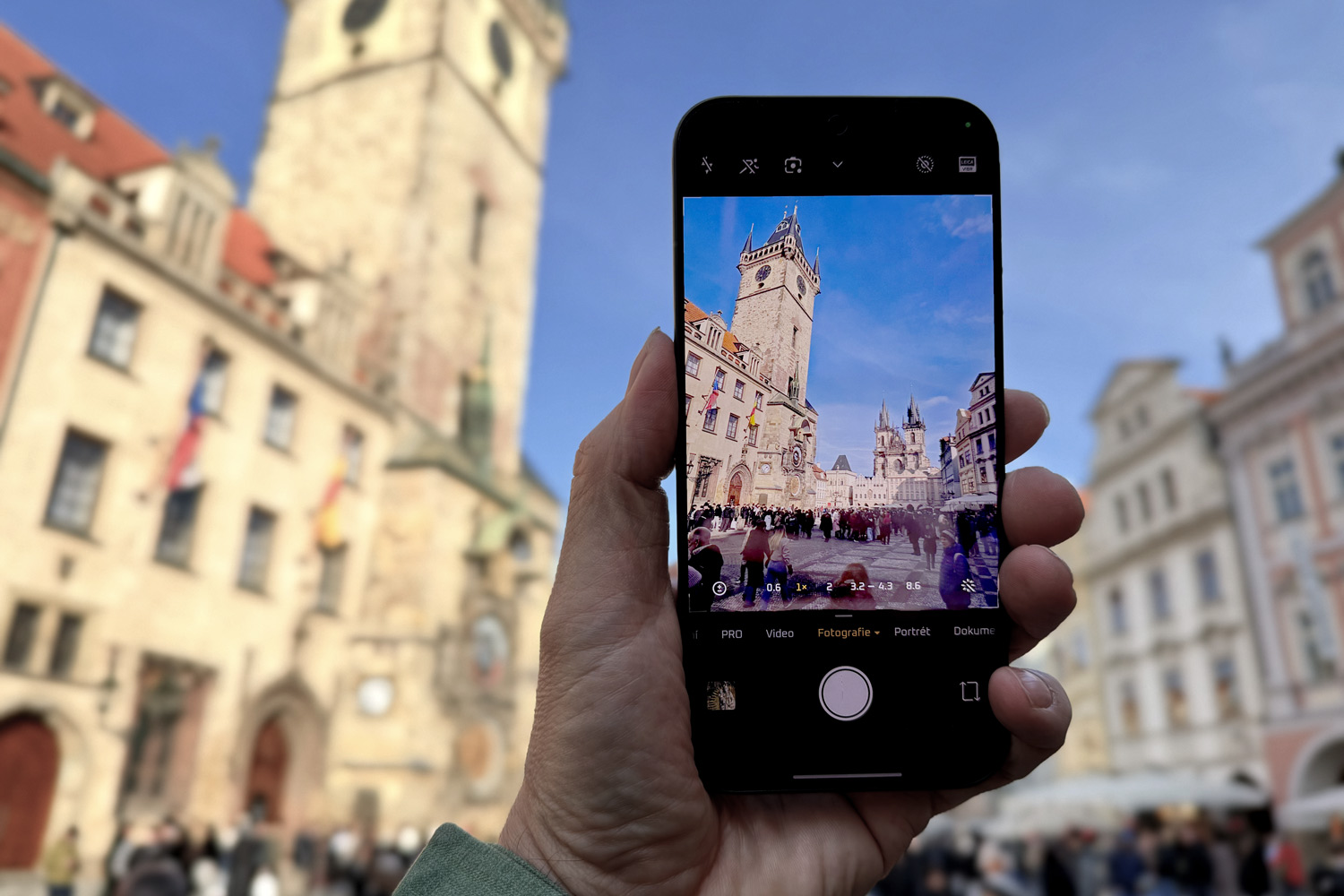
What to expect when photographing with the Xiaomi 17 Ultra, whose predecessors have always belonged to the absolute top tier of flagships? This year, it boasts remarkable parameters: a new one-inch sensor, but above all, a total rarity: a telephoto lens with optical zoom. Let’s explore this newcomer in a detailed review.
Where it fits and who the Xiaomi 17 Ultra is for
A brief summary of where this camera phone belongs is actually very simple. For many years, this series has played the role of family silver for Xiaomi—the model on which they want to show the absolute best their developers can achieve. And not just Xiaomi developers, but also the famous German Leica, who participate in the development of optics and image processing.
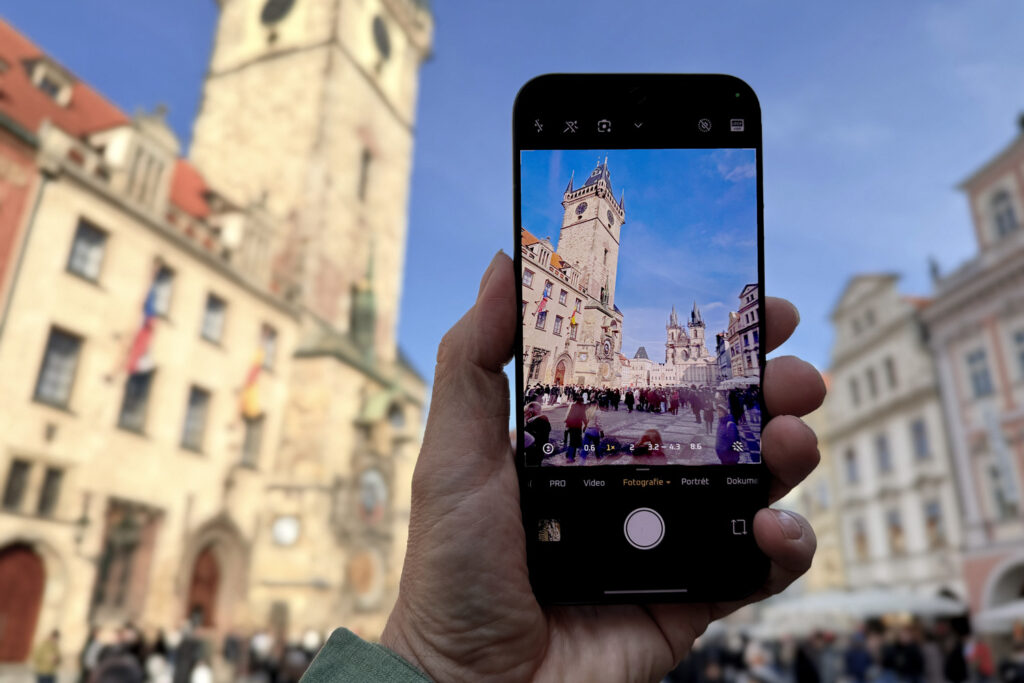
So, this time too, it is at first glance a model that aims to impress again with its photographic equipment: there is the so-called one-inch sensor, a sensor of large physical size, which in itself is a guarantee of top quality. An even bigger attraction, or at least a point of interest, is something else: a telephoto lens with a variable focal length. In other words: an optical zoom with a range of 75-100mm.
Either way, the bar was and is very high – I considered the previous model Xiaomi 15 Ultra in recent months to be probably the best mobile for experienced photographers. Those who can most appreciate and use precisely the one-inch sensor, but also the system of lenses and other functions.

For clarity, let’s explain the “mystery” of the missing generation – Xiaomi management decided to skip the Xiaomi 16 Ultra and other models with this number. Mainly because they wanted to “align” the numbering with iPhones, but likely also to emphasize a truly significant leap forward.
And that is exactly what we are going to evaluate now: how significant is this leap? And what to expect from this mobile in photography? As usual, I had the opportunity to test it in detail before its launch on the European market, both in Prague and then during its official presentation in Barcelona.
And as always, I recommend playing the video as well, in which everything is analyzed in detail over about 200 photos.

Video: Xiaomi 17 Ultra photography – 200 photos in 4K
Xiaomi 17 Ultra camera – specifications
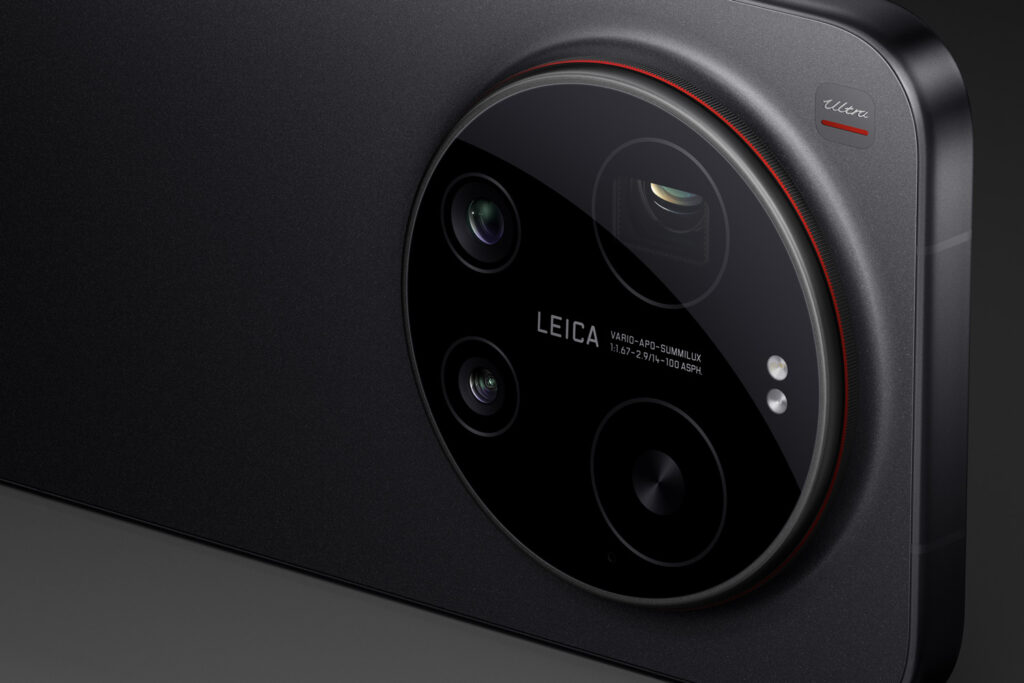
Let’s start with an overview of the Xiaomi 17 Ultra’s photographic equipment. As usual, the famous German Leica is signed under the lenses and filters. And the camera system bears the official name Leica VARIO-APO-SUMMILUX 1:67-2.9/14-100 ASPH.
| Xiaomi 17 Ultra – Camera: Lenses and Sensors | |
|---|---|
| Main Camera | 23mm, 50 Mpx f/1.67, OIS one-inch sensor Light Fusion 1050L LOFIC HDR technology |
| Telephoto Lens | 75-100mm, 200 Mpx f/2.39-2.96, OIS Samsung HPE sensor 30cm macro photography support |
| Ultra-wide Lens | 14mm, 50 Mpx f/2.2, 115° FOV JN5 sensor |
| Front Camera | 21mm, 50 Mpx f/2.2, 90° FOV |
At first glance, it is obvious that the first of the building blocks will be, as usual, the main sensor. It traditionally has 50 Mpx, but the essential thing is that it is a so-called one-inch sensor. That is, a sensor of a large physical size comparable to top-tier compacts. And few things in the world of photography apply as unequivocally as the statement that the larger the sensor, the better the photos. Xiaomi emphasizes in its materials that this is a new generation of sensor with LOFIC HDR technology. Which, in short, means higher recording quality for HDR photos (see below).

The second major star of this generation is the zoom with variable focal length, i.e., a telephoto lens that can zoom optically. In other words, while mobiles normally can only zoom digitally, which always means a certain loss of quality, that is not the case here. And when zooming between focal lengths of 75 and 100mm, “the lenses still draw everything.” And the quality is thus still maximum. Plus, more experienced photographers have more room for creativity and, thanks to the (relatively) high speed, can work with elegant blur that is optical, not digital as in portrait mode.

The ultra-wide sensor is also essential, of course, which again has 50 Mpx and offers top-tier performance in its segment similar to the other two lenses/sensors. But let’s admit that it will be somewhat in the shadow of the two main attractions – the main sensor and the telephoto lens.
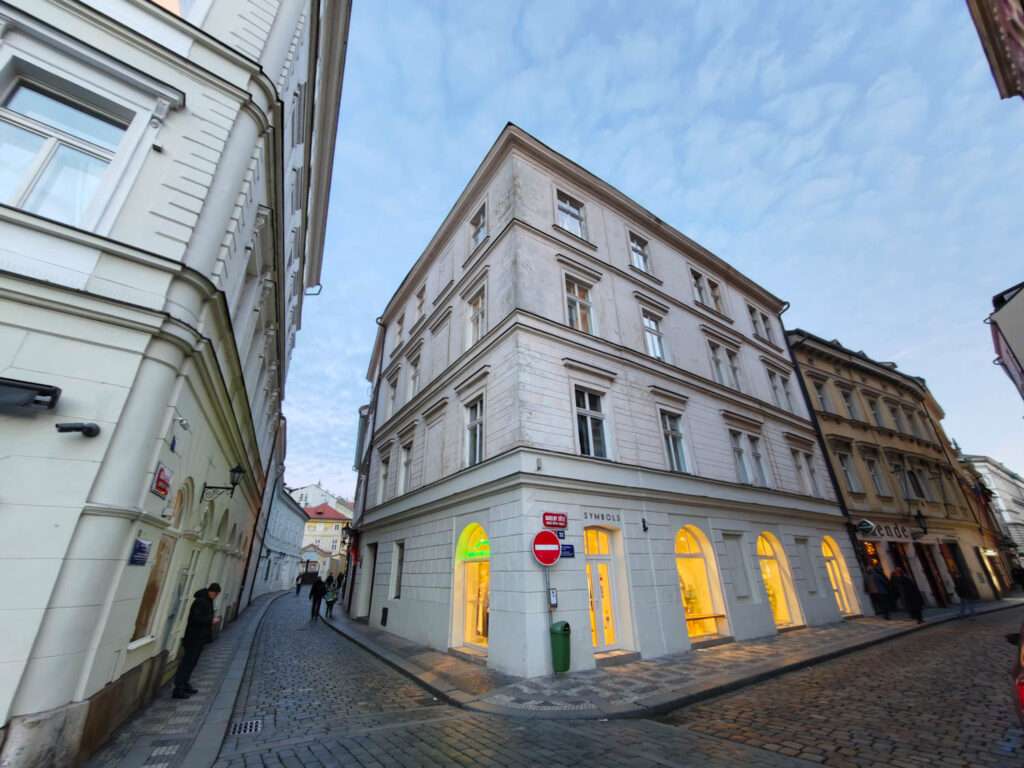
From the sensor and lens parameters, one more important fact is obvious: unlike the Xiaomi 15 Ultra, there is no special “second” telephoto lens with a speed of 1.8 and 70mm, which was suitable for shooting a certain category of details and which I always considered an essential part of the lens and sensor system (see below).
And of course: even more than usual, Xiaomi is now boasting about its collaboration with Leica, the famous German photographic legend that participates in the design of the lenses, but also the algorithms for photo processing. Leica even released its own special edition of the Xiaomi 17 Ultra this time, which was introduced in Europe as the Leitzphone.

A less conspicuous but quite fundamental innovation is that the Xiaomi 17 Ultra already automatically records video in HDR (in Dolby Vision) by default, thus keeping pace with, for example, iPhones. With the previous generation, it was necessary to set HDR shooting manually – which wasn’t a problem, but now Xiaomi simply claims HDR much more significantly.
And of course, there are many valuable additional functions, not only filters, but also, for example, the possibility to photograph up to 200 Mpx (with the telephoto lens), which sounds like a relative detail, but it isn’t – it works really well and sometimes these huge files really make sense.

Leica Leitzphone arrives – and with it the control ring
For the very first time, this flagship has also received a special edition bearing the name of the German Leica. While for the launch on Asian markets, the official name was “Leica edition,” in Europe, everything was introduced under the name Leica Leitzphone, admittedly with the suffix “Powered by Xiaomi.”
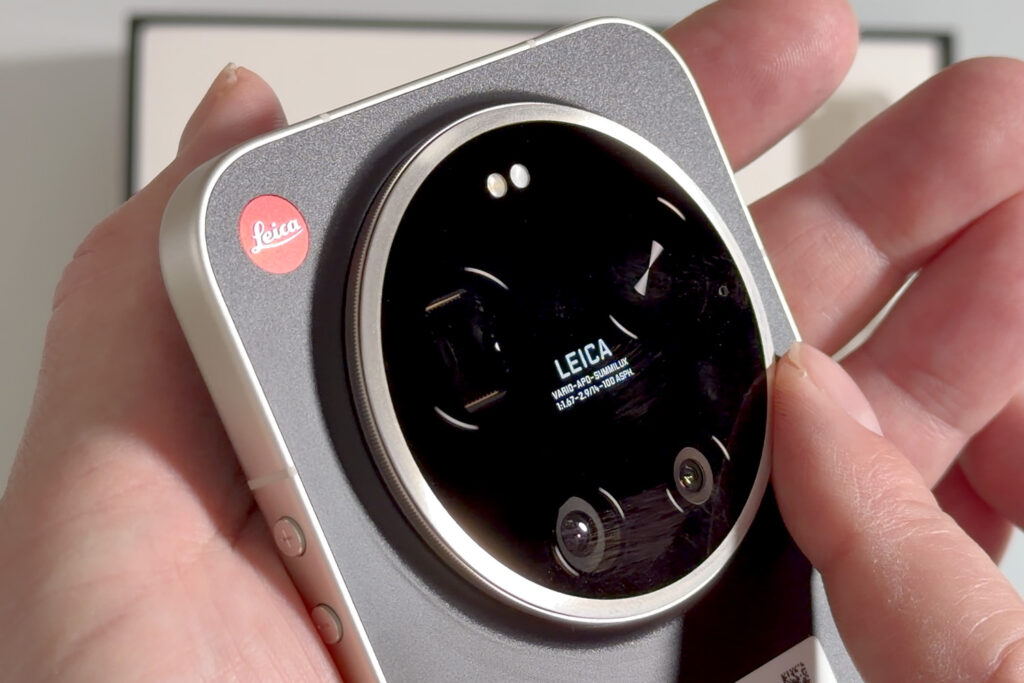
And what is the difference? The most fundamental and visible one is that the Leitzphone has a special control ring around the photo module – in English they call it the Camera Ring. The name doesn’t matter, of course, what’s important is that it adds a truly useful control element to the “ordinary” Xiaomi 17 Ultra. By turning this wheel, it is possible to zoom, or set a number of other parameters on it.
Other differences are in the overall design – the Leitzphone has, for example, a metal frame. And also in other small things: the graphic appearance of the mobile’s “interior” is a bit different and corresponds more with the “classic” concept of Leica cameras. There are also differences in various additional filters, functions, and also, of course, a higher price.
You can read the Leitzphone review here in this article of mine.
Xiaomi 15 Ultra vs Xiaomi 17 Ultra – comparison of parameters
And how does the Xiaomi 17 Ultra stand in comparison with the previous generation, i.e., the Xiaomi 15 Ultra? Personally, I was very interested in this because I have long considered the Xiaomi 15 Ultra to be one of the best, and quite possibly the absolute best photo mobile for experienced photographers.
And here is the comparison table.
| Xiaomi 15 Ultra versus Xiaomi 17 Ultra – Comparison of Parameters | ||
|---|---|---|
| Parameter | Xiaomi 15 Ultra | Xiaomi 17 Ultra |
| Main Camera | 23mm, 50 Mpx f/1.63, OIS one-inch LYT-900 sensor |
23mm, 50 Mpx f/1.67, OIS one-inch sensor Light Fusion 1050L |
| Telephoto lens 1 | 100mm, 200 Mpx f/2.6, OIS HP9 sensor, size 1/1.4″ 2.24μm 4-in-1 Pixel |
75-100mm, 200 Mpx f/2.39-2.96, OIS Samsung HPE sensor 30cm macro photography |
| Telephoto lens 2 | 70mm, 50 Mpx f/1.8, OIS IMX858 sensor 10cm macro photography |
none |
| Ultra-wide lens | 14mm, 50 Mpx f/2.2, 115° FOV JN5 sensor |
14mm, 50 Mpx f/2.2, 115° FOV JN5 sensor |
| Front camera | 21mm, 32 Mpx f/2.0, 90° FOV OV32B sensor |
21mm, 50 Mpx f/2.2, 90° FOV |
The most visible difference is quite fundamental: the Xiaomi 17 Ultra has an objectively unique telephoto lens with optical zoom, but in total, it has one less lens.
The missing lens is the “second” telephoto lens (70mm, speed 1.8), which “knew” how to take truly unique photos of details even from ten centimeters, while the new telephoto lens requires 30 cm (both cited from official specifications). How much of a problem is that? For the vast majority of users, none, they won’t care. But the truth is that this skill was simply useful for a certain type of shot and I will miss it. Either way, it’s good to mention it.
There is a new main sensor. A less visible but fundamental change is a brand new main sensor. The previous generation left the sensor unchanged, so this is undoubtedly a significant step forward.

And it’s also worth mentioning the improvement of the “selfie camera” parameters, which now newly offers 50mm, which I don’t deal with much in my reviews, but it might be important for someone.
Plus yes, progress has also occurred in a number of other parameters, functions, etc., as is usual between generations (including, for example, the already mentioned improvement of default video recording in Dolby Vision HDR).
Xiaomi 17 Ultra and photography – what I liked
Maximalist combination of sensors, lenses, and software equipment – the essential thing about this Xiaomi 17 Ultra series is the simple fact that it offers a truly unique combination of hardware and software. And it undoubtedly belongs among the most prominent camera phones on the market – I personally always say that mobiles of this series are the most sensible choice for truly experienced photographers. They can most appreciate and use the advantages of the one-inch sensor, the great lens parameters, and various other functions. Which of course doesn’t mean that an ordinary user won’t appreciate them, but they cannot use them quite to the full – which is a pity specifically with these mobiles.

Truly valuable main one-inch sensor – sometimes people ask me if that physically large one-inch sensor is really that fundamental. The answer is: yes, undoubtedly. Here too, see the previous paragraph, an experienced user can use this advantage a bit more, but specifically here it applies less than with other parameters. A landscape or portrait shot in good light with a one-inch sensor can simply offer very extraordinary quality, and that simply counts. Plus, as I already mentioned, Xiaomi boasts that it is a new generation sensor with better HDR processing technology, which also contributes to the overall puzzle.

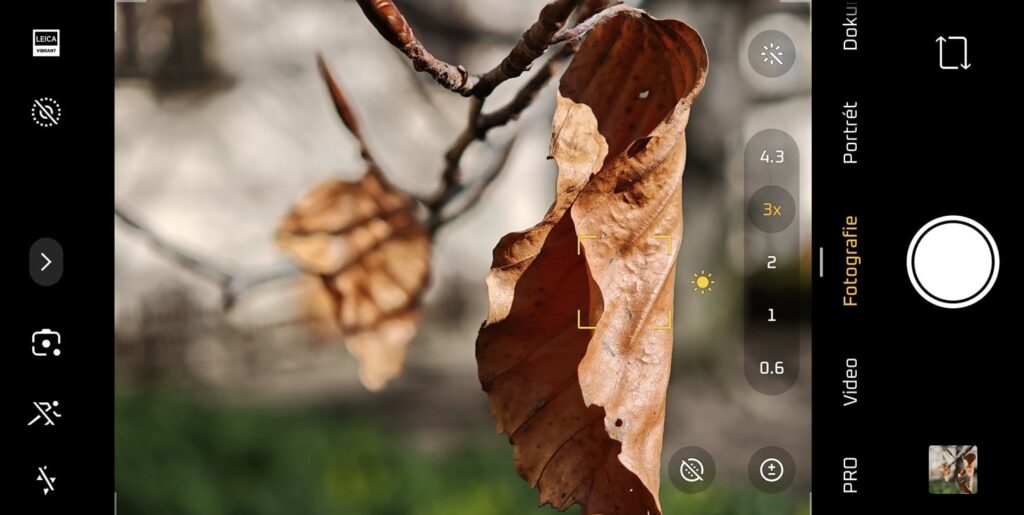
Remarkable telephoto lens with optical zoom. Telephoto lenses are often what now decides the overall quality of camera phones – and in that sense, the Xiaomi 17 Ultra definitely doesn’t have to worry. Optical zoom in a telephoto lens is a total rarity, both from the point of view of photography and the technology as such: Chinese and German developers have really done a remarkable job here. For the sake of certainty, let’s repeat why it’s so important. Firstly: between 75 and 100mm, it’s possible to zoom using the optical system and it’s therefore not necessary to zoom digitally, as we are used to with more common mobiles. Secondly: it gives photographers much more room for experimentation and creativity when shooting – they simply have more variants of photos available than with one lens. All this, moreover, with a very solid speed – and the result, see the sample photos, can thus be remarkable photos full of “real” optical blur (unlike artificial blur in portrait mode).

The quality of zoomed photos is very good – even in the digital zoom zone. As you will see in the test photos and in the video, the mobile performs very well thanks to the telephoto lens even during “digital zooming,” in the zone somewhere around 10-15x magnification. Why do I put “digital zooming” in quotes? Because – similarly to, for example, the iPhone 17 Pro – this term is somewhat subjective. For me as a traditional photographer, digital zoom here is anything beyond the 100mm edge, i.e., 4.3x zoom. But: I have a 200 Mpx sensor available, which means that even at 8.6x, for example, we can shoot without “cropping pixels,” we just use part of the sensor and for the resulting photo it will still be “de facto” optical quality. Either way, it applies that if you stick to reasonable values, the results will be surprisingly good – see the photos of nutrias and birds on the banks of the Vltava. And yes, even the maximum 120x magnification is actually remarkable, although that is naturally more of a technical point of interest.


Truly tuned portrait mode – portrait mode belongs among very essential tools for experienced photographers, although yes, it’s a digital process where the background is blurred by software editing, not optics. I experimented with portrait mode in a number of situations and was very satisfied, even in situations where I wouldn’t normally venture into shooting in this mode, including, for example, photographing animals by the Vltava. In short: this too is simply tuned and works very well, which is another item completing the overall effect.

Shooting in 200 Mpx makes a lot of sense – the mobile allows photographing even in the full resolution of the sensor (i.e., in 50 Mpx for the main and 200 Mpx for the telephoto lens). This in itself is nothing extraordinary, any mobile can do that. But: mostly it doesn’t make much sense, however, here the results are remarkable and in some situations, this possibility is simply an alternative to taking exceptionally valuable detail shots. You can see it best in the sample photos from Prague in my video. Thanks to a truly high-quality optical system, when 200 Mpx shooting is turned on, we are able to obtain very good-looking shots from which we can then obtain truly unprecedented details when enlarging. It only makes sense sometimes, but specifically when shooting city panoramas, yes – similar details can really come in handy there.

Overall tuning under Leica’s tactics – last year in Barcelona I had the opportunity to speak with Leica representatives who participate in the development of lenses and digital processes. And a banal but essential thing occurred to me: that it is definitely not a formal partnership. But that the collaboration with Xiaomi is very essential for them. And that it means an important thing: that they are truly guarantors of quality – because the fame of this German brand is built on it. And it is manifested here too, in the overall tuning of optics and software. Personally, I am not a fan of filters, so the large selection of Leica filters leaves me rather cold, but I know well that people – including experienced photographers – like to work with them. In short: Leica is truly felt here.
Xiaomi 17 Ultra and photography – what to watch out for
The second telephoto lens is missing – and it was great. As I already mentioned, one of the pillars of previous generations is missing here, namely the second telephoto lens. For example, the previous Xiaomi 15 Ultra model had a main “zooming” 100mm telephoto lens, whose function has now been taken over by the 75-100mm zoom), but also a second telephoto lens with 70mm and a great speed of 1.8. I liked it a lot because it allowed shooting truly unique detail shots from about 10 cm, with an elegantly blurred background. Which is a function that was honestly appreciated more by connoisseurs and I always asked myself with concern when someone at Xiaomi would realize that it’s a thing truly for experts. Well, it seems they’ve already realized it – and it’s missing in the new generation. Yes, of course, one can still conjure with details, with that sliding zoom. But it’s no longer from such a uniquely short distance. In short: yes, this lens will only be missed by a small group of users, but it’s just a bit of a pity.
A few small things need to be tuned – as always, it applies that some small things in image processing need to be tuned, but that is more of a formal and in a way unnecessary remark. I tested this mobile even before its market launch and similar small things are always solved by an update within a few weeks.
It is a top-tier mobile that will be most appreciated by experienced users. This is not a reproach, of course, but a rather important statement. As I already mentioned, I personally consider this series to be completely maximalist, but it applies that the biggest advantages will be appreciated more by experienced users. Those who can work with depth of field, understand the advantages of larger sensors and variable focal lengths. Not that it isn’t a mobile suitable for undemanding users, but the fact is that they only rarely use it truly to the full.

Xiaomi 17 Ultra – summary in two sentences
The Xiaomi 17 Ultra follows in the footsteps of its predecessors and offers an unprecedented combination of hardware and software elements that make this camera phone one of the best flagships on the market. The top-tier main sensor, but also the unique optical zoom, have the largest share in this, but it applies that everything will be most appreciated by more experienced users.
Xiaomi 17 Ultra – More Test Photos


Review Summary
Xiaomi 17 Ultra
The Xiaomi 17 Ultra follows in the footsteps of its predecessors, offering an unprecedented combination of hardware and software features that make this camera phone one of the best flagship models on the market. The standout is its top-tier main sensor, along with a unique optical zoom, though it’s worth noting that the full experience is best appreciated by more experienced users.
7.9
Pros
- excellent main one-inch sensor
- unique telephoto lens
- great combination of features
Cons
- lacks a second telephoto lens
- best appreciated by experienced users
- a few details still need refinement
Related posts
-
Xiaomi Redmi Note 17 Pro Max 5G Camera Review + Sample Photos
-

Xiaomi 17T Camera Review: 200 Sample Photos & HDR Video
-
Xiaomi 17T Pro Camera Review: 200 Sample Photos & HDR Video
-
Xiaomi 17 camera review: 200 test photos + video
-
Leica Leitzphone: Hands-On Review, Unboxing & Camera Test
-

Xiaomi Redmi Note 15 Pro+ 5G Camera Review: 50 Sample Photos + Video







Leave a Reply