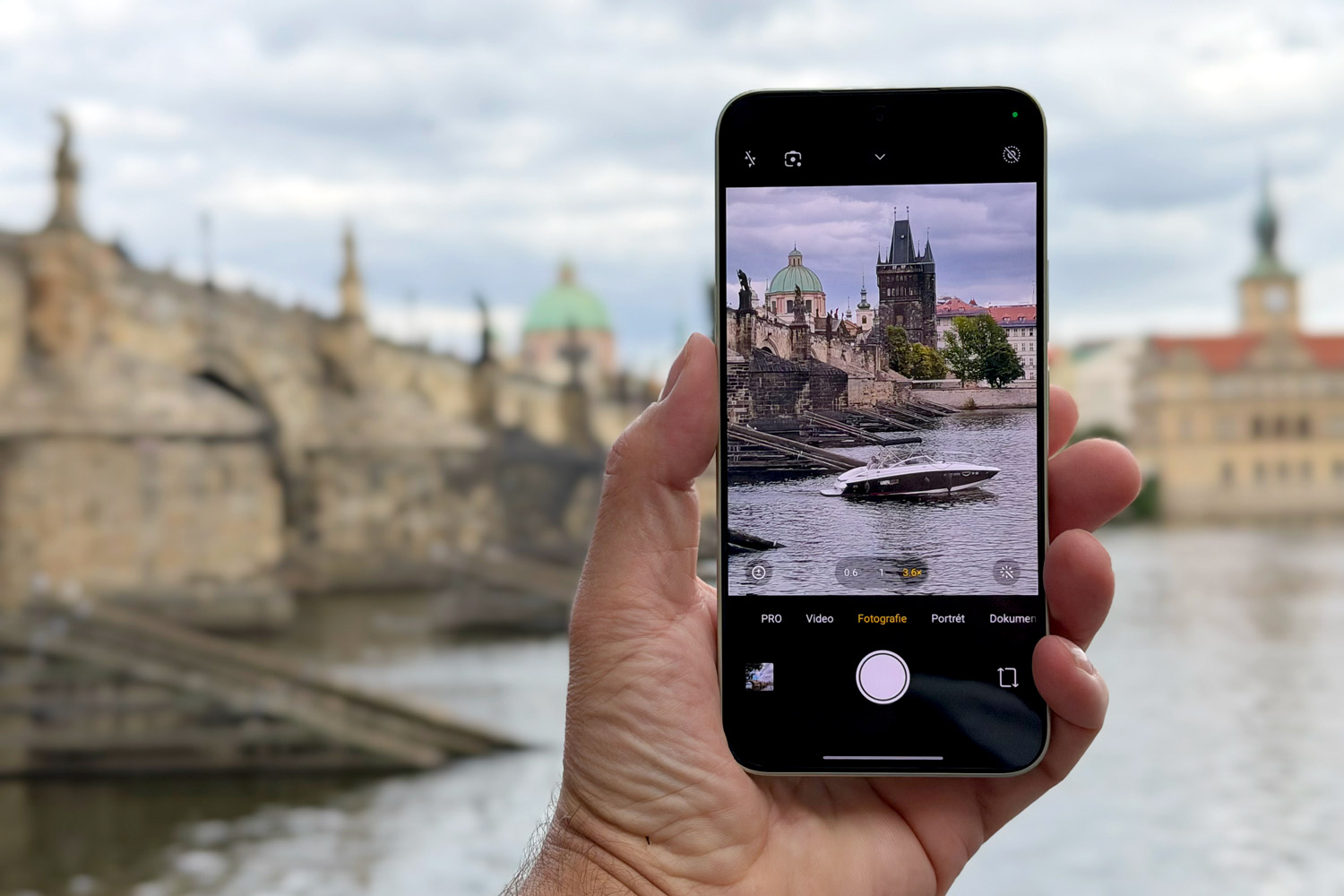
What can you expect from the Xiaomi Redmi Note 17 Pro Max 5G, the top model in a new generation that once again promises solid performance at an affordable price? As I have done with previous generations, I put the phone through an extensive photography test – and prepared dozens of sample photos for this review, along with a video that I will publish in the next few days.
Who Is the Xiaomi Redmi Note 17 Pro Max For and Where Does It Fit?
As always, let’s start by looking at where this model actually fits on the current “map” of smartphones. And if you are already getting a little lost in the numbering and constant stream of new models, you are not alone. So: the Xiaomi Redmi Note 17 Pro Max 5G is the top model among the four phones in the popular Redmi Note range – which has traditionally appeared at the beginning of the year – and this January I tested the Xiaomi Redmi Note 15 Pro+ 5G (review here).
Xiaomi has, however, decided to reshuffle its launch schedule – hence the unusually short gap between releases (January to September). And, much like some other smartphone manufacturers, it has also aligned its numbering with the competition – skipping the 16th generation. In short: the 17th generation arrives just a few months after the 15th series.
Yes, it is a little confusing – but it does not change the basic fact: this year’s four Redmi Note models offer a wide range of features and prices, aimed at different needs and budgets. For me, however, the most interesting model is traditionally the top one, which after a few months and with various discounts can usually be bought for around $400-450. And my traditional verdict in recent years has been: for that kind of money, it is actually not bad when it comes to photography.

You won’t find a sophisticated camera setup here – there is no telephoto lens and no Leica partnership, so higher-end models such as the Xiaomi 17T Pro are clearly several steps ahead. But if the owner learns to work within its limitations, this entire review can essentially be summed up in one sentence: A less demanding user will be happy, but even a more demanding user will not be disappointed in everyday situations (without zooming) and in good light.
Xiaomi Redmi Note 17 Pro Max and the Camera
First, let’s sum up what you should know about the camera system of this model.
| Xiaomi Redmi Note 17 Pro Max 5G – Camera: Lenses and Sensors | |
|---|---|
| Main camera | 26mm, 50 MP – f/1.5, OIS, 0.8μm pixel size |
| Ultra-wide | 15mm, 8 MP – f/2.2 |
| Front | 22mm, 32 MP – f/2.2 |
One important fact is not immediately obvious from the table – Xiaomi has decided to change the resolution of the main sensor: previous generations had 200 MP, while this one has just 50 MP. Why did this happen? We don’t know. It may be the result of cost-cutting – smartphone manufacturers around the world make no secret of the fact that times are tough, prices are rising, especially for memory, and keeping the overall price at a reasonable level is more difficult than it used to be. Or it may simply reflect the fact that this number no longer works as much of a magnet – until relatively recently, some users followed the logic that the more megapixels, the better the results. Which is generally not true, and is often quite the opposite – sensors with a higher pixel count can have problems with image quality in poorer lighting conditions (there is more so-called noise).

The key element, then, is the 50 MP sensor and the f/1.5 lens, which is a slightly better figure than the previous model (which has f/1.7), and from a photography perspective there is another seemingly minor detail that is not entirely insignificant: the focal length here is around 26mm, which is closer to the values commonly found on cameras than one generation earlier (where it was 23mm).
As we will discuss in more detail below, the crucial point – and perhaps the most important thing of all – is that this main sensor does a very solid job and confirms what we have come to expect in this category: solid performance at an affordable price.

There is no zoom – this is something you have to take into account, and with smartphones in this category it is simply part of their definition: if you want solid zoom performance, you need to move up to a higher class with a dedicated “zoom” lens and sensor. With Xiaomi, one example is the higher-end Xiaomi 17T (review here).

The other parts of the camera system are more supplementary: there is an ultra-wide lens, which is always a very valuable part of the setup – and useful for some important types of photography in both landscapes and cities. The truth is that it has a resolution of only 8 MP, which is low by today’s standards. It is nothing dramatic, but it will always be a secondary lens.
And then, of course, there are the other usual modes: Pro mode, full-resolution shooting (the Ultra HD function), and basic filters (though not from the famous Leica brand).

It is also worth mentioning a feature that is still not a given on affordable smartphones: video recording is available in 4K (at 30 frames per second), although not in HDR.
Xiaomi Redmi Note 17 Pro Max – What I Liked
The key point: the photos are genuinely good. The essential question behind every review can always be reduced to some version of the “coffee shop” question: “Does it take decent photos?” Yes, it does – as I have already mentioned, the main sensor delivers solid performance and does not immediately have the telltale look of a cheap phone (which was common just a few generations ago). I tested the phone in a variety of situations and locations: from the hills of Wallachia to the narrow streets of Prague’s Old Town. And I was certainly not disappointed, although yes, the beautiful autumn sunshine helped me a lot. The decision whether to buy it will naturally also involve a number of other questions – from the considerable competition even within Xiaomi’s own smartphone lineup to the key defining feature: the lack of zoom. But overall, this is a solid phone.

The main sensor and lens do a good job – as I have already mentioned, the key tools are, of course, the main sensor and lens. As you can see from the sample photos on this page, you can expect genuinely solid performance from them in a variety of situations. Of course, they are limited by their class, but I think the results will be a pleasant surprise for the average user.
The ultra-wide-angle lens is a valuable addition – I have already been somewhat critical of the ultra-wide-angle lens above, as its 8 MP resolution is a limitation. On the other hand, it also deserves some praise – although some smartphone owners never use it, it really is useful. Personally, I cannot imagine photographing in cities or interiors without it, when you need the ability to “fit” a very wide angle into a single shot. And despite the resolution limitation, it works well.



The phone handles fairly challenging situations as well – I tested the Xiaomi Redmi Note 17 Pro Max 5G in a range of situations, some of which were genuinely “nasty”: backlighting, scenes in poor light, strong contrasts, and so on. In general, cheaper phones have always struggled with these situations, but overall I was satisfied here. Yes, higher-end phones can do more in this respect, but in this category the key thing is simply that the average user is happy with the results. And they will be.

A really powerful battery – this is not directly related to photography, of course, but it is certainly worth mentioning: one of the main selling points of this phone is its large battery, which according to the official press release has a capacity of 9,210 mAh and is “the largest Xiaomi battery ever used in a smartphone for the European market”. With Android phones (unlike my iPhones), I generally do not have a problem with battery life, but it is obvious that a large battery can come in handy.
Among the additional features I liked, for example, is the ability to shoot at full resolution (the Ultra HD function). As the name suggests, it allows you to capture images at the sensor’s full resolution, i.e. 50 MP. This only makes sense in certain special situations, for example when photographing a city panorama packed with detail. That extra detail can then be useful for cropping or printing larger photos. For everyday use, however, it is unnecessary, even counterproductive: smartphones are optimized to give users a high-quality output (usually) in a 12 MP image.

Xiaomi Redmi Note 17 Pro Max – What to Watch Out For
It is an affordable phone, and that is how you need to treat it – overall, this model pleasantly surprised me, but that does not change the fact that it is a lower-end phone, so you cannot expect miracles overall. My advice would always be to watch for discounts and, if possible, opt for something from a higher class, where the price difference may not be particularly large (for example, the aforementioned Xiaomi 17T).
There is no optical zoom – this is not criticism, it is simply a statement of fact: the phone does not have a dedicated lens/sensor for zooming, which is simply one of its characteristics. We can zoom in up to 20×, but this is, of course, digital zoom, and image quality drops fairly quickly. Used sensibly, it will still not be a disaster, but you simply cannot expect miracles.

There is no 200 MP sensor, which would have been useful for zooming. As we already know, the main sensor has only 50 MP compared with previous generations. This is generally not a problem (see above), and perhaps it is even an advantage. But from the perspective of magnification, it is obviously not ideal – after all, 200 MP made it possible to “pull out” more detail from the sensor when using digital zoom. So here too, the same rule applies: you need to take this into account.
The ultra-wide-angle lens has only 8 MP – I have already mentioned this, along with the fact that it is not a major issue. But it is simply good to know that for somewhat more ambitious photography, the relatively low resolution can become noticeable.
Don’t expect a sophisticated filter system – I admit that I almost completely ignore smartphone filters, as I generally consider them unnecessary because an experienced photographer can do without them. But it is true that the more phones I test, the more willing I am to give filters a chance. And it is worth noting that this category of smartphones does not have what, for example, the aforementioned T series offers: a broad range of objectively interesting filters from the famous German company Leica.

Competition from Xiaomi’s higher-end models is considerable – the Xiaomi Redmi Note 17 Pro Max has a difficult task in that it is the top model among four other phones where price plays a crucial role. This means that competition from slightly higher-end models is, and will continue to be, very significant. Spend a few thousand more and you can, for example, buy the previous generation (and exactly one year older) Xiaomi 15T Pro (review), which is an excellent mid-range phone with incomparably better hardware.
Xiaomi Redmi Note 17 Pro Max 5G – Summary in Two Sentences
Like its predecessors from previous generations, the Redmi Note 17 Pro Max 5G offers very solid performance that is generally comparable even with more expensive phones, all at a reasonable price. However, the limitations are significant: most notably, there is no zoom, and competition from mid-range smartphones, including Xiaomi’s own models, is also important, as slightly older but significantly more capable phones can be bought for a similar price.
Xiaomi Redmi Note 17 Pro Max 5G – Additional Photos from the Test


Review Summary
Xiaomi Redmi Note 17 Pro Max 5G

Like its predecessors from previous generations, the Redmi Note 17 Pro Max 5G offers very solid performance that is generally comparable even with more expensive phones, all at a reasonable price. However, the limitations are significant: most notably, there is no zoom, and competition from mid-range smartphones, including Xiaomi’s own models, is also important, as slightly older but significantly more capable phones can be bought for a similar price.
7.5
Pros
- solid performance for its category
- good image quality for everyday photography
- large battery capacity
Cons
- no optical zoom
- limited software features
- considerable competition from slightly more expensive models
Related posts
-

Xiaomi Redmi Note 15 Series Specs Comparison: All 5 Models
-

Best Smartphones for Photographers (2026) – My Top Picks Based on 10 Years of Reviews
-

Xiaomi Redmi Note 14 camera test: review + 200 sample photos
-

Xiaomi 15T camera review: 150 test photos + video in HDR
-

Xiaomi 15T Pro camera review: 200 test photos + video in HDR






















Leave a Reply